
Categories
Home Buying Tips, Home OwnersPublished March 8, 2026
What Should I Look for in my Real Estate Agent?

Are you preparing to buy or sell a home—and wondering if hiring a real estate agent is even necessary?
Or maybe the bigger question is: how do you know you’ve chosen the right one?
While it’s easy to assume all licensed agents deliver the same results, the truth is: choosing the wrong agent could cost you thousands.
At Premier Home Team, we have guided hundreds of buyers and sellers through this process, we’ve seen what truly sets great agents apart—and what red flags to avoid.
In this article, we’ll walk you through 8 essential qualities to look for in a real estate agent, so you can move forward with confidence and peace of mind.
Why Choosing the Right Real Estate Agent Matters More Than You Think
Choosing a real estate agent may feel like a simple step, but it has a much bigger impact than most people expect.
You’re not just hiring someone to open doors or fill out paperwork — it’s about who you trust to guide you through high-stakes decisions, protect your interests when emotions run high, and help you feel confident throughout the process.
The right agent combines calm guidance with clear strategy, using market data and real experience to influence pricing, negotiation outcomes, and timelines.
Over the course of a transaction, those differences add up— impacting how stressful or smooth the entire experience feels.
1. Why Client-Focused Real Estate Agents Lead to Better Decisions
One of the clearest indicators of a strong agent is where their focus starts.
The best agents prioritize the client first, not just the property or the outcome of the deal. They take the time to understand your goals, your concerns, and what success actually looks like for you before talking about pricing or paperwork.
A relationship-first approach leads to smarter, more strategic decisions. You’re supported by clear reasoning, relevant data, and a thoughtful plan that keeps your goals and best interests at the center.
.jpg)
2. Real Estate Experience That Saves You Money and Stress
A common mistake buyers and sellers make is assuming that licensing equals experience.
In reality, becoming a real estate agent has a relatively low barrier to entry. The coursework teaches the basics, but it does not prepare someone for the realities of pricing homes, managing inspections, negotiating repairs, or navigating contract timelines.
Experience is what fills that gap.
Agents who have been through dozens—or hundreds—of transactions can spot issues before they become problems. They know what’s normal, what’s negotiable, and what needs immediate attention. Without that experience, deals can feel disorganized, emotional, or even fall apart entirely.
3. Local Market Expertise That Gives You a Competitive Edge
Online listings can show you prices and photos—but they don’t explain why homes are selling the way they are.
A great real estate agent sees hundreds of homes each year and has access to market data, statistics, and professional resources that go far beyond what’s available online.
That perspective helps them understand how local competition, buyer demand, and pricing strategies change from neighborhood to neighborhood.
In markets like Philadelphia and the surrounding suburbs, an approach that works in one area may completely miss the mark in another.
By leveraging real market knowledge and data, a strong agent knows when there’s room to negotiate—and when you need to come in with a strong offer. That insight can be the difference between winning a home or losing it altogether. Local expertise also allows an agent to educate you on:
- How days on market affect your leverage
- When over-asking offers make sense
- Which contingencies help or hurt in specific areas
That level of insight only comes from being actively involved in the market.
4. Why Dual-Sided Real Estate Experience Helps You Avoid Deal Breakers
Agents who have represented both buyers and sellers bring a more complete perspective to every transaction.
They understand how timelines, inspections, township requirements, and negotiations feel from both sides of the table. That balance helps them anticipate objections, explain what’s reasonable.
Ultimately, guiding clients through moments that might otherwise feel frustrating or unfair.
Just as important, experienced agents provide emotional steadiness. Buying or selling a home is personal. A professional perspective keeps decisions grounded in reality rather than fear or pressure.
5. How Honest Communication Prevents Surprises During Your Home Sale or Purchase
If there’s one non-negotiable trait to look for in a real estate agent, it’s communication.
You’re about to make one of the biggest financial decisions of your life. You need to work with someone you trust—someone you feel comfortable speaking openly with.
You need to be able to communicate without holding back concerns or emotions.
Real estate decisions are personal, and clear communication is what keeps them from becoming overwhelming.
Strong agents lead with education and empathy. They advise you on pricing, timelines, next steps, and potential challenges to avoid surprises along the way. Knowing what to expect builds confidence and trust as the process unfolds.
A major red flag is an agent who skips those upfront conversations or avoids difficult topics. When expectations aren’t clearly set, frustration follows quickly.
The right agent walks you through the process step by step, checks in often, and keeps you informed—without overwhelming you.
6. Strategic Real Estate Negotiation That Protects Your Bottom Line
Good negotiation isn’t about being aggressive—it’s about being informed, prepared, and intentional.
The strongest agents rely on market data, recent comparable sales, and clear communication to protect their clients’ money and position. That might mean advising a buyer not to overpay—even in a competitive market.
An inflated price could lead to appraisal issues, renegotiations, or a deal falling apart later. It could also mean helping a seller understand that the strongest offer isn’t always the highest price, but the one with the cleanest terms, solid financing, and the highest likelihood of closing.
Strategic negotiation also happens long before offers are accepted. Skilled agents communicate proactively with the other side. They understand motivations, and structure offer terms in a way that makes sense for the specific market. They know when to push, when to hold firm, and when flexibility actually creates leverage.
Ultimately, strong negotiation keeps deals moving forward while minimizing unnecessary risk.
The right agent for you, is going to support you throughout the transaction, and help you reach your goal with clarity, confidence, and as few surprises as possible..jpg)
7. A Real Estate Marketing Plan That Attracts the Right Buyers Fast
If you’re selling, posting your home on the MLS is only the starting point—not the strategy.
High-quality marketing today combines strong digital exposure with proactive, hands-on effort.
While online ads and listing platforms help create visibility, the real impact comes from additional activities. Open houses, direct neighborhood outreach, virtual staging, 3D video tours, and consistent follow-up with interested buyers and agents.
This approach creates urgency and demand instead of passively waiting for the right buyer to stumble across a listing.
Agents who are willing to do the legwork—both online and in the community—help prevent homes from sitting too long and losing momentum.
A strong marketing plan is designed to connect with the right buyers and establish confidence early, helping a home stand out in the market from the start.
8. How to Read Real Estate Agent Reviews Like a Pro
Reviews matter, but the most valuable ones are detailed.
Instead of only reading five-star summaries, look for reviews that explain how the agent handled challenges, communicated under pressure, or solved problems when something went wrong.
When inspections, appraisals, or financing issues arise—the best agents stay calm, present options, and guide clients forward without panic or pressure.
Your Final Checklist to Hire the Right Real Estate Agent with Confidence
By now, it’s clear that the right real estate agent brings more than credentials. They provide guidance, protect your interests, and help you move through the process with confidence.
If you’re trying to narrow down your options, it helps to simplify the decision. Instead of focusing on buzzwords, promises, or how many homes someone has sold, ask the right questions.
The downloadable checklist below is designed to help you quickly evaluate whether an agent is truly the right fit for you—as a buyer or a seller—before you commit.
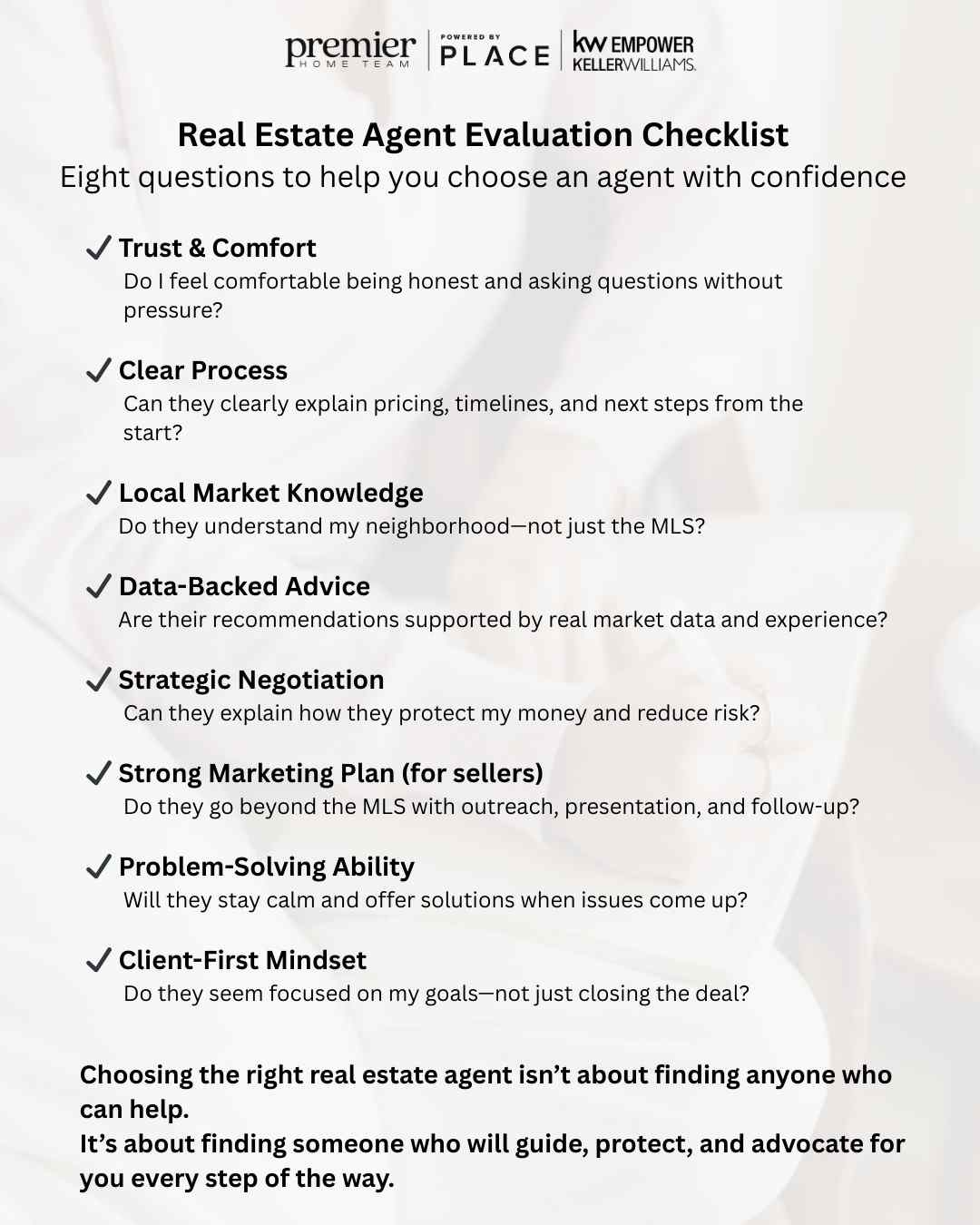
At the end of the day, what to look for in a real estate agent comes down to trust, experience, and guidance.
The right agent serves as your advocate, protecting your interests and guiding you through one of the most important financial decisions of your life.
Ready to Choose the Right Agent?
Now you know what separates great agents from average ones. This matters because the wrong choice can cost you thousands—or your dream home.
Download our Real Estate Agent Interview Checklist to evaluate your candidates with confidence.
As a team that’s guided hundreds of buyers and sellers through high-stakes transactions, we’re here to help you feel informed every step of the way. If you’re considering buying or selling and want clear guidance—not pressure—the next step is simple.
👉 Contact us to start a conversation and see if we’re the right fit for your goals.
Robin Martin
Realtor® | Premier Home Team | Keller Williams Empower | PLACE
or another way