
Categories
Home Buying TipsPublished October 5, 2026
What Is an Escalation Clause in Real Estate? A Buyer's Guide

What Is an Escalation Clause in Real Estate? A Buyer's Guide
Executive Summary
An escalation clause allows you to automatically increase your purchase price by a set amount, up to a maximum you choose, when there are competing offers on a property. It can help you stay competitive without repeatedly submitting new offers, but it can also increase appraisal risk and reveal how much you're ultimately willing to pay. Whether you should use one depends on the market, your budget, and the specific offer you're making.
You've found a home you love, but so has everyone else, and you’re worried that your offer might not land at the top of the list. In competitive markets, multiple-offer situations are common, and your agent may suggest using an escalation clause to make your offer more competitive. What you might not know is whether using one will actually help you win the home, or just show the seller how high you're willing to go.
At Premier Home Team, we work with buyers in Greater Philadelphia, South Jersey and Delaware. We negotiate multiple-offer situations regularly, especially in the Philadelphia suburbs, and we’ve seen when an escalation clause can help a buyer, and when it can backfire.
This guide covers what an escalation clause is, how it works, the most common problems it creates, and whether it's the right strategy for your next offer.
What Is an Escalation Clause in Real Estate?
An escalation clause automatically increases your offer by a set amount, up to a maximum you choose, when there are competing offers on a property. Think of it like an automatic bid on an auction site: once you set your limit, it does the work for you instead of you manually raising your offer.
When Are Escalation Clauses Typically Used?
Escalation clauses are most useful when you expect a home to receive multiple offers. Before recommending one, we typically call the listing agent to get a sense of the competition and determine whether an escalation clause makes sense for that particular offer.
An escalation clause is only one way to make your offer more competitive. For other strategies, read How to Write a Competitive Offer, where we explain what else you can do to strengthen your offer in a multiple-offer situation.
How Does an Escalation Clause Work?
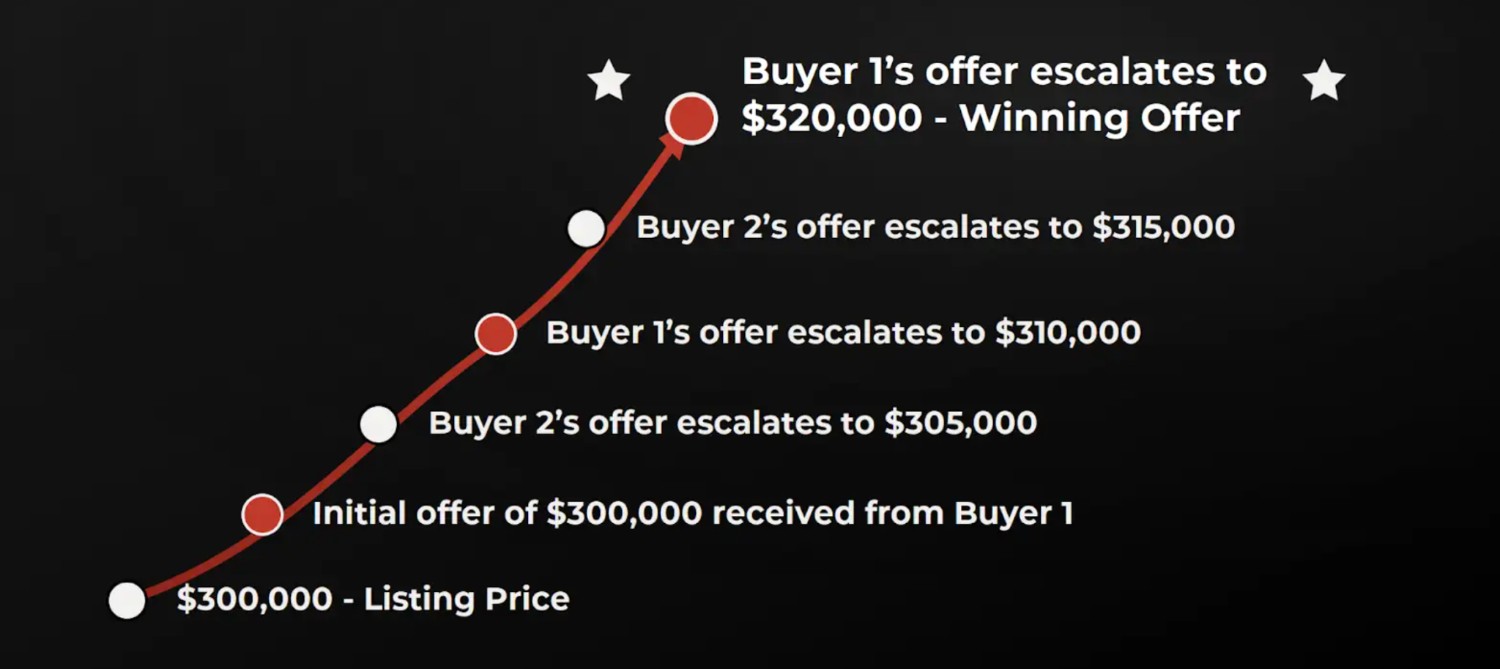
Every escalation clause has three parts: a starting offer, an increment (how much your offer automatically increases by each time), and a cap (the absolute maximum you're willing to pay).
In Pennsylvania, an escalation clause is typically added to an offer using the Price Escalation Addendum to Agreement of Sale (Form PEA) from the Pennsylvania Association of Realtors. The form allows you to set the amount your offer will increase by when competing offers are received, along with the maximum purchase price you're willing to pay.
Escalation clause example:
In one recent deal, a home was listed at $300,000. Our client started at $315,000 with an escalation clause in $5,000 increments, capped at $340,000.
If a competing offer came in at $330,000, the client's offer would automatically increase to $335,000; if a competing offer hit $338,000, it would move to $340,000 and stop there, since that was the agreed ceiling regardless of the increment size.
One common misunderstanding: buyers assume the seller can simply claim a higher offer exists and trigger the escalation. In reality, the escalation addendum requires the seller to provide the buyer's agent and buyers with a copy of the competing offer that triggered the escalation.
Common Problems With Escalation Clauses (and How to Avoid Them)
Revealing Your Maximum Price to the Seller
When you submit an escalation clause, the seller and listing agent can see the maximum amount you're willing to pay. That means you're showing them your ceiling upfront, which can affect how they approach negotiations or a later request for “highest and best” offers.
Solution: Before using an escalation clause, decide with your agent whether the benefit of automatically increasing your offer outweighs the downside of showing the seller your maximum price.
Your Offer Could Be Higher Than the Appraised Value
Using an escalation clause usually means going over the asking price, which raises the risk of the home appraising for less than your offer. Since your lender bases financing on the appraised value, a low appraisal could mean covering the difference in cash, or renegotiating.
Solution: Set your cap with your lender and agent's input, not just your gut, and know ahead of time whether you have funds available to cover an appraisal gap if it comes to that.
Some Sellers or Agents Won't Accept Escalation Clauses at All
Some sellers and listing agents won’t accept escalation clauses, especially when multiple buyers are using them. Competing escalation clauses can create confusion over which offer actually triggers another.
Solution: If a listing explicitly won't accept escalation clauses, submit your strongest offer instead of trying to work around the restriction.
Is an Escalation Clause the Right Strategy for You?
If you're considering an escalation clause, think about how you'd feel if someone else won the home at different price points. If you'd be upset to lose it over another $5,000, that can help you keep working toward the maximum you're comfortable offering. At some point, you'll reach a number where you'd be okay letting the other buyer have it. That's your ceiling.
Find Your Real Ceiling
Not sure how high you're actually willing to go? Download our Find Your Real Ceiling worksheet to walk through the same exercise we use with buyers before they submit a competitive offer.
We're more cautious with buyers who are emotionally attached to a specific home and want to "do whatever it takes," and with buyers who don't have liquid funds available to cover a potential appraisal gap. If either applies to you, a straightforward strong offer without an escalation clause may be the safer move.
Make Your Offer With Confidence
An escalation clause isn't automatically a good or bad move. It can help you stay competitive in a multiple-offer situation, but you need to be comfortable with how high your offer could go and the risks that come with it.
If you're considering an escalation clause, talk with your agent about whether it makes sense for the specific home, your budget, and what you're comfortable paying. At Premier Home Team, we help buyers throughout Greater Philadelphia, South Jersey, and Delaware navigate competitive offers and understand their options before they commit.
Talk to your agent about using an escalation clause in your offer.
Frequently Asked Questions
Can the seller see the maximum amount I’m willing to pay?
Yes. When you submit an escalation clause, the seller and listing agent can see the maximum purchase price you’ve set. That’s one of the trade-offs of using an escalation clause: it can make your offer more competitive, but it also shows the seller your ceiling.
Does the seller have to prove there’s another offer?
In Pennsylvania, yes. If another offer triggers your escalation clause, the listing agent must provide you or your buyer’s agent with a copy of the competing offer that caused your purchase price to increase.
What happens if my escalated offer is higher than the appraised value?
If the home appraises for less than your final purchase price, your lender may not finance the full amount you offered. Depending on the terms of your agreement, you may need to cover the appraisal gap with cash or try to renegotiate with the seller.
Do all sellers accept escalation clauses?
No. Some sellers and listing agents won’t accept escalation clauses, particularly in multiple-offer situations where several buyers may be using them. If the seller won’t accept an escalation clause, you’ll need to decide with your agent what your strongest straightforward offer should be.

Robin Martin
Realtor® | Premier Home Team | Keller Williams Empower | PLACE
or another way