
Categories
Market Trends, Investment InsightsPublished April 17, 2026
A 2026 Honest Review of the Real Estate Industry in Philadelphia


If you're still pricing your home based on what sold in 2023, or waiting for mortgage rates to drop before you buy, you're likely missing what’s actually happening in today’s market. Homes across Philadelphia are sitting for 60, 90, even 100+ days while buyers quietly gain negotiating power, all because both sides are working off outdated assumptions.
We’re in the field daily, negotiating offers, analyzing comparable properties (comps), and advising clients across Philadelphia, the surrounding counties, Delaware, and New Jersey. That gives us a real-time pulse on what’s working, and what isn’t, in a way national headlines can’t provide.
In this honest review, you’ll learn exactly how the market has changed since 2023, why certain homes are sitting while others still sell fast, and what buyers and sellers need to do differently right now to win.
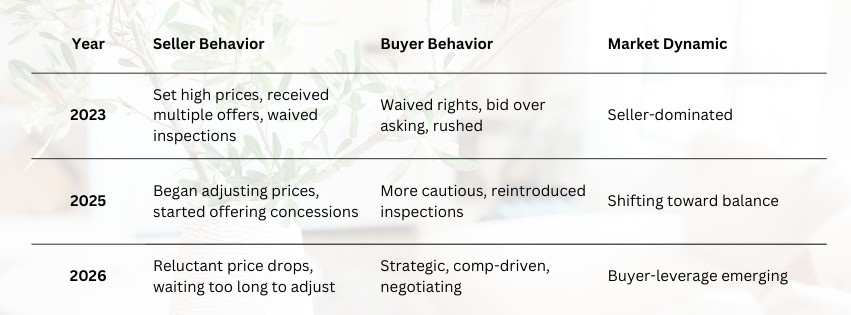
How has the market shifted from 2023 to 2026?
In 2023, the rules were simple: sellers held all the cards. Buyers waived inspections, accepted inflated prices, and competed in bidding wars just to stay in the game.
By 2025, and now clearly in 2026, that dynamic has shifted.
Buyers are once again negotiating. Inspections are back on the table, agents are doing more of them than they've done in years. Repair requests and credits that were almost unheard of a few years ago are now becoming routine.
Here's how dramatically things have changed: a recent buyer submitted an offer $50,000 under asking on a property listed at $265,000. The listing agent initially pushed back, then went silent. A week later, they came back and accepted the offer.
This doesn't mean bidding wars have disappeared. They still happen, but they're far more targeted. Instead of every listing drawing frantic competition, only homes in strong school districts with good condition and the right pricing create urgency. Everything else has to earn attention through realistic pricing.
The biggest change is that buyers have leverage. Buyers now have choices, and that fundamentally changes the negotiation dynamic.
Why Are Philadelphia Inventory Trends Misleading?
One of the most misunderstood aspects of the current market is inventory.
Yes, there are more listings than in 2023. But that increase isn't evenly distributed—and it's creating vastly different experiences depending on where you're looking.
In Philadelphia proper: The market feels saturated. Homes—even well-priced, fully renovated ones—are sitting 60, 90, sometimes 100+ days. Multiple listings with similar finishes and features often hit the market simultaneously, diluting demand across the board.
Outside the city: In the surrounding counties and into Delaware, conditions are tighter. Good single-family homes in strong school districts still move relatively quickly and can attract multiple offers. But buyers are more measured than they were in 2023, and sellers can't rely on momentum alone to carry an overpriced listing.
This unevenness is why blanket market advice doesn't work anymore. Neighborhood, property type, school district quality, and pricing accuracy matter more than ever. A strategy that works in Delaware County might fail spectacularly in West Philadelphia.
.jpeg)
Source: Bright MLS Industry Watch Reports
Why Are Sellers Stuck in 2023 Pricing Mindsets?
One of the clearest friction points in 2026 is pricing, especially among sellers who haven't adjusted their expectations.
Many sellers are still mentally anchored to 2021–2023 comps, when homes sold in days and routinely went above asking. When given a low, mid, and high price range, many sellers still want to aim for the high, even when market data doesn't support it.
The problem? Pricing based on old market conditions doesn't "test the market", it gets ignored.
When a listing starts too high, it doesn't generate activity. No showings means no feedback. And once a property sits on the market for weeks, buyers don't see risk, they see opportunity to negotiate aggressively.
The timeline varies by location:
- In Delaware/Montgomery/Bucks counties: Two weeks on market already signals room for negotiation
- In Philadelphia: A month or more becomes the threshold where buyers know they have leverage
The way agents are pulling comps has changed too. What used to work—going back up to a year—no longer reflects reality. Now the focus is on more recent sales, even if that means expanding the geographic search area instead of the time period.
Today's market rewards precision, not optimism. Sellers who commit to honest, comp-based pricing from day one are closing deals. Those waiting for a buyer to "fall in love" with an overpriced property are watching their listing go stale.
How Are Buyers Regaining Negotiating Power in 2026?
Affordability remains a real challenge. Interest rates haven't returned to pandemic lows, and buyers feel that pressure in their monthly payments. Combined with still-elevated prices in desirable areas, hesitation is understandable.
But here's what's changed: buyer psychology has adapted.
Six percent interest rates, which caused sticker shock a year ago, now register as normal. The initial panic has given way to pragmatism. Instead of waiting indefinitely for perfect conditions, today's buyers are becoming strategic.
They're waiting for the right property instead of rushing. They're passing on overpriced homes without FOMO. And they're submitting offers aligned with actual comps, even when sellers bristle at them, and getting those offers accepted more often than sellers expect.
The key is knowing when and where to push. Lowballing without justification still backfires. But buyers who submit informed, comp-supported offers with patience are succeeding.
Negotiation power exists in 2026, it just has to be used intelligently.
As seller leverage decreases, strategic buyers are gaining ground, especially those submitting comp-aligned offers on aging listings.
Is Philadelphia a good market to buy in right now?
For investors and first-time buyers, Philadelphia presents the most opportunity right now—but also the most potential traps.
The opportunity: Oversaturation means deals can absolutely be found. Buyers have negotiating leverage they haven't had in years, especially in neighborhoods where inventory is piling up.
The risk: Returns are thinner than they were in 2023, especially for flips. Back then, renovations delivered strong margins. Now, many are barely breaking even. The challenge often comes down to over-improving for the neighborhood—putting $50,000–$100,000 into a renovation expecting to command $350,000–$400,000, when the market data for that area still says it's a $300,000 neighborhood. The bells and whistles don't change the fundamentals.
For investors chasing cash flow: Move-in-ready multi-family properties generating strong returns are increasingly rare. Most properties producing $300-400/month cash flow require work. The upside now favors those willing to renovate or adjust their return expectations.
For first-time buyers: If you don't currently own a home, Philadelphia makes sense right now. You have negotiating power, more options, and sellers who are increasingly willing to make concessions. But if you're moving from a property with a 2020-era interest rate? The math gets much harder to justify unless there's a compelling life reason to move.
When do sellers actually adjust their expectations?
Many sellers don't truly adjust their expectations until their home actually hits the market.
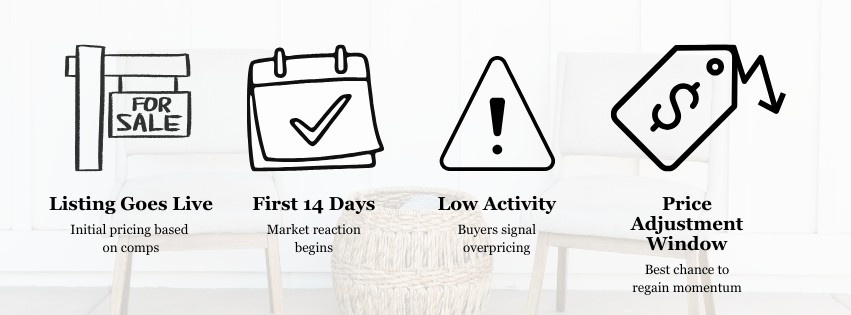
Before listing, the instinct is to aim high. The agent presents the pricing analysis, but hope often wins out. Then the property goes live, and reality arrives through what happens next—or doesn't happen at all.
No showings in the first two weeks? That's the market sending a clear message.
The most successful sellers in 2026 are those who commit to honest pricing from the start and stay nimble:
- Price accurately based on recent comps (not aspirational comps from 2023)
- Be willing to drop within 14 days if activity doesn't materialize
- Remember that more inventory means buyers have options, if your home isn't competitively priced, they'll simply move on
Waiting too long to correct courses often costs more than pricing correctly from the start. Every week a property sits, it loses perceived value in buyers' minds.
Where are sellers still positioned well?
Not every seller is struggling in 2026.
If you're in the surrounding counties with a well-maintained single-family home in a good school district, you're positioned to sell successfully right now. That's where demand is consolidating, as buyers continue moving out of Philadelphia proper into these areas.
But even in strong markets, pricing discipline matters. The days of "list high and see what happens" are over.
What do buyers and sellers need to understand most?
For buyers: You have negotiating power, but it's not unlimited. The market is situational. You can negotiate, but you still need to respect value and location. Going way under on a well-priced home in a strong school district will backfire. But submitting a comp-supported offer on an overpriced property that's been sitting for 30+ days is smart strategy.
Be patient. More inventory is coming to market. It's not the feeding frenzy of 2023 where everyone chased the same three listings. The right property at the right price is worth waiting for.
For sellers: Today's success comes from alignment with current market conditions, not optimism based on past performance. Price based on what homes are selling for in the last six months, not what they sold for in 2023.
Bottom line: know what you're actually dealing with
The Philadelphia real estate market in 2026 isn’t just different from 2023, it’s fundamentally changed. The power dynamic has shifted, and success now depends on understanding today’s actual conditions, not outdated assumptions.
Whether you're a seller still hoping for pandemic-era prices or a buyer waiting for rates to drop below 6%, the real risk is missing what’s possible right now. Holding on to old narratives is costing people time, money, and opportunities.
If you’re unsure how your specific neighborhood, property type, or goals fit into this market, Contact Our Team. We’re on the ground every day helping clients adapt their strategy to what’s working in real time.
We’ve helped buyers negotiate below asking, sellers reposition stagnant listings, and investors avoid renovation mistakes that cost them their margins. Understanding the current dynamics puts you in control, and helps you to work with the market as it actually exists today. With the right guidance, this market has real opportunities for those willing to see it clearly.

Robin Martin
Realtor® | Premier Home Team | Keller Williams Empower | PLACE
or another way