
Categories
Careers, Working in Real EstatePublished June 3, 2026
How Many Homes Can A New Real Estate Agent Expect to Sell in Their First Year

.jpeg)
How many homes can a new real estate agent realistically sell in their first year?
It’s one of the first questions most newly licensed agents ask before starting their real estate career. But usually, the real concern behind the question isn’t just about transactions.
You’re really wondering something deeper:
Will I build enough momentum in year one for this career to actually work?
The short answer: most new real estate agents sell somewhere between 2 and 20 homes in their first year, depending on their lead sources, training, market conditions, and how consistently they prospect for new clients. Across the entire industry, experienced real estate agents typically sell more homes per year as their referral network and past clients, and lead sources grow over time.
After onboarding and coaching 20+ new agents on our team over the past several years, we’ve seen firsthand how the first year in real estate actually plays out. We’ve also seen the other side of the industry — talented people who leave real estate early because they underestimated how much consistency and structure the first year requires.
Some agents struggle to close a handful of deals, while others build consistent production much faster. The difference usually comes down to structure, support, and the number of real estate conversations happening every day.
In this article, we’ll break down:
- what a realistic first year in real estate looks like
- how production differs between solo agents and team agents
- and why the number of homes sold isn’t always the best way to measure whether your first year is successful.
What New Real Estate Agents Are Really Trying to Figure Out
When you ask how many homes you can sell in year one, you’re usually trying to understand something more important.
You want to know things like:
- What other agents actually achieved in their first year
- Whether your income & transaction goals are realistic
- What kind of daily effort the job actually requires
Most people asking how many homes they can sell in year one are really asking whether they can build enough momentum to make a real estate career sustainable.
The challenge is that real estate doesn’t work like a traditional career ladder where experience alone often helps to increase income.
Different agents operate in completely different environments, including:
- Different mentorship
- Different systems
- Different levels of lead flow
- Different markets
That’s why the most useful comparison isn’t with ‘all agents’.
The better question is, whose business do you want to replicate?
If you find someone producing the kind of results you want, studying their process will give you far more insight than chasing industry averages.
Why the Number of Homes Sold Can Be Misleading in Your First Year
When agents talk about first-year success, they often focus on units (houses) sold. On the surface, the number of homes sold seems like the simplest way to measure success in real estate.
This metric matters because it reflects the number of people you’ve helped buy or sell homes. More transactions usually mean:
- More experience
- More relationships
- More opportunities for referrals
But it can also be misleading. Not all transactions are equal. A unit count doesn’t tell you:
- The price point of those homes
- Whether rentals were included
- What the agent actually earned
For example, one agent might close 10 lower-priced homes, while another closes 4 higher-priced transactions and earns a similar income. In real estate, transaction count measures activity, but it doesn’t always reflect income or business growth.
So while units are useful for measuring activity, they don’t always tell the full financial story. If you’re new to the industry, it can help to understand how real estate commissions actually work and how agents get paid.
What a Realistic First Year in Real Estate Actually Looks Like
Most new agents imagine their first year will be full of deals right away. The reality can look quite different.
For most agents, the first year in real estate is less about immediate success and more about learning the activities that eventually produce deals.
You’re figuring out:
- How to generate leads
- What scripts work in conversations
- How to follow up with potential clients
- Which activities actually produce results
Without experience, it’s easy to abandon those production strategies too early.
Many agents try something for a few weeks, don’t see results, and assume it doesn’t work. But real estate often requires longer cycles. The seeds you plant today might not produce transactions for months.
That’s why the most important trait in year one isn’t natural sales ability. It’s consistency.
For example, one new agent on our team closed just three transactions in their first six months. But by consistently hosting open houses and following up with potential buyers, they finished their first year with seventeen closings and entered year two with several repeat clients already in their pipeline.
Why Structure Matters More Than Talent in Your First Year
One of the biggest structural decisions new agents face early in their career is whether to start independently or join a real estate team.
Both paths can lead to success, but they often produce very different experiences, especially in the first year when mentorship, systems, and lead generation make a huge difference. Those factors dramatically change the speed at which new agents learn and start closing transactions.
In the first year, consistency and structure usually matter more than natural sales talent.
That’s why the experience of a solo agent and a team-based agent often looks very different in year one. If you're trying to decide which environment might help you grow faster, we break down the differences in detail in our article Solo vs Team: Which Real Estate Career Path is Right for You
What the First Year Looks Like as a Solo Real Estate Agent
If you start as a solo agent without a structured lead source, most of your business development comes from two places:
- Your personal network (friends, family, past contacts)
- Open houses
Your daily work is focused on one simple goal, talking to as many people as possible about real estate.
That often means:
- Calling people you know
- Hosting open houses on weekends
- Following up with potential buyers and sellers
But the early challenge is uncertainty.
You don’t yet know:
- Where the next client will come from
- Which conversations will convert
- How long it will take for deals to happen
Without structured lead flow, most solo agents build their first clients through personal networks and open houses. Because of that, many solo agents describe the first year as a long stretch of trial and error.
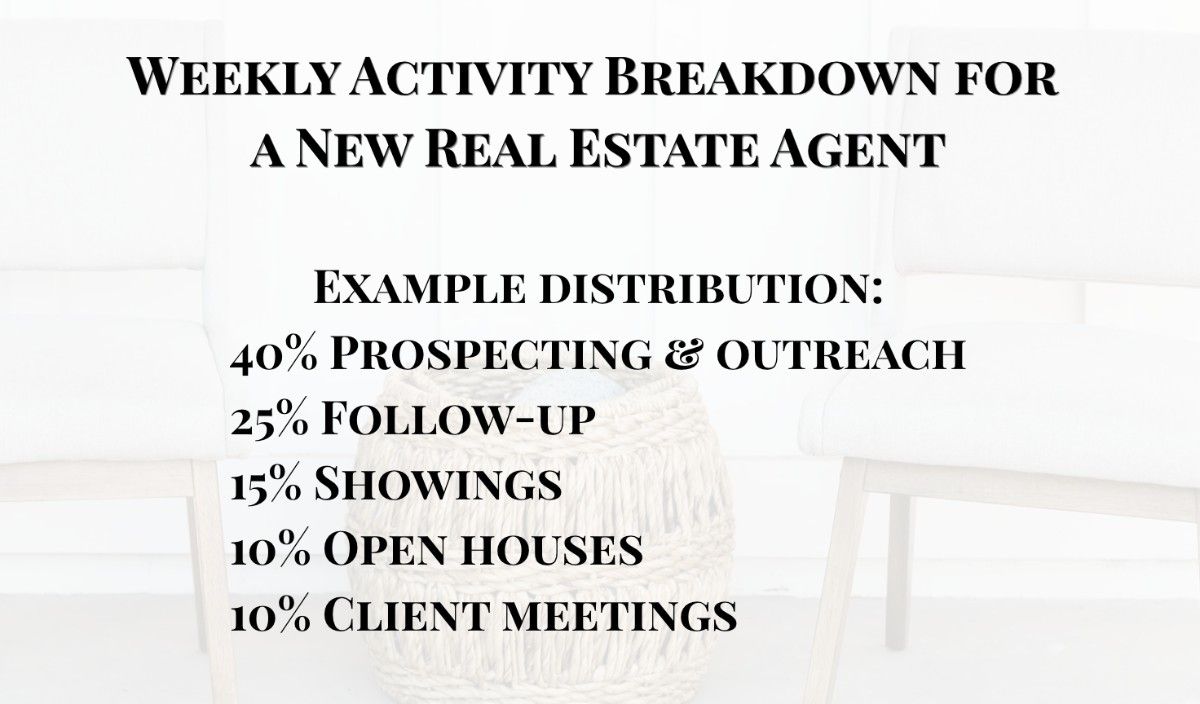
A New Agent’s Weekly Activity
In the first year, most of your schedule revolves around a handful of core activities that generate conversations and client opportunities.
- Prospecting calls
- Open houses
- Showings
- Follow-up
- Client meetings
For many new agents, the majority of their time is spent generating conversations and following up with potential clients rather than closing transactions.
A typical week for a new agent often looks less like closing deals and more like building conversations that eventually turn into clients.
A Realistic First-Year Range for Solo Agents
In our experience working with new agents, if someone treats the business like a full-time career and stays consistent with prospecting and follow-up, a realistic expectation is somewhere around 2–12 transactions in the first year.
Some agents close fewer while they are still learning the business, while others build momentum more quickly depending on their lead sources and environment.
But “full time” in real estate often means more than a typical job.
Many agents work evenings, weekends and 7 days a week during the busy season. It’s not unusual for new agents to treat the business like an 8 am to 8 pm schedule, especially when building momentum in their business.
Why Joining a Real Estate Team Can Increase First-Year Transactions
Joining a team changes the structure of your first year significantly.
| Important Factors for New Real Estate Agents (Solo vs. Team) | ||
| Factor | Solo Agent | Team Agent |
| Lead generation | Personal network, open houses, self-generated leads | Often provided leads + personal prospecting |
| Mentorship | Limited or informal | Structured coaching and guidance |
| Systems & processes | Must build your own | Established systems already in place |
| Administrative support | Usually handled yourself | Often supported by transaction coordinators or staff |
| Typical first-year production | ~2–12 transactions | ~16–20 transactions |
| Income per deal | Higher split per transaction | Lower split but potentially higher volume |
Instead of figuring everything out alone, you gain access to mentorship from experienced agents, proven systems, potential lead sources, and transaction support. Having this support removes much of the guesswork.
Instead of asking “What should I try?”, you’re following processes that have already worked for others. For many agents, that shortens the learning curve dramatically.
Typical First-Year Production on a Team
With mentorship, leads, and support, many first-year team agents close roughly 16–20 transactions in their first year.
That increase usually comes from two advantages.
- First, many teams provide leads from people actively looking to buy or sell. That means your conversations are more likely to turn into real opportunities.
- Second, teams often provide transaction coordination and operational support. Instead of handling paperwork and logistics yourself, you can spend more time generating new business.
Of course, not all teams are equal. Some offer real lead flow and coaching, while others mainly offer branding and a split.
The Trade-Offs of Joining a Real Estate Team
Of course, that leverage comes with trade-offs.
Two major ones are:
Commission splits
When you’re part of a team, your portion of each deal is typically smaller than if you were working independently.
But many agents compare it to a simple choice, would you rather have a whole grape or half a watermelon?
Even with a smaller percentage per deal, higher transaction volume can still lead to greater income and growing your business faster.
Less control over systems
Solo agents have complete freedom. They can run their business however they want.
Teams usually operate with specific systems and processes that agents are expected to follow.
For some people, that structure is helpful. For others, it feels restrictive.
Why Real Estate Success in Year One Comes Down to Conversations
Whether you decide to go solo or join a team, we've found that early production is usually determined by one thing: how many real estate conversations you have.
Many new agents assume success comes down to personality or natural sales ability. In reality, real estate is much more of a numbers game.
The exact numbers can vary, but most agents operate within a simple rule-of-thumb funnel like this:
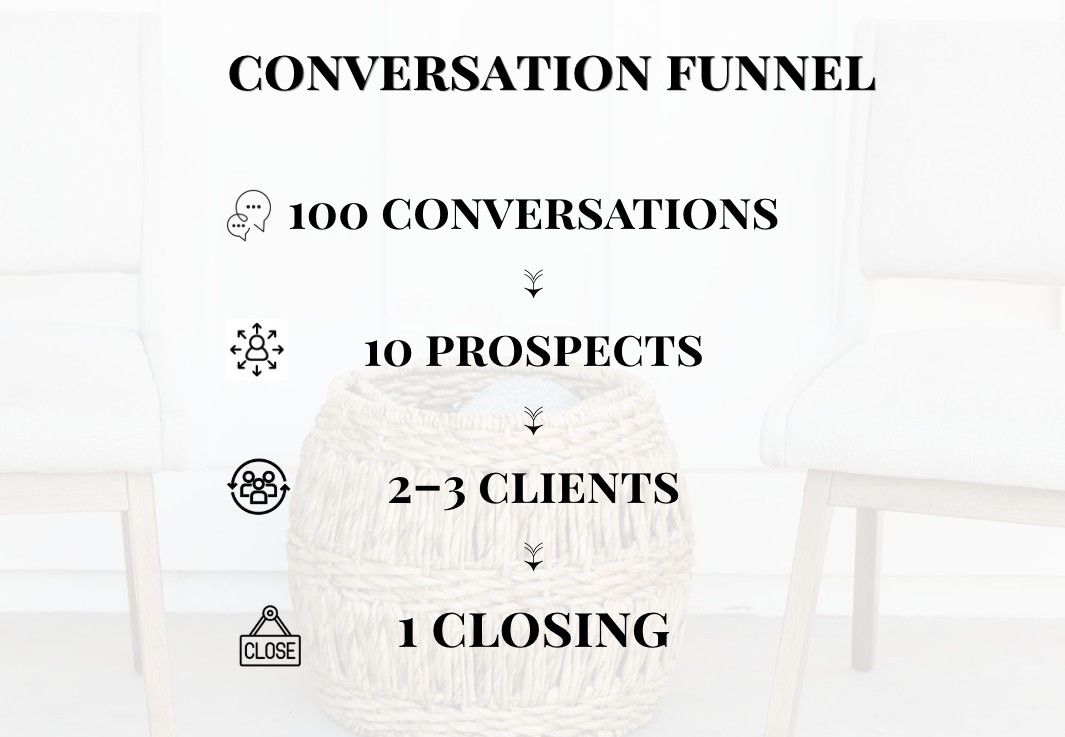
The path to more transactions usually isn’t complicated; it starts by increasing the number of meaningful conversations you’re having about buying or selling homes.
This is why many new agents track their daily conversations rather than focusing only on closed transactions.
Why Many Agents See More Closings in Year Two
Year one may feel slow not because you’re failing, but because you’re building the assets year two depends on.
One of the most encouraging realities about real estate is that success often compounds. The work you do in year one frequently produces the referrals, repeat clients, and momentum that drive year two growth.
Many of your first clients will:
- refer friends or family
- come back for another transaction
- stay in touch for future opportunities
At the same time, some prospects simply need more time before they’re ready to move. That’s why agents who stay consistent often see a noticeable jump in production in year two and beyond.
The seeds you planted early finally begin to grow.
So How Many Homes Can You Sell in Your First Year?
At this point, the answer becomes clearer.
The exact number depends on your structure, support, and consistency, but there are realistic ranges that most new agents fall into.
Most new agents working full time tend to land somewhere around:
- 2–12 transactions as a solo agent
- 16–20 transactions on a structured team
These ranges come from what we’ve observed while onboarding and coaching new agents on our team over the past several years. Of course, production can vary depending on your market, brokerage support, lead sources, and how consistently you prospect.
But for most agents, the bigger story of year one isn’t just the number of homes sold.
Year one is where you build the conversations, relationships, and habits that often produce the referrals and momentum that show up in year two and beyond.
If you're still exploring what a real estate career might look like, a helpful next step is understanding how different environments shape your first year.
In our guide “Solo vs Team: Which Real Estate Career Path Is Right for You?”, we break down the differences in income potential, hidden costs, and growth opportunities in more detail.
Your Next Step
If you're considering starting your real estate career and want a clearer picture of what your first year could realistically look like, the best step is to talk with someone who’s helped new agents navigate that path before.
In that conversation, we can walk through:
- realistic first-year production expectations
- how agents build momentum early
- and what path might fit your goals best
If you’d like to talk through your goals and what your first year might realistically look like, you can schedule a conversation with our team leader here.
Frequently Asked Questions About a Real Estate Agent’s First Year
How many homes does a real estate agent need to sell to make a living?
The number of homes a real estate agent needs to sell to make a living depends on home prices, commission splits, and personal income goals. In many markets, agents earn a portion of the commission from each transaction, which means income varies widely depending on property values and brokerage arrangements. For new agents, the first year often focuses on building relationships and generating leads, while consistent income tends to grow as referrals, repeat clients, and past contacts begin producing more transactions in later years.
How many homes does the average real estate agent sell per year?
Across the entire industry, the number varies widely depending on experience, market conditions, and how actively the agent generates business. New real estate agents often sell between 2 and 20 homes in their first year, while experienced agents typically close more transactions as their referral network and past client relationships grow. Many established agents build consistent pipelines that produce repeat clients and referrals year after year.
How long does it take for a new real estate agent to get their first client?
For many new agents, it can take several weeks or even a few months to secure their first client. Real estate transactions often have long timelines, and many buyers and sellers take time before they are ready to move forward. Agents who consistently prospect, host open houses, and follow up with potential clients tend to generate their first opportunities faster.
What percentage of new real estate agents succeed in their first year?
Success in real estate varies widely. Some new agents close multiple transactions in their first year, while others struggle to gain traction and leave the industry early. In many cases, the agents who succeed are the ones who stay consistent with daily prospecting, build relationships, and follow proven systems for lead generation and follow-up.
Is it hard to become a successful real estate agent?
Real estate can be rewarding, but the early stages of the career require persistence and discipline. New agents often need to learn how to generate leads, build trust with potential clients, and manage transactions from start to finish. Those who treat the career like a full-time business and stay consistent with conversations and follow-up tend to build momentum over time.
Robin Martin
Realtor® | Premier Home Team | Keller Williams Empower | PLACE
or another way