
Categories
Home Buying TipsPublished June 5, 2026
Philadelphia vs Suburbs: Down Payment Assistance Differences Explained

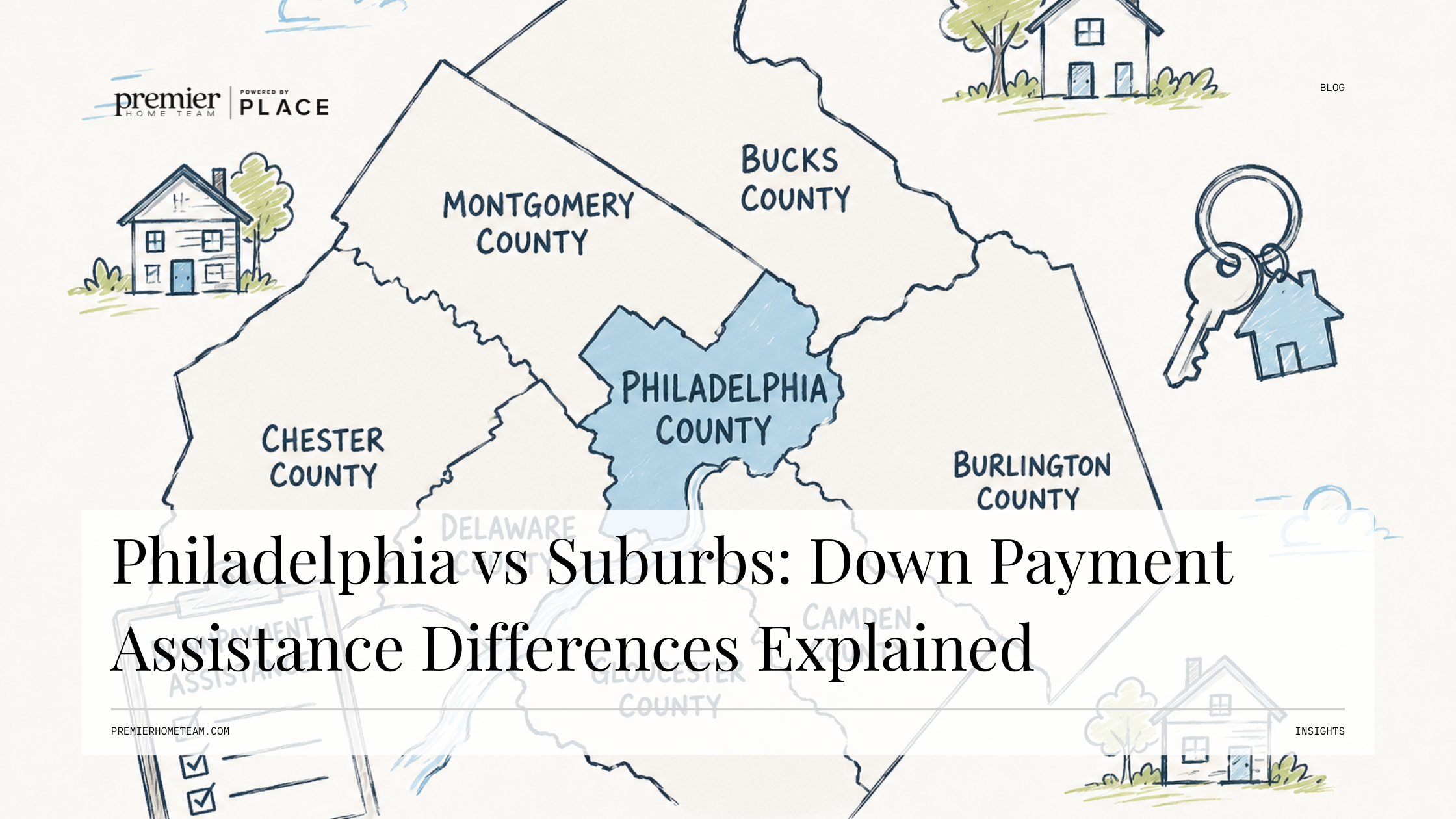
If you’re deciding where to buy in the Greater Philadelphia area, or weighing options between Philadelphia and the surrounding counties, down payment assistance might be influencing your decision more than you realize.
The difference between buying in Philadelphia versus the surrounding counties isn’t just location; it can also impact how much help you get, how flexible your loan is, and what options are available to you.
You’ll see options tied to Philadelphia, others tied to specific counties, such as Delaware, Montgomery, or Chester, and even statewide programs layered on top. And while they all sound similar, they don’t always work the same way.
Understanding those differences is critical because the program you qualify for (and how you use it) can significantly impact your costs, flexibility, and timeline.
In this article, we’re going to break down how down payment assistance programs differ between Philadelphia and the surrounding Counties so you can understand how those differences impact your options and which path may be the better fit for you.
Philadelphia vs. County Down Payment Assistance: A Quick Comparison
If you’re looking for a quick answer before diving deeper, here’s the high-level difference:
- Philadelphia → More flexible, easier to use, higher income limits
- County → More restrictive, varies by location, sometimes more complex
The best option depends on your income, where you’re buying, and how flexible you are in your location.
What Are Down Payment Assistance Programs?
Down payment assistance (DPA) programs are designed to lower the upfront cost of buying a home; how they’re structured and what you qualify for can vary significantly depending on where you’re buying.
If you need a full breakdown of how these programs work, read our complete guide to down payment assistance.
The Main Down Payment Assistance Programs in the Philadelphia Area
Before comparing how these programs differ, it helps to understand the main options available depending on where you’re buying.
In Philadelphia, most buyers start with one or a combination of:
- Philly First Home, a city-based program with long-term forgiveness.
- PHFA (Pennsylvania Housing Finance Agency) programs, which can often be layered on top for additional support.
Outside the city, buyers in places like Delaware, Montgomery, and Chester County will typically look at county-level assistance programs, which are tied to specific municipalities and funding sources.
While all of these programs aim to reduce upfront costs, they don’t operate the same way, and those differences can significantly impact your experience as a buyer.
Which Down Payment Assistance Option Is Better for You?
At this point, you might be wondering:
“Okay, I understand the differences, but which option is actually better for me?”
The answer depends on your financial situation, where you’re buying, and how much flexibility you need. The key difference comes down to flexibility versus specificity, and which matters more for your situation.
Here’s a simple way to think about it:
In most cases, buyers in Philadelphia have more flexibility, while county programs can be more restrictive but occasionally offer targeted advantages.
Philadelphia programs tend to be a better fit if:
- You want a simpler, more predictable process (for example, fewer delays due to funding availability or property condition requirements.)
- You prefer programs that are widely available and easier to navigate.
- You want to avoid complications tied to property condition requirements.
County programs may be a better fit if:
- You’re targeting a specific area with strong local incentives.
- You’re comfortable navigating limited availability or funding cycles.
- You’re prepared for additional property requirements or repairs that may come up during the process.
The challenge with county programs is that they can vary significantly depending on location, which makes the details much more important.
That’s why understanding these differences directly impacts:
- How much assistance do you receive
- Whether you have to repay it
- How flexible your loan structure is over time
We’ve worked with many buyers navigating both city and county programs, and these differences come up in almost every situation. In the next sections, we’ll break down the specific differences so you can evaluate which path makes the most sense for you.
Philadelphia vs. County DPA Programs: Side-by-Side Comparison
While most programs fall into similar categories, how those programs are structured, especially forgiveness timelines and repayment conditions, can vary depending on location.
| Factor | Philadelphia Programs | County Programs |
| Income Limits | Generally higher, more flexible | Often lower and more restrictive |
| Program Availability | More consistent and widely available | Can vary by municipality and funding cycles |
| Forgiveness Terms | Often longer (e.g., ~15 years) | Varies widely, sometimes stricter |
| Ability to Combine Programs | Frequently allows stacking (e.g., Philly First + PHFA) | Often limited or restricted |
| Ease of Use | More predictable and easier to navigate | May require more coordination and timing |
| Property Requirements | Typically standard inspection requirements | May include stricter property conditions or repairs |
| Best For | Buyers who want flexibility and broader access | Buyers targeting specific local incentives and who meet stricter criteria |
Still unsure how these programs actually work? Start with our complete guide to down payment assistance for a full breakdown before comparing your options.
Now let’s take a closer look at how these differences play out in real scenarios.
Philadelphia vs. County Down Payment Assistance: What Actually Changes?
At a glance, these programs may seem similar. But once you look closer, the differences fall into a few key areas that directly affect your eligibility, flexibility, and long-term costs.
How forgiveness timelines affect what you actually pay back
One of the biggest differences is how (and when) the assistance is forgiven, or if it’s forgiven at all.
The timeline and whether the funds are truly forgivable can look very different depending on where you buy.
In Philadelphia, programs like Philly First typically offer forgivable loans over a longer timeline, often around 15 years. State programs like PHFA may offer forgiveness over a shorter period, such as 10 years, depending on the option.
County programs, on the other hand, can vary widely. Some follow similar forgiveness structures, while others may require repayment if you move or refinance, regardless of how long you’ve owned the home.
Where you might qualify, and where you might not
Eligibility requirements also shift depending on location.
Where you buy can directly impact whether you qualify at all.
Philadelphia programs are generally based on area median income (AMI), allowing for a broader range of buyers to qualify, especially as household size increases.
County programs often have lower income thresholds, which can make qualification more restrictive. A household that qualifies in Philadelphia may exceed the limits in nearby counties like Montgomery or Delaware.
How much total assistance can you realistically access
Philadelphia programs often allow more flexibility when it comes to combining assistance, while county programs may limit or restrict how programs can be layered.
Why These Differences Matter
Individually, these differences might seem small. But together, they can significantly shape your homebuying experience. That’s why understanding not just what programs exist, but how they differ, is essential before moving forward.
They can affect:
- How much cash you need upfront
- Whether you qualify at all
- How long you need to stay in the home
- How smoothly your transaction moves
How to Decide Between Philadelphia and County Down Payment Assistance Programs
Before comparing these options, there’s one important question to consider: How flexible are you on where you want to live?
If you’re set on a specific area, whether that’s Philadelphia or a particular county, your options will naturally be limited to the programs available there. In that case, the decision isn’t about choosing between programs — it’s about making the most of what’s available in that location.
But if you have flexibility in where you buy, understanding how these programs differ can open up opportunities you may not have considered.
The answer comes down to a few key factors that will shape your experience as a buyer:
1. How much flexibility you need in your home search
Philadelphia programs are often the better fit for buyers who prioritize flexibility and ease of use. County programs can be more limiting depending on location and property requirements.
2. Your income and eligibility range
If your income is closer to the upper limits, Philadelphia programs may give you more room to qualify. County programs often have stricter thresholds that can disqualify buyers more quickly.
3. How long you plan to stay in the home
If you’re planning to stay long-term, forgiveness timelines may matter less. But if you expect to move or refinance sooner, the structure of the program — especially repayment terms — becomes much more important.
4. How comfortable you are navigating complexity
Philadelphia programs tend to be more standardized and predictable. County programs can vary significantly by municipality, which can introduce more variables into the process.
In most cases, the “better” option isn’t about which program offers more money, it’s about which one aligns better with your goals, timeline, and level of flexibility.
Final Thoughts: Why This Choice Matters More Than You Think
Choosing between Philadelphia and county down payment assistance programs isn’t just about eligibility; it can have a long-term impact on your financial flexibility.
Two buyers with similar incomes could end up with very different outcomes depending on:
- Where they purchase
- Which programs they qualify for
- How those programs are structured
In some cases, one option may offer significantly more upfront assistance. In others, the difference comes down to repayment terms or restrictions that affect you years down the road.
That’s why the most important step isn’t just understanding the programs, it’s applying them to your specific situation.
Comparing your options side by side is a great starting point, but the next step is to look at what you actually qualify for based on your income, credit, and where you’re buying.
See what down payment assistance programs you may qualify for and how they work to better understand how they apply to your situation.
If you want help walking through those options and figuring out which path makes the most sense for you, talking with a team that understands both city and county programs can help you make a more confident decision.
FREQUENTLY ASKED QUESTIONS
Are down payment assistance programs better in Philadelphia or the suburbs?
It depends. Philadelphia programs are often more flexible, while county programs may have stricter requirements but sometimes offer targeted incentives.
Does where you buy affect down payment assistance?
Yes. Location can impact eligibility, income limits, and the types of programs available.
Can you qualify in one area but not another?
Yes. A buyer may qualify in Philadelphia but exceed income limits in nearby counties.
Are county programs more restrictive than city programs?
In many cases, yes. County programs often vary by municipality and may include stricter requirements.
Should you choose where to live based on down payment assistance?
Not necessarily. But if you have flexibility, understanding these differences can expand your options.

Robin Martin
Realtor® | Premier Home Team | Keller Williams Empower | PLACE
or another way