
Categories
Post Closing, Home Buying TipsPublished April 10, 2026
Real Estate Closing Day for Buyers: What Actually Happens


What Happens on Closing Day When Buying a House?
Buying a home involves dozens of steps, but few moments feel as significant or as mysterious as closing day.
Closing day is the final step in the home-buying process when buyers sign the final documents, transfer funds, and officially become the legal owners of the property.
If you’re like most buyers, you may find yourself wondering: What actually happens when you “close” on a house? Will you spend hours signing documents? Do the buyers and sellers meet face-to-face? And when someone says, “You’ll close in a few weeks,” what does that day actually look like?
For first-time buyers especially, closing day can feel intimidating simply because the process isn’t always explained clearly ahead of time. You're signing legal documents, transferring large amounts of money, and finalizing one of the biggest purchases of your life — and most people have never done it before.
The good news is that closing day is usually far simpler and more organized than most buyers expect. After guiding over 700 buyers through this final stage of a home purchase, we’ve found that once people understand what will happen during the appointment, most of the anxiety disappears.
In this guide, you’ll learn:
- What real estate closing day actually is
- Where the closing appointment usually takes place
- Who attends the closing meeting
- What documents you’ll sign
- What you need to take with you
- What surprises can occasionally happen
By the time you walk into your closing appointment, you’ll know exactly what to expect, and you’ll be ready for one of the most exciting moments in the home-buying journey: receiving the keys to your new home.
What Happens on Closing Day During a Home Purchase?
Closing day is the final step of the home-buying process when the last paperwork is signed, funds are transferred, and the buyer officially becomes the owner of the property.
Many buyers imagine closing as the most important moment in the transaction. In reality, most of the critical work happens before that day.
By the time you sit down at the closing table:
- Your loan has already been approved
- The property has been inspected
- The title work has been completed
- Your financing has been finalized
Because of that, closing itself is largely about finalizing documentation and confirming the transfer of ownership.
During the closing appointment:
- Final mortgage documents are signed
- The deed transferring ownership is executed
- Closing funds are delivered
- The transaction is officially recorded
Once that process is complete, the home is yours.
Final Walkthrough vs Closing Day: What’s the Difference?
Buyers sometimes confuse the final walkthrough with the closing appointment. Although they often happen on the same day, they serve very different purposes.
| Final Walkthrough | Closing Appointment |
| Check property condition | Sign legal documents |
| Confirm repairs were completed | Transfer funds |
| Confirm home is empty | Record the transaction |
| Happens right before closing | Happens at the title or realtor’s office |
Step-by-Step: What Happens on Closing Day
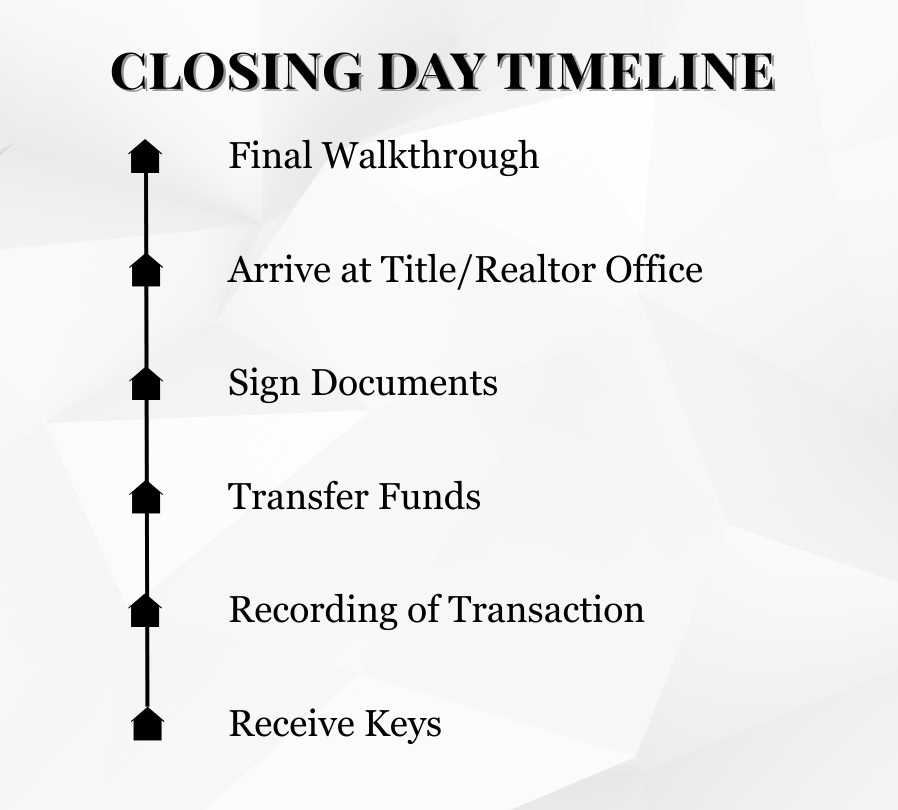
Although every real estate transaction is slightly different, most closing appointments follow a predictable sequence.
Here’s what buyers can typically expect on closing day:
1. Final Walkthrough of the Home
Before heading to the closing appointment, buyers usually complete a final walkthrough of the property. This confirms the home is in the agreed-upon condition and that any negotiated repairs have been completed.
2. Arrival at the Closing Location
Closings usually take place at a title company or real estate office. In some cases, buyers may sign documents remotely.
3. Review and Sign the Closing Documents
The closing agent walks buyers through the paperwork, explaining each document before it is signed.
4. Transfer of Closing Funds
The remaining funds for the purchase are delivered to the title company, typically through a certified wire or cashier’s check.
5. Recording the Transaction
Once all documents are signed and funds are confirmed, the transaction is recorded with the local government office.
6. Keys Are Handed Over
After the recording is complete, the buyer officially becomes the homeowner and receives the keys to the property.
Why Closing Is More Than Just Signing Paperwork?
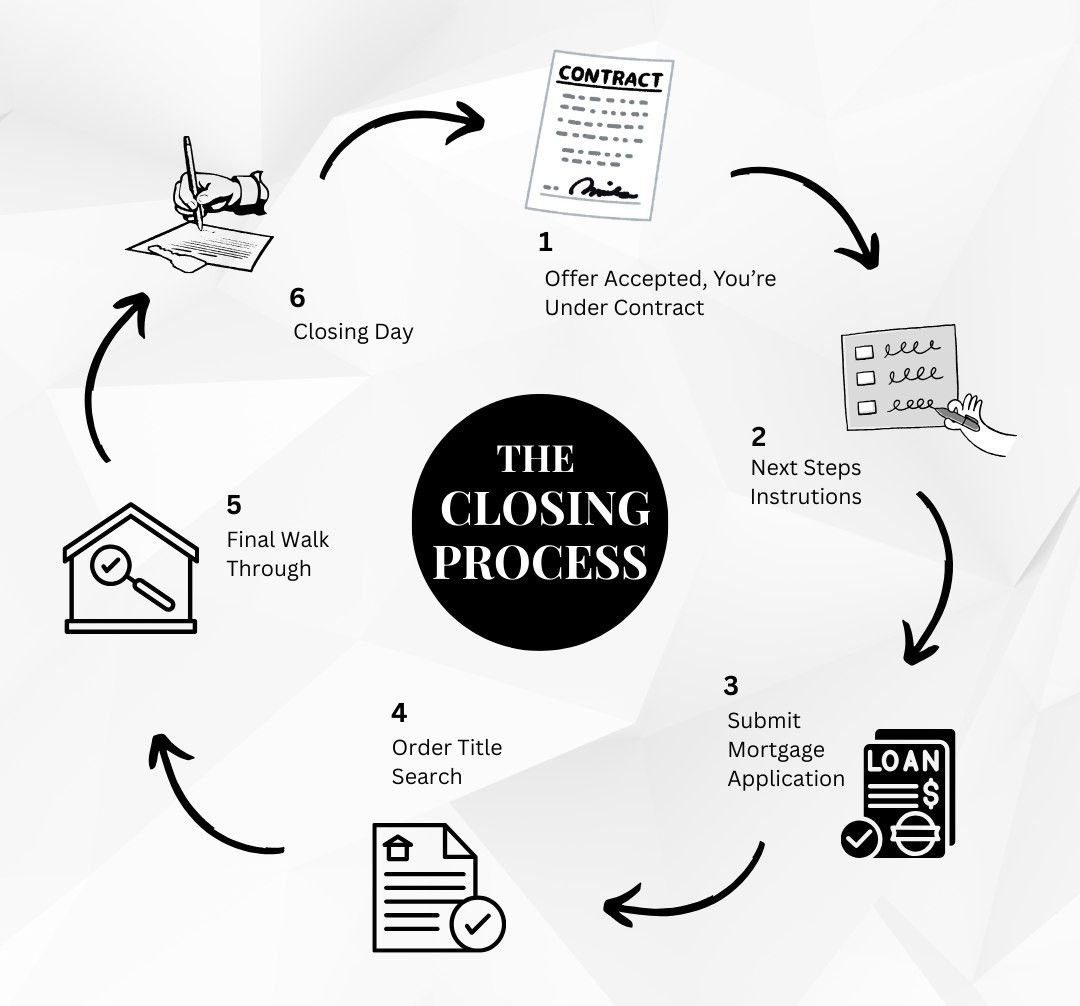
Although the term “closing day” sounds like a single event, closing is actually the culmination of weeks of preparation and coordination.
There are many moving parts behind the scenes, including:
- Lenders and underwriting teams reviewing documents
- Title companies verifying ownership records
- Insurance policies being finalized
- Financial transfers being arranged
Because so many steps must be completed correctly and on time, many real estate teams rely on a dedicated transaction coordinator to manage the process.
This person helps track deadlines, coordinate documents, and communicate with all the parties involved so that the team can fulfill a supporting role, and the buyer doesn’t have to juggle every detail alone.
In many cases, buyers only see the final result: a smooth closing appointment that feels almost ceremonial. But behind the scenes, a great deal of work has already happened to get there.
Who Actually Attends a Real Estate Closing?
One of the biggest surprises for buyers is who is, and isn’t, present at closing.
Many people imagine an emotional meeting between the buyers and sellers. In reality, modern closings tend to be much simpler.
Typically present at closing:
- The buyer (or buyers)
- The buyer’s real estate agent
- The title agent or closing agent
The title agent leads the meeting, explains each document, and ensures everything is properly signed and recorded.
Interestingly, sellers often do not attend the closing anymore. Since the COVID era, it has become common for sellers to sign their paperwork in advance through what’s called a deed package.
Similarly, lenders rarely attend in person because their work is usually complete before the closing appointment.
In some cases, buyers may even sign documents remotely, depending on the transaction.
What Happens Before Closing Day?
The final week before closing can feel hectic because several last-minute details must be finalized.
Buyers commonly need to complete tasks such as:
- Complete Home Inspections
- Submitting final documents requested by the lender
- Finalizing homeowners insurance
- Confirming utilities are transferred into their name
- Preparing the remaining funds for closing
One of the most stressful elements during this stage can be last-minute lender requests.
For example, lenders may ask for:
- Employment verification
- Additional financial documentation
- Gift documentation if funds are being contributed
Even when buyers submit paperwork quickly, those documents must still go through underwriting review, which can take several days. That’s why responding promptly to lender requests is so important.
The good news is that once these items are finalized, the closing appointment itself usually runs very smoothly.
How to Prepare for Closing Day
As closing day approaches, a little preparation can help ensure the appointment goes smoothly.
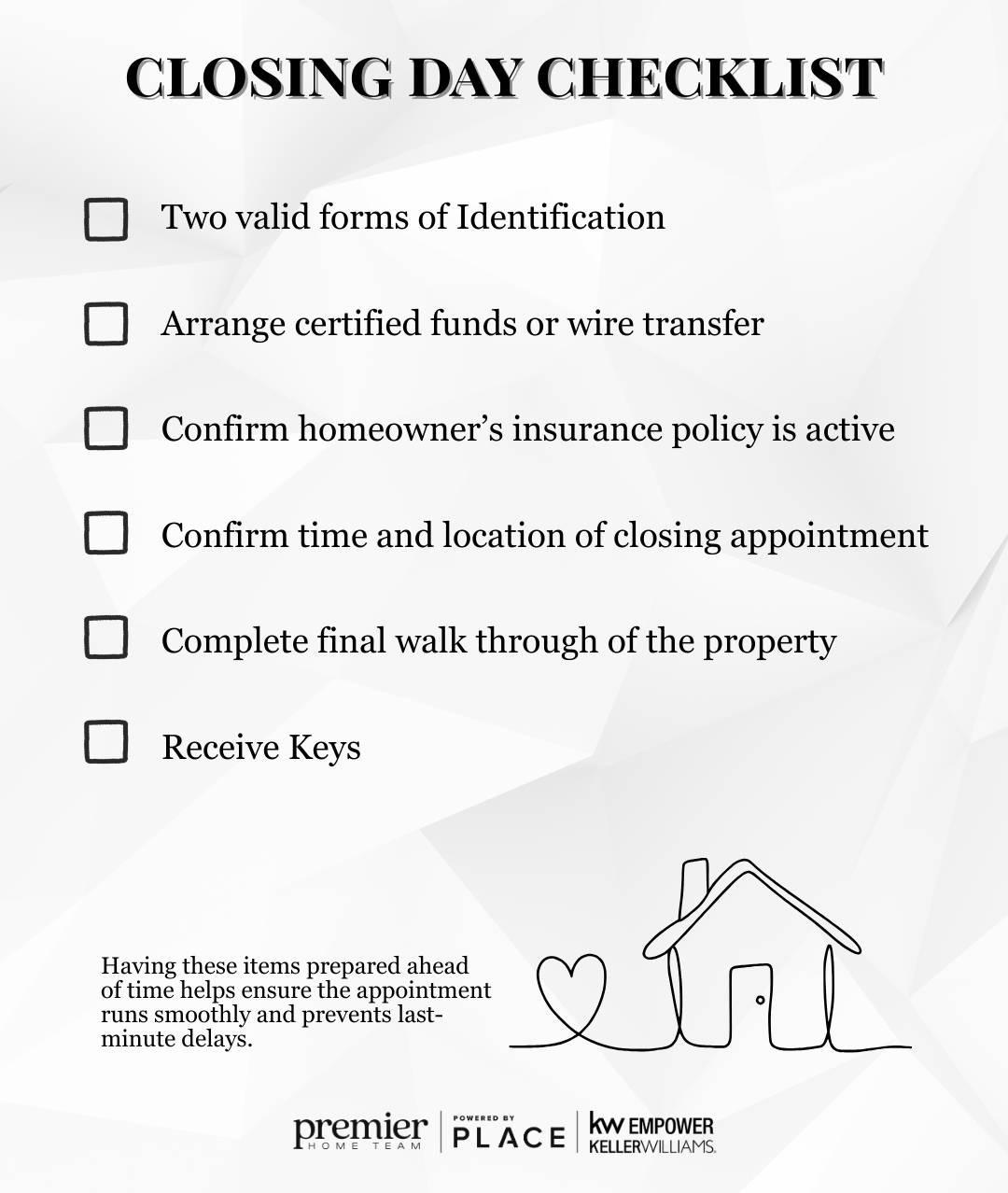
In the days leading up to closing, buyers should:
- Review the closing disclosure carefully to confirm the final numbers
- Confirm the time and location of the closing appointment
- Arrange the wire transfer or certified funds needed for closing
- Schedule the final walkthrough of the home
- Prepare the required identification and documents
If you'd like a simple way to keep track of these steps, we’ve created a Printable Closing Day Checklist you can download and bring with you to your appointment.
Taking a few minutes to prepare these details ahead of time helps prevent last-minute stress and allows the closing appointment to move quickly and smoothly.
What Do Buyers Need to Take to Closing?
Many buyers show up at closing expecting to bring a folder full of paperwork.
In reality, most of the documents are already prepared and waiting for you.
Typically, buyers only need to bring:
- A certified check or wire for remaining closing funds
- Two forms of identification
- A checkbook (for small last-minute adjustments)
The funds must come from traceable sources. This requirement sometimes confuses buyers, but it exists to prevent fraud and ensure financial transparency during real estate transactions.
What Actually Happens During the Closing Appointment?
A typical closing appointment follows a simple and structured flow.
Before arriving, buyers usually complete a final walkthrough of the property. This ensures the home is in the agreed-upon condition and that any negotiated repairs were completed.
Once at the closing location (often a title office or realtor’s office), the process usually unfolds like this:
First, the title agent explains each document as it’s presented. Buyers review and sign the paperwork one form at a time. This continues through the entire stack of documents.
Most appointments take about 45 minutes to an hour.
Some of the most important documents signed include:
- The mortgage note, which confirms the buyer’s agreement to repay the loan
- The deed, which officially transfers ownership
- Ownership structure documents for couples or joint owners
After all documents are signed, the remaining funds are delivered to the title company. Once the funds are certified, the deal is officially complete.
At that point, buyers typically receive:
- The keys to the home
- Copies of the documents they signed
And just like that, they’re homeowners.

Common Closing Day Surprises
Even when everything goes according to plan, there can still be occasional surprises on closing day.
Most of them are discovered during the final walkthrough, not at the signing table.
Examples include:
- Repairs that were promised but not completed
- Items left behind in the house
- Unexpected damage or leaks
- Sellers who haven’t fully moved out
These situations are relatively rare, but when they happen, the buyer’s agent can negotiate solutions, such as financial credits or cleanup arrangements, before the transaction proceeds.
In extreme cases, buyers can delay signing until the issue is resolved.
What Do You Need To Feel Confident Walking Into Closing?
For first-time buyers, the biggest source of stress isn’t the paperwork, it’s the unknown.
When buyers understand what’s coming, the anxiety usually fades quickly.
Once the closing begins, most people relax because the process is structured, the title agent explains everything clearly, and the documents often reflect information buyers have already seen earlier in the transaction.
If there’s one important piece of advice for buyers at the closing table, it’s this:
Take your time signing the documents, and if you don’t understand something you’re signing, stop and ask questions.
For you, closing might be a once-in-a-lifetime experience. For real estate professionals, closings happen every day. The process should move at your pace, not anyone else’s.
Your Next Step Before Closing Day
For many buyers, closing day feels intimidating simply because it’s unfamiliar. Signing legal documents, transferring large sums of money, and finalizing a home purchase can seem overwhelming if you don’t know what to expect.
But as you’ve seen, most of the real work behind closing happens well before the appointment itself. By the time you sit down at the closing table, the inspection, underwriting, title work, and financing have already been completed.
When you understand what happens during the closing appointment, what documents you’ll sign, and what you need to bring with you, the process becomes much less stressful.
To make things even easier, we’ve created a printable Closing Day Checklist you can download and use to make sure nothing gets overlooked before your appointment.
Download the checklist below so you can walk into closing day confident, organized, and ready to receive the keys to your new home.
And if you're preparing to buy a home and want guidance through every step of the process, from making an offer to closing day, talking with an experienced real estate professional can help ensure everything goes smoothly and that no surprises appear along the way.
Frequently Asked Questions About Real Estate Closing Day
Even after learning what to expect, buyers often still have a few practical questions about closing day. Here are answers to some of the most common ones.
How long does closing day take when buying a house?
Most closing appointments take between 45 minutes and one hour. During this time, buyers review and sign mortgage documents, confirm financial transfers, and finalize the property ownership transfer.
Do buyers and sellers attend closing together?
In many modern real estate transactions, buyers and sellers do not attend closing at the same time. Sellers often sign their paperwork earlier through a deed package, while buyers attend the final closing appointment with their real estate professional and the title agent.
When do buyers get the keys to the house?
In most cases, buyers receive the keys immediately after the closing documents are signed and the funds are confirmed by the title company. At that point, ownership of the home has officially transferred.
What happens if something is wrong during the final walkthrough?
If buyers discover issues during the final walkthrough, such as incomplete repairs or damage, the closing may be paused while the buyer’s agent negotiates a solution, such as repair agreements or financial credits.
Can a real estate closing be delayed?
Yes. Although uncommon, closings can sometimes be delayed due to issues such as last-minute lender documentation requests, title problems, or delays in transferring funds.

Robin Martin
Realtor® | Premier Home Team | Keller Williams Empower | PLACE
or another way