
Categories
Home Buying TipsPublished May 18, 2026
Do You Have to Sign a Contract With a Realtor to Buy a Home?

.jpeg)
If you’ve started looking at homes, you’ve probably hit an uncomfortable moment pretty quickly:
An agent asks you to sign a contract before you’ve even toured a house.
And your instinct is to pause:
“Why would I commit to working with someone I just met?”
It’s a fair question, and one we hear all the time from buyers who don’t want to feel locked into the wrong situation.
At the same time, agents will tell you it’s “standard” or even required.
So what’s actually true?
As a team that works with home buyers every day, we’ve seen both sides: buyers who felt pressured into agreements too early and others who avoided signing and ran into problems later in the process.
In this article, we’ll break down exactly:
- Whether you actually have to sign a contract
- When it’s required (and when it’s not)
- The risks, benefits, and what to look for before agreeing to anything
So you can move forward without feeling trapped.
Quick Answer:
Do you have to sign a contract with a realtor to buy a home?
Short answer: No; not immediately.
But in most cases, yes; you will need to sign a buyer agreement before an agent can show homes or represent you in a purchase.
What Is a Realtor Contract (Buyer Agreement)?
The contract most buyers are asked to sign is called a buyer broker agreement, also known as a buyer representation agreement, explained by the National Association of Realtors.
At its core, it’s a document that outlines:
| What’s Included | What It Means for You |
| Compensation | How your agent gets paid and what you might owe |
| Timeline | How long you're committed to working together |
| Agent Responsibilities | What your agent is required to do for you |
| Your Rights | Protections like confidentiality and representation |
In simple terms, it turns a casual conversation into a clearly defined working relationship.
Before signing, everything is informal. After signing, both sides know exactly what to expect.
Why Do Realtors Ask You to Sign One?
There are two main reasons, and neither is about pressure.
1. It creates full transparency
A good agreement puts everything on the table:
- Commission structure
- Timeline
- Expectations
- Duties like confidentiality and representation
This eliminates the “he said, she said” moments later.
Instead of guessing how things work, you have it in writing from the start.
2. It’s often required to move forward
In today’s market, agents need an agreement in place before they can:
- Show you homes
- Represent you in an offer.
- Act on your behalf
So while it may feel optional early on, at some point in the process, it becomes necessary.
Do You Actually Have to Sign a Contract to See Homes?
Here’s a simple way to think about when an agreement is typically required:
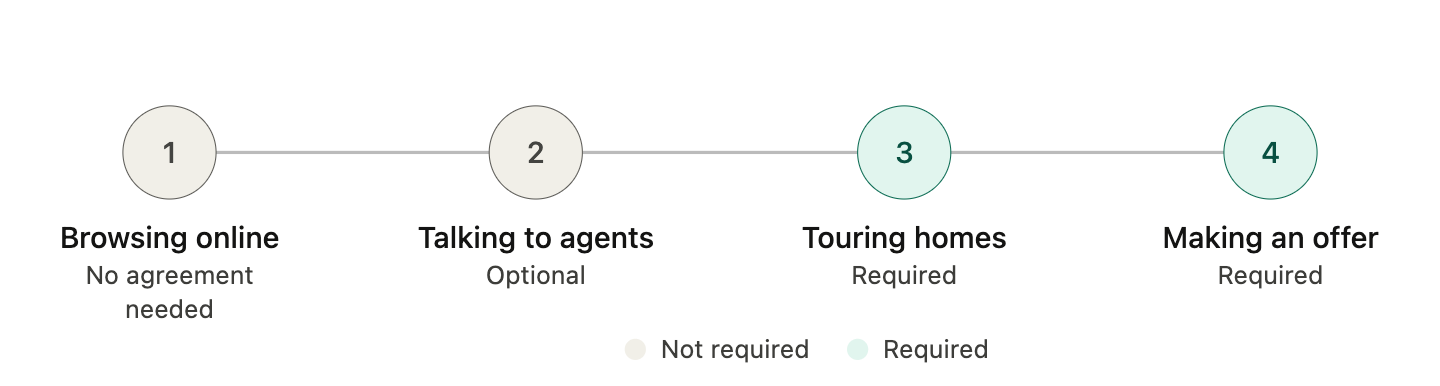
Short answer: yes, eventually.
But there’s nuance here.
You don’t always have to jump into a long-term commitment right away.
Many agents offer options like:
- Short-term agreements (7–14 days)
- Touring agreements (just for showing homes)
This allows you to “try out” working together before committing long-term.
If you’re feeling hesitant, this is one of the smartest ways to move forward without pressure.
What Happens If You Don’t Sign?
Technically, you can delay signing, but it can create friction.
Here’s what that might look like:
- You find a home you love → but can’t see it immediately.
- You want to make an offer → but need to sign quickly under pressure.
- You don’t fully understand costs → until late in the process.
The risk is that everything becomes rushed when it matters most. And that’s when mistakes tend to happen.
How These Agreements Actually Protect You (Not Just the Agent)
.jpg)
It’s easy to assume contracts only benefit the agent, but that’s not the full picture.
A signed agreement means your agent is:
- Legally obligated to represent your best interests
- Required to disclose information and communicate offers
- Bound to duties like confidentiality and loyalty
In other words, it formalizes their responsibility to you.
Without that structure, expectations can get blurry.
We always recommend reviewing third-party resources alongside this guide so you can make the most informed decision possible, whether you choose to work with us or not.
What Should You Look for Before Signing?
Most agreements look complex, but in reality, there are two things that matter most:
1. Timeline
How long are you committed?
This could be:
- A few weeks
- A few months
- Or longer
If you’re unsure, start shorter.
2. Compensation
What are you potentially responsible for paying?
Even if the seller often covers commissions, there are situations where you may be responsible for paying your agent directly, so it’s important to understand exactly how real estate agents get paid when you buy a home.
Everything else in the agreement is typically a written summary of standard agent duties.
Potential Downsides of Signing a Buyer Agreement
Here’s a quick breakdown of the benefits and potential downsides:
| Benefits | Potential Downsides |
| Clear expectations | May feel locked into one agent |
| Full representation | Possible compensation obligations |
| Better service commitment | Limited flexibility to switch agents |
| Faster transaction ability | May require formal exit process |
While these agreements can be helpful, there are a few potential downsides buyers should be aware of:
- You may feel locked into working with someone who isn’t the right fit.
- Buyer broker agreements include compensation clauses, meaning you could still owe your agent money depending on how the transaction is structured.
- Ending the relationship early may require approval from the agent or broker.
- You may lose flexibility if you want to explore other agents.
This doesn’t mean you shouldn’t sign, it just means you should understand what you’re agreeing to before you do.
“Am I Locked In?” (The Biggest Fear Buyers Have)
This is one of the most common concerns, and a valid one.
The reality is:
It depends on the agent.
Some agents:
- Are flexible
- Will release you if it’s not a good fit
Others:
- May hold you to the contract
That’s why one of the smartest questions you can ask upfront is:
“What happens if I decide this isn’t the right fit?”
A trustworthy agent will answer that clearly, and won’t avoid the conversation.
Why Committed Buyers Often Get a Better Experience
Here’s something most buyers don’t realize:
When you sign an agreement, it often improves the level of service you receive.
Why?
Because now:
- The agent knows you’re serious.
- There’s mutual commitment.
- They’re more invested in getting you results.
Without that commitment, there can be uncertainty, and that can affect how much time and energy an agent can realistically dedicate.
Common Reasons Buyers Hesitate (And What to Do Instead)
Most hesitation comes down to three things:
- “I’m not ready yet.”
- “I want to talk to multiple agents.”
- “I don’t want to be stuck.”
All valid.
Here’s the smarter approach:
Take your time choosing the agent, not avoiding the agreement. The smarter approach is to focus on how to choose the right real estate agent before worrying about the agreement itself.
Talk to multiple agents.
Ask questions.
Compare how they communicate.
Then, when someone feels right, move forward with that agent.
What If You Sign… and Regret It Later?
If things don’t work out, you still have options:
- Ask to be released from the agreement.
- Review any exit terms written into the contract.
- Contact the agent’s broker if there’s a serious issue.
Worst case, you may need to wait out the agreement timeline, but this is rare when expectations are clear upfront.
How to Feel Confident Before You Sign Anything
At the end of the day, this decision isn’t really about the contract; it’s about the person you’re choosing to work with.
Ask yourself:
- Do I trust this agent?
- Do we communicate well?
- Do I feel like they’re actually looking out for me?
If the answer is yes, the agreement becomes a formality.
If the answer is no, don’t sign yet.
Your Next Step
At the end of the day, signing a contract with a realtor isn’t about obligation. The right agreement should make you feel more confident, not more restricted.
If you’re still unsure, don’t rush it.
Take the time to:
- Talk to a few agents.
- Ask how their agreements work.
- Understand what happens if it’s not a good fit.
Because when you find the right person, the contract will feel like a step forward.
And if you’d like, we’re always happy to walk you through exactly how our agreements work, no pressure, just clarity.
Frequently Asked Questions About Realtor Contracts
Can I buy a house without signing a contract with a realtor?
Yes, you can start the process without signing a contract, but in most cases, you’ll need to sign a buyer agreement before an agent can show homes or represent you in a purchase. Without it, your agent may not be able to act on your behalf or move quickly when you find a home you like.
Can I work with multiple real estate agents at the same time?
You can talk to multiple agents early on, but once you sign a buyer agreement, you’re typically committing to work exclusively with that agent for a set period of time. That’s why it’s important to choose carefully before signing.
What happens if I sign a buyer agreement and want to switch agents?
It depends on the terms of your agreement. Some agents will release you if it’s not a good fit, while others may require you to wait until the contract expires. It’s always a good idea to ask about exit options before signing.
Do I have to pay my real estate agent as a buyer?
In many cases, the seller covers the buyer’s agent commission, but not always. Depending on the agreement and market conditions, you could be responsible for some or all of the compensation. This is why it’s important to understand the terms upfront.
How long does a buyer agreement usually last?
Buyer agreements can vary widely, from a few days to several months. If you’re unsure, you can often request a shorter-term agreement at first to make sure the relationship is a good fit before committing longer.

Robin Martin
Realtor® | Premier Home Team | Keller Williams Empower | PLACE
or another way