
Categories
Home OwnersPublished May 4, 2026
What Is a U&O and What Does It Mean for Your Home Sale?


You’ve accepted an offer. Everything feels on track.
Then your township inspection comes back, and suddenly you’re facing unexpected repairs, delays, and a closing that may not happen on time.
This is exactly what happens to many sellers who didn’t plan for a usage and occupancy certification (U&O).
If you’re selling a home in Greater Philadelphia, understanding the U&O process early can be the difference between a smooth closing and a stressful, delayed one.
In this guide, we’ll break down exactly what a U&O is, what inspectors look for, the potential costs involved, and how to avoid the most common issues.
What Is a Usage & Occupancy Certification?
A usage and occupancy (U&O) certification is a requirement from most townships in the Greater Philadelphia area that verifies a property is safe and up to current code before it changes ownership.
At its core, the purpose is simple: to ensure the home meets the local municipality code and is safe for the next buyer.
That means local municipalities may inspect elements such as:
- Electrical systems
- Plumbing
- Heating systems
- Interior and exterior safety conditions
It's an important detail to be aware that codes evolve over time. Even if your home met all requirements when you purchased it, your township may now require updates before you can sell.
Why Is a U&O Required Before Closing?
In most municipalities outside of Philadelphia itself, you cannot close on a home sale without passing the U&O process.
Townships require this certification because they want to confirm:
- The home is structurally and mechanically safe.
- There are no hazards for future occupants.
- Public infrastructure (like sidewalks or sewer lines) meets standards.
For sellers, this means one thing: you’re responsible for addressing any issues before the transaction can be completed.
So what happens if your home doesn’t pass?
What Happens If You Fail a U&O Inspection?
Failing a U&O inspection is actually very common; so if it happens, you’re not alone.
The good news is that failing doesn’t mean your sale is falling apart. It simply means the township has identified items that need to be corrected before the property can be officially transferred.
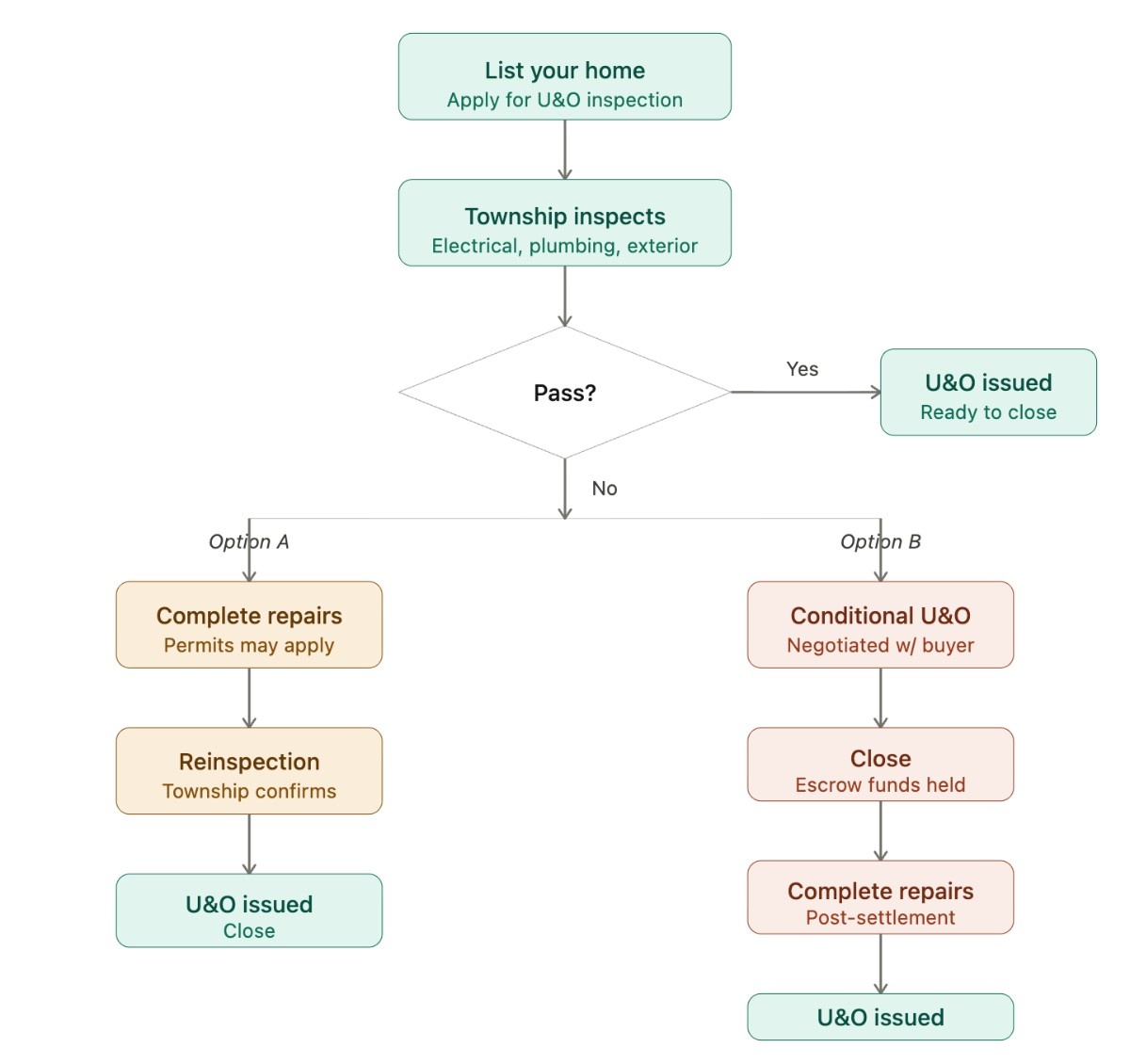
After the inspection, you’ll receive a report outlining exactly what needs to be fixed. From there, you’ll need to complete those repairs and schedule a reinspection to receive approval.
That said, this is where timing and preparation become critical.
In most municipalities, the required repairs must be completed before closing, which can create a few challenges:
- Delays in your closing timeline, especially if repairs involve permits, contractors, or weather (like concrete work)
- Additional costs, particularly if issues like sidewalks or sewer lines are flagged
- Reinspection requirements - meaning you’ll need to pass a follow-up inspection before moving forward
- Buyer frustration or renegotiation, if timelines shift or unexpected issues arise
In more complex cases, repairs can take weeks to complete, which may push back your settlement date or require renegotiation with the buyer.
This is why many sellers choose to address potential U&O issues before listing their home, so they can stay in control of the timeline, avoid surprises, and keep their transaction moving smoothly.
In our experience, it’s not the inspection that causes problems—it’s the last-minute repairs that catch sellers off guard.
How Much Does a U&O Cost in Pennsylvania?
One of the first questions sellers ask at this point is: “How much is this going to cost?” The cost of a U&O inspection itself is usually relatively low, but the real cost comes from any repairs required to pass.
Here’s a general breakdown of what sellers can expect:
- U&O Inspection Fee: $50–$200+ (varies by township)
- Minor Repairs (detectors, handrails, paint): $100–$500
- Sidewalk or Concrete Replacement: $500–$5,000+
- Sewer Lateral Repairs or Replacement: $3,000–$10,000+
While many homes only require minor fixes, occasionally, sellers encounter more significant issues, especially with sidewalks or sewer lines.
The key thing to understand is this: the inspection itself is rarely the expensive part; it’s the unexpected repairs that can impact your timeline and budget. In our experience, the biggest cost surprises typically come from exterior concrete and sewer-related issues, both of which can take longer to resolve and may require permits.
Because requirements vary by municipality, and can change over time, it’s important to confirm exactly what your township requires.
If you’re not sure where to start, we can help you look it up and walk you through what to expect for your specific property.
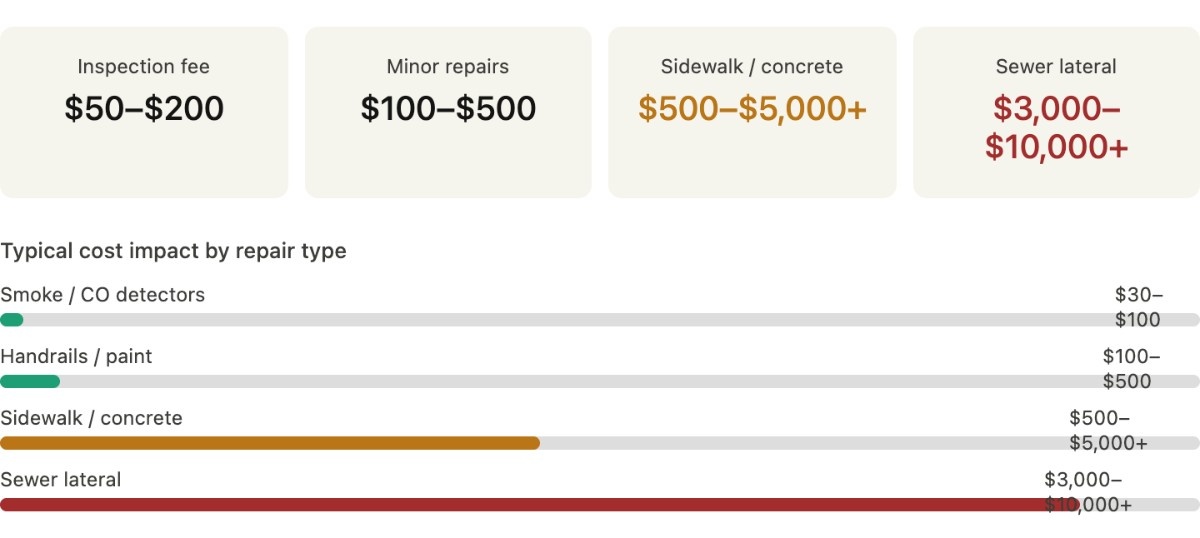
Disclaimer: Cost ranges provided are estimates based on industry averages and are not guaranteed. Actual costs may differ significantly. Consult a licensed contractor for an accurate assessment.
What Are the Most Common Causes of Delays?
The two biggest culprits are:
1. Concrete Repairs
Replacing sidewalks or walkways takes time, permits, and weather cooperation.
2. Sewer Lateral Issues
These can require excavation and coordination with licensed professionals.
Weather also plays a role, especially in the Philadelphia region. Cold winters and wet seasons can slow down outdoor work, pushing timelines further.
What Do Inspectors Look for During a U&O Inspection?
While requirements vary by township, there are several common issues that come up across the Greater Philadelphia area.
1. Exterior Safety Issues
Concrete is one of the most common concerns. Inspectors often look for:
- Cracked or uneven sidewalks
- Trip hazards
- Damaged walkways
These issues are taken seriously because they pose safety risks to pedestrians.
2. Paint and Surface Conditions
Peeling or chipping paint, especially in older homes, can raise concerns, sometimes due to potential lead exposure.
The fix is often simple (scraping and repainting), but it must be addressed.
3. Handrails and Structural Safety
Missing or loose handrails are another frequent issue. These are straightforward to repair but commonly flagged.
4. Smoke and Carbon Monoxide Detectors
Many townships require properly installed detectors. This is usually an easy fix; but still required before final U&O approval.
5. Sewer Lateral Inspections
Some municipalities require inspection of the sewer line connecting your home to the public system.
This is one of the more serious potential issues because:
- Repairs can be expensive.
- Work may involve digging up parts of the yard.
- Timelines can be longer.
When Should Sellers Start Preparing for a U&O?
Waiting until after accepting an offer to deal with U&O is one of the most common and costly mistakes sellers make.
At that point, you’re on a deadline. Any issues flagged during the inspection need to be resolved quickly, often leading to rushed decisions, higher costs, and unnecessary stress.
The best time to start preparing for a U&O inspection is before you even list your home.
Taking a proactive approach allows you to:
- Understand what your specific township will require.
- Identify potential issues early.
- Budget for repairs in advance.
- Complete work on your own timeline, not under contract pressure.
When sellers prepare early, they stay in control. When they wait, the timeline and the stress take control of them.
Here’s how that difference typically plays out:
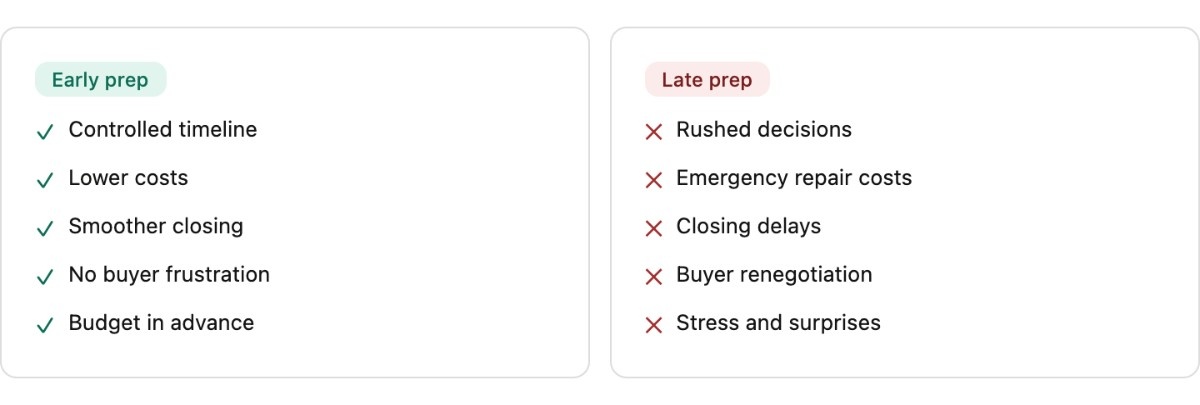
In our experience, sellers who address U&O requirements before listing not only avoid surprises, they also create a much smoother path to closing. Not sure what your township requires? We’re happy to help you figure it out before you list.
Who Is Responsible for the U&O Process?
In most cases, the seller is responsible for:
- Applying for the U&O inspection
- Paying inspection and reinspection fees
- Completing required repairs
- Scheduling follow-up inspections
After repairs are completed, the township typically requires a reinspection to confirm everything meets code before issuing certification.
That said, there are exceptions.
Can Buyers Ever Take Responsibility?
Yes, if a home is being sold “as-is,” the responsibility for U&O repairs can sometimes be negotiated and transferred to the buyer.
However, this must be clearly agreed upon upfront and written into the contract.
Can You Sell a Home Without Passing U&O?
In some cases, there is a workaround known as a conditional U&O certification.
This allows:
- The transaction to close
- Repairs to be completed after settlement
Typically, this involves:
- Escrow funds being held.
- Township approval
- A set timeframe (often a few months, depending on the municipality)
This option requires negotiation and coordination, but it can help keep deals on track.
Philadelphia vs. Surrounding Counties: What’s Different?
One key distinction in this region is how Philadelphia itself handles U&O compared to the surrounding counties.
- Philadelphia County:
No in-person inspection is typically required. Sellers can usually apply for the certification online. - Surrounding counties (Delaware, Montgomery, Chester, etc.):
Require in-person inspections and completion of any flagged repairs before closing.
This difference can significantly impact timelines and expectations.
How to Make the U&O Process Go Smoothly
If there’s one piece of advice that consistently makes the biggest difference, it’s this:
Start early and know what to expect.
The most successful sellers:
- Learn their township’s requirements before listing.
- Budget for potential repairs.
- Work with an experienced agent who can guide the process.
When you understand what’s coming, the U&O process becomes manageable, not stressful.
Your Next Steps
Selling a home in Greater Philadelphia comes with unique requirements, and U&O is one of the most important to understand early.
If you’ve made it this far, you’re already ahead of most sellers. You know what U&O is, what can go wrong, and where unexpected costs and delays can come from.
Now the next step is simple:
Figure out exactly what your township will require for your specific property.
Because requirements can vary, and change, the fastest way to avoid surprises is to get clarity upfront. If you’d like help, we’re happy to walk you through it.
We’ll help you:
- Identify your township requirements
- Flag potential issues before they become problems
- Outline what you can expect for timeline and cost
Schedule a quick conversation with our team to get a clear plan before you list.
Or, if you prefer to start on your own:
Download our U&O Seller Checklist to see what to look for before your inspection.
Because when you plan ahead, you don’t just pass your U&O, you protect your timeline, your budget, and your peace of mind.

Robin Martin
Realtor® | Premier Home Team | Keller Williams Empower | PLACE
or another way