
Categories
Home Owners, Seller StrategiesPublished April 13, 2026
What Happens at a Listing Appointment

.png)
What Happens at a Listing Appointment?
Selling your home is one of the biggest financial decisions you’ll ever make, but most homeowners walk into their listing appointment unsure of what’s about to happen.
They don’t know what questions to ask, what a good agent should actually cover, or how to tell if they’re getting real guidance… or just a polished sales pitch.
And that uncertainty can be costly.
Choose the wrong agent, misunderstand pricing, or miss key details early, and you could leave tens of thousands of dollars on the table, or watch your home sit on the market longer than expected.
At the same time, we get it. Most sellers don’t go through this process often, and there’s a lot of conflicting advice out there. After helping hundreds of homeowners navigate listing appointments, we’ve seen firsthand where things go right and where they go wrong.
In this guide, we’ll walk you through exactly what happens during a listing appointment, what a great agent should do differently, and how to evaluate your options with confidence, so you can make the right decision for your sale.
A Listing Appointment Is an Interview For Both Sides
At its core, a listing appointment isn’t just a meeting; it’s a mutual evaluation.
You’re deciding whether this agent is the right person to guide one of your largest financial decisions. At the same time, the agent is working to understand your situation so they can recommend the right strategy.
A strong agent won’t jump straight into a sales pitch. Instead, they’ll focus on understanding three key things: your goals, your timeline, and your expectations.
Are you trying to maximize your profit? Move quickly? Coordinate the sale with another purchase?
Each of these paths requires a different approach. And the more clearly you define what success looks like, the more effectively your agent can build a plan around it.
Before anything else, pricing, marketing, timing, you’re choosing your team. And that decision sets the tone for everything that follows.
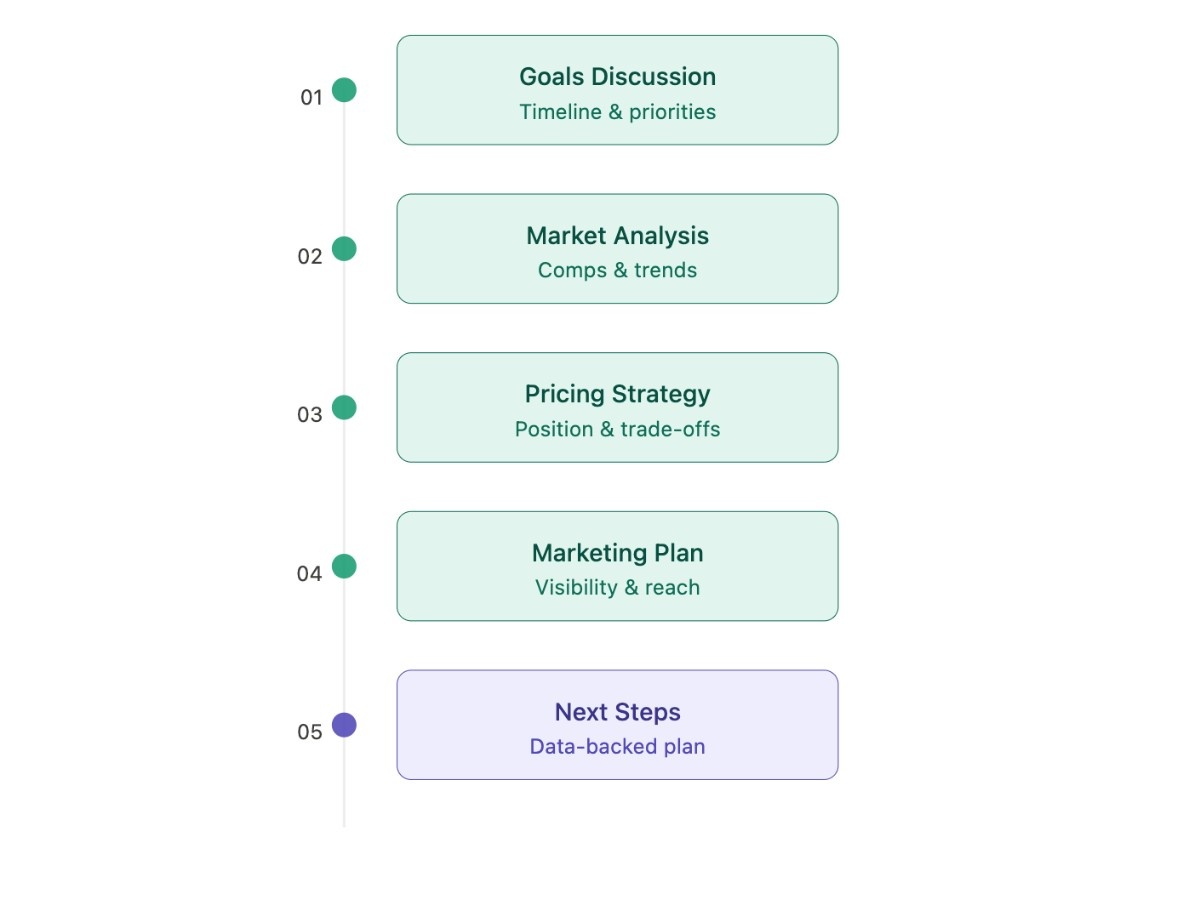
Here's how a well-structured listing appointment typically flows:
What a Great Agent Has Already Prepared Before Meeting You
Before they ever sit down with you, a great agent has already analyzed your home, your neighborhood, and the broader market.
This typically includes:
- Comparable sales
- Current competition
- Market trends (days on market, inventory)
- Pricing behaviour at different levels
This ensures every recommendation is grounded in reality.
Evaluating Your Home Through a Buyer’s Eyes
During the appointment, your agent will also evaluate your home from a buyer’s perspective.
That means identifying:
- Repairs that could raise red flags
- Cosmetic updates that could improve appeal
- Anything that might impact perceived value
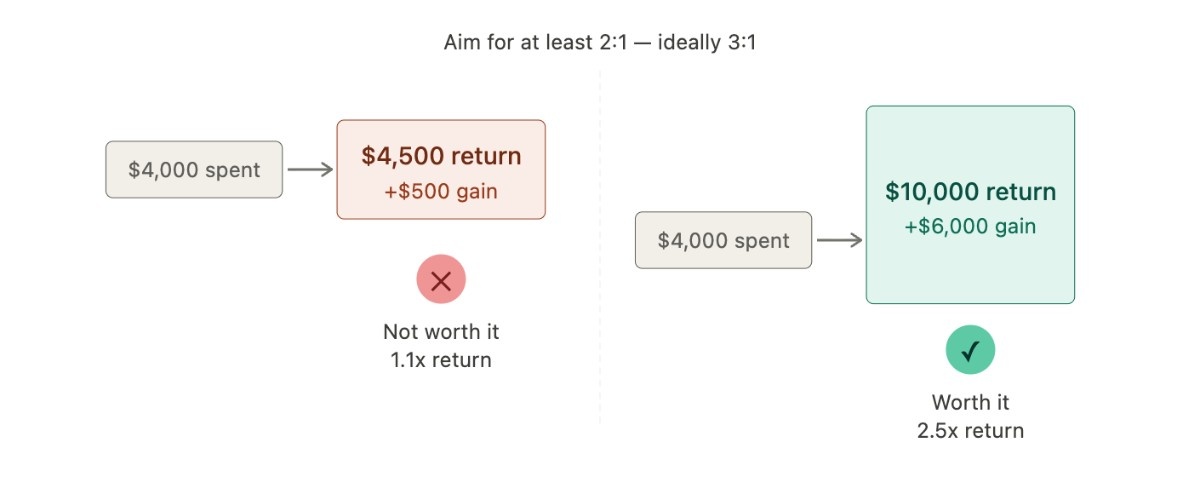
But more importantly, they’re evaluating everything through the lens of return on investment.
Not every improvement is worth making.
A strong agent will recommend updates only when they significantly increase your home’s value; typically aiming for at least a 2:1 return, and ideally closer to 3:1.
The Conversation: Turning Data Into a Strategy
This is where great agents separate themselves.
A strong agent won’t just present statistics; they’ll explain what those numbers actually mean for you.
You should understand:
- How quickly homes are selling
- Who has the advantage?
- Your level of competition
That means connecting market data, your home, and your goals into one plan.
Because it’s most important to understand the data, so that you know how to act on it to sell your home.
How Pricing Really Works (And Why Data Drives It)
Pricing is one of the most important parts of the entire process, and one of the most misunderstood.
Pricing isn’t about picking a number. It’s about positioning your home in the market.
There’s no single “right” price - there’s a range the market is willing to accept.
And different agents may recommend different pricing approaches based on:
- How quickly you need to sell
- Your risk tolerance
- Current market conditions
- Buyer demand in your price range
A trustworthy agent won’t just give you a number; they’ll explain:
- The range your home likely falls into
- The pros and cons of pricing higher vs. lower
- What they expect to happen based on each approach
You might:
- Price higher to maximize value (with more risk)
- Price more competitively to generate demand and momentum
Both approaches can work, but only if they’re based on real data and aligned with your goals.
A great agent doesn’t guess. They show you how the market is likely to respond, and explain the trade-offs clearly.
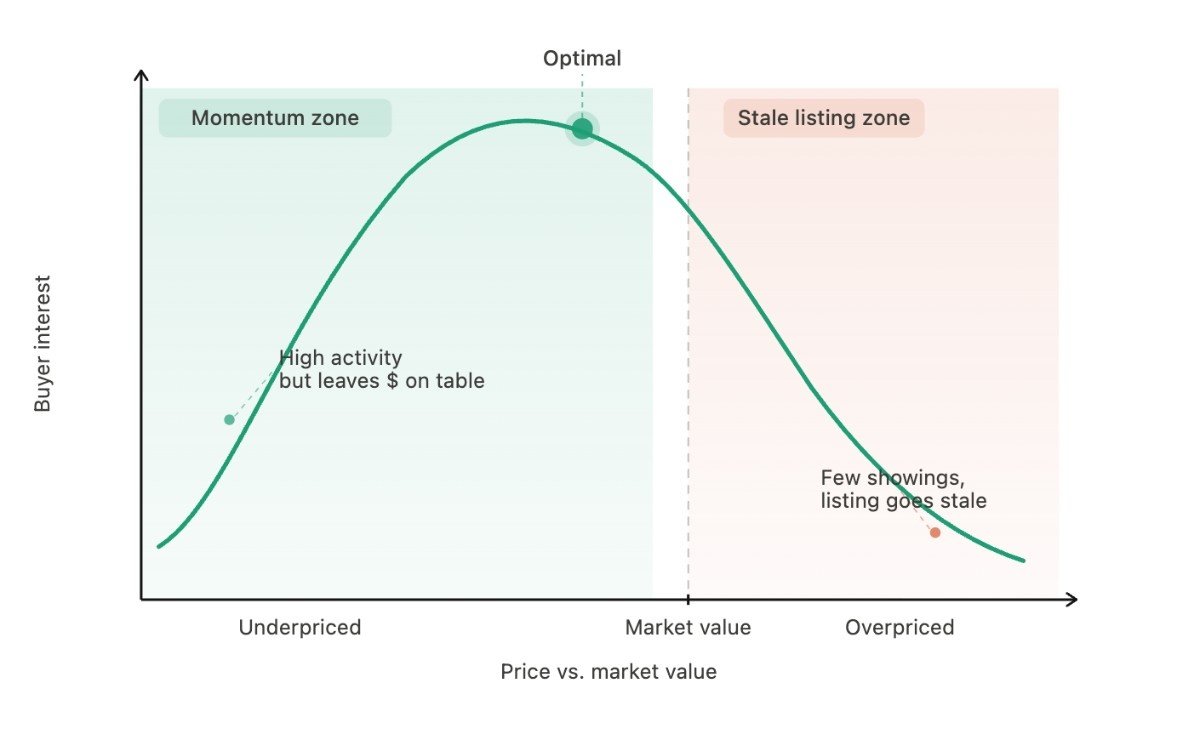
That's the pricing window your agent is trying to hit, and why getting it right from day one matters.
What to Look for in a Strong Marketing Plan
With pricing aligned, the next step is execution - starting with marketing. Its job is simple: drive qualified buyers to your home.
A strong plan includes:
- High-quality visuals
- Online exposure across major platforms
- Social media distribution
- Open houses and local outreach
What matters is how effective the plan is. Because visibility without the right audience doesn’t sell homes. The right strategy does sell homes.
Common Mistakes Sellers Make During Listing Appointments
Many sellers don’t realize it, but some of the biggest mistakes happen during this meeting.
Here are a few to watch for:
1. Choosing the Agent Who Suggests the Highest Price
Some agents intentionally overprice homes to win your business, knowing they can recommend price reductions later. This often leads to:
- Longer time on market
- Price drops that hurt buyer perception
- Ultimately, selling for less than if priced correctly from the start.
2. Not Asking About the Marketing Strategy
Not all marketing is the same.
If an agent can’t clearly explain:
- How they generate demand
- What makes your listing stand out
- How they use video, digital, and exposure
…you may end up with a listing that simply sits.
3. Overlooking Communication Style
Your agent isn’t just listing your home; they’re guiding you through a high-stakes process.
If communication feels unclear, slow, or overly “salesy” during the appointment, that usually doesn’t improve later.
4. Not Understanding the Pricing Strategy
Pricing isn’t just a number; it’s a strategy.
If you leave the appointment thinking that sounds about right, but don’t understand why, you’re missing a critical piece of the process.
A Great Listing Appointment vs. an Average One
Not all listing appointments are the same, and the difference can directly impact your results.
Here’s how to tell the difference between a great agent and an average one:
| Great Agent | Average Agent |
| Starts with your goals | Focuses on winning your business |
| Uses real data to explain pricing | Suggests a price without clear explanation |
| Clearly outlines a strategy | Uses vague marketing language |
| Explains trade-offs and risks | Avoids difficult conversations |
| Helps you make a decision | Pushes for a quick signature |
A great agent helps you make a decision. An average agent tries to get your signature.

What Happens Once Your Home Hits the Market
Once your home hits the market, execution and communication take center stage.
Your agent should:
- Coordinate showings, open houses, and feedback.
- Keep you updated on market changes.
- Advise on any adjustments needed.
Because the market doesn’t stand still, and neither should your strategy.
Costs and Financial Considerations
A listing appointment will also cover the financial side of selling, including:
- Agent commission
- Potential prep costs (repairs, staging)
- Your estimated net proceeds
This clarity helps you avoid surprises.
How to Prepare Before Your Listing Appointment
To get the most out of your meeting, come prepared with:
- Your timeline
- Your top priority (price, speed, or certainty)
- Questions like:
- “How did you arrive at this price?”
- “What would you do differently to sell my home?”
- “What could go wrong, and how would you handle it?”
That last question matters because great agents don’t just have a plan; they know how to adapt.
The Bottom Line
A listing appointment isn’t just a formality; it’s the foundation of your sale.
It’s where strategy is built, expectations are set, and the right partnership begins.
The more you understand, the better decisions you’ll make.
Ready to Take the Next Step?
By now, you should have a clear understanding of what a listing appointment really is, and why it’s such a critical step in the selling process.
It’s not just about pricing your home. It’s about building a strategy, understanding your options, and choosing the right partner to guide you through one of your largest financial decisions.
The sellers who get the best results aren’t guessing. In today’s market, data is king, but only if you know how to use it. Sellers getting results are making decisions based on data, clear goals, and expert guidance.
If you’re thinking about selling, the next step is simple: have the conversation.
Schedule your listing appointment or call an agent today to get a clear, data-backed plan for your home and move forward with confidence.
Frequently Asked Questions
What happens during a real estate listing appointment?
During a listing appointment, a real estate agent evaluates your home, reviews market data, discusses pricing strategy, outlines a marketing plan, and helps you decide the best approach based on your goals and timeline.
What should I expect at a listing appointment?
You should expect a strategic conversation, not just a walkthrough. A good agent will discuss your goals, review market data, explain pricing, outline a marketing plan, and answer your questions clearly.
How long does a listing appointment usually take?
Most listing appointments take about 45 minutes to an hour, depending on how in-depth the conversation is and how many questions you have.
Do I need to prepare anything before a listing appointment?
It helps to know your timeline, your top priority (price, speed, or certainty), and have a few questions ready. You don’t need everything figured out, that’s what the agent is there to help with.
Can I meet with more than one agent before choosing?
Yes, and it’s often a good idea. Comparing how different agents approach pricing, strategy, and communication can help you make a more confident decision.

Robin Martin
Realtor® | Premier Home Team | Keller Williams Empower | PLACE
or another way