
Categories
Home OwnersPublished May 1, 2026
What to Expect During Inspection Negotiations as a Home Seller

.jpeg)
Selling your home doesn’t end when you go under contract; in many ways, that’s when the emotional and financially important part of the process begins.
After the home inspection, buyers often come back with requests. Sometimes they’re small. Sometimes they feel overwhelming. And for many sellers, this is the moment where doubt creeps in:
- Are they asking for too much?
- Is this deal about to fall apart?
- Do I have to agree to all of this?
Handled poorly, inspection negotiations can cost you thousands—or even derail your sale entirely.
But here’s the truth
Inspection negotiations are not a red flag. They’re a completely normal part of the process.
At the end of the day, our goal is simple: help you understand exactly what’s happening, what buyers are really looking for, and how to respond strategically so you can move forward with confidence - whether you choose to work with us or not.
What Happens After the Home Inspection
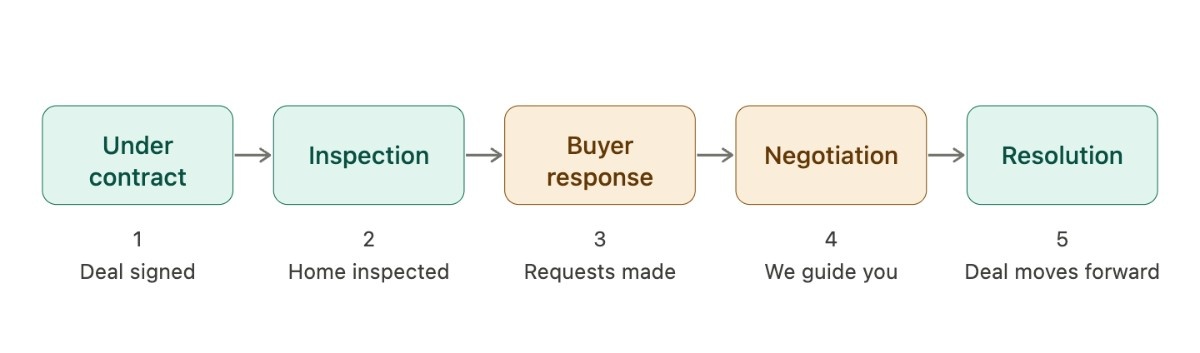
Once you’re under contract, the buyer enters the inspection contingency period.
In most Pennsylvania transactions, buyers have about 10 days to:
- Schedule the inspection.
- Review the findings.
- Submit a formal response.
From a seller’s perspective, this phase often feels like a waiting game.
The inspection happens… and then silence.
But behind the scenes, the buyer is reviewing a report that often includes dozens of items - some minor, some more serious. From there, they typically respond in one of three ways:
- Request repairs.
- Request a credit (money back at closing).
- Accept the home as-is.
Most of the time, they choose option 1 or 2 - and that’s where negotiation begins.
What Buyers Are Actually Looking For
One of the biggest misconceptions sellers have is that buyers are trying to “nickel and dime” them.
In reality, most buyers are trying to do one thing - protect themselves from unexpected costs and risks.
Their requests typically fall into three categories:
| Major Systems & Safety Issues | Broken Items or Functional Issues | Cosmetic Issues |
| These are the most common, and most important, negotiation points. | These are usually straightforward and often expected. | These are the easiest to push back on. |
| Electrical concerns (like outdated or ungrounded wiring) Plumbing problems HVAC issues Structural concerns |
Windows that don’t open Appliances that don’t work Leaking fixtures |
Paint touch-ups Minor wear and tear Aesthetic preferences |
In older housing markets like Philadelphia, it’s very common for inspections to uncover things that are technically “issues,” but typical for the age of the home.
Even so, if those items relate to safety or future costs, they often become negotiation points.
Setting Expectations as a Seller
In Pennsylvania, most homes are sold as-is. But this is often misunderstood.
“As-is” does NOT mean:
- No inspection
- No negotiation
- No requests
It simply means the buyer made an offer based on the home’s visible condition.
If the inspection reveals new information - especially safety concerns or major issues - buyers still have the right to:
- Request repairs
- Request credits
- Walk away from the deal.
That creates a balance:
- The seller isn’t obligated to fix everything.
- But the buyer isn’t obligated to move forward either.
How to Decide What’s Worth Negotiating
Here’s where strategy comes into play.
Everything is negotiable, but that doesn’t mean everything should be.
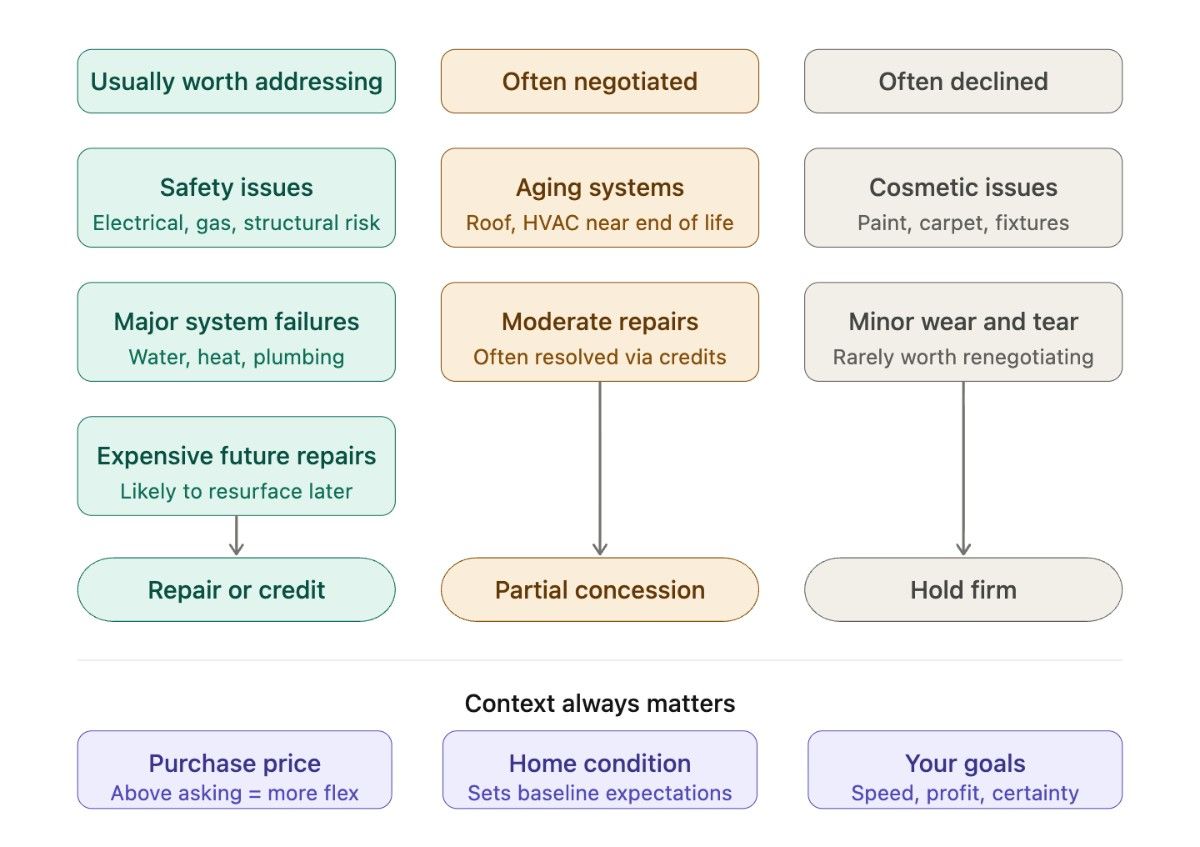
Here’s a simple framework most successful sellers follow:
Usually Worth Addressing
- Safety issues
- Major system problems
- Expensive future repairs
These are the issues most likely to kill a deal if ignored.
Often Negotiated
- Aging systems (roof, HVAC, etc.)
- Moderate repairs
These typically result in partial concessions or credits.
Often Declined
- Cosmetic issues
- Minor wear and tear
These rarely justify renegotiating the deal.
The Bigger Context Matters
Your decision should always factor in:
- The agreed-upon purchase price
- The condition of your home
- Your goals (speed, profit, certainty)
For example, if your home is under contract well above asking, it may make financial sense to be more flexible. On the other hand, if margins are tight, you may push back more firmly.
That said, major issues and safety concerns are usually the biggest sticking points. Addressing those, either through repairs or credits, often keeps deals together.
Repairs vs. Credits: What’s the Better Move?
In today’s market, many sellers choose to offer a credit instead of making repairs.
Repairs
Pros:
- Keeps the buyer happy upfront
- May feel more complete.
Cons:
- Requires time and coordination
- Can delay closing
- Risk of workmanship disputes
Credits
Pros:
- Faster and simpler
- No contractor coordination
- Buyer takes responsibility after closing.
Cons:
- Immediate cost to seller
- Buyer controls the final outcome.
In many cases, credits are the preferred solution because they keep the deal moving and reduce friction.
What Do Inspection Negotiations Typically Cost?
This is one of the biggest questions sellers have - and one most agents avoid answering clearly.
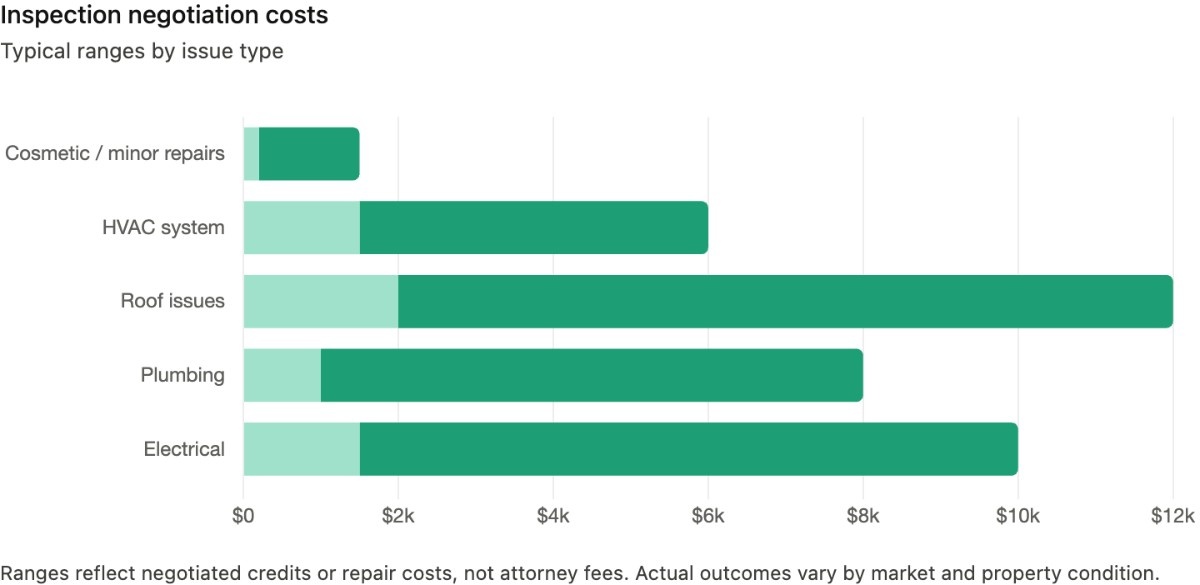
While every deal is different, here are some general expectations:
- Minor issues → a few hundred to a couple thousand dollars
- Moderate repairs → $1,000–$5,000
- Major issues → $5,000–$15,000+ (depending on scope)
Keep in mind, most negotiations end somewhere in the middle - not at the full request amount.
The goal is finding a number both sides can live with to keep the deal together.
Common Mistakes Sellers Make
One of the most common and avoidable mistakes sellers make is not properly preparing the home for inspection.
Inspectors need full access to evaluate the property. That means ensuring all major systems - electrical panels, HVAC units, plumbing areas, the roof, basement, and any mechanicals - are accessible and not blocked or locked off.
It’s also critical that all utilities are turned on. Inspectors can’t fully evaluate the home without running water, testing electrical systems, or checking heating and cooling. This is especially important for vacant or investor-owned properties, where utilities are sometimes shut off.
If the inspector can’t complete their work, the buyer may need to schedule a re-inspection, delaying the process and potentially complicating negotiations before they even begin.
A well-prepared home helps keep the timeline intact and sets the stage for a smoother negotiation.
If You’re in Negotiations Right Now, Start Here
If you’re currently in the middle of inspection negotiations, it’s easy to feel reactive.
But the most successful sellers don’t react, they follow a simple, grounded approach:
- Separate emotion from reality - from the buyer’s perspective, this is a risk assessment.
- Identify the real deal breakers - safety issues & major systems are usually key.
- Decide on your line before you respond - prevents back and forth frustration.
- Focus on the outcome, not the items - what does it take to keep this deal together?
What If the Deal Falls Apart?
This is the question most sellers are thinking, but few say out loud: “What if this kills the deal?”
The honest answer is, sometimes, despite everyone’s best efforts, negotiations don’t come together. In most cases, both sides are already too invested to walk away over reasonable issues.
Inspection negotiations are designed to surface concerns and work through them.
In the majority of cases, both sides are motivated to find a solution. Deals typically fall apart only when a major unexpected issue is uncovered
If the buyer does walk away during the inspection contingency period, they’ll typically receive their earnest money deposit back, and the home returns to the market.
That’s not ideal, but it’s also not uncommon, and it’s part of why smart, strategic negotiation matters.
A Real-World Reminder: It’s a Process
In one case, a buyer submitted a list of over 100 requested repairs, essentially their entire inspection report.
At first, it felt overwhelming. But after reviewing the list, prioritizing what mattered, and going through several rounds of negotiation, both sides reached an agreement that worked.
That’s the reality of inspection negotiations:
The first response isn’t the final outcome.
The Most Important Advice for Sellers
If there’s one thing to keep in mind, it’s this:
Don’t take it personally.
Buyers are trying to minimize their risk. You’re trying to protect your investment. Both sides have valid goals.
When you approach negotiations with that understanding and rely on a skilled agent to guide the process, you’re far more likely to reach a solution that works for everyone.
Final Thoughts
Inspection negotiations can feel like a critical moment, but they’re not a crisis. They’re a conversation.
When you understand what buyers are really trying to accomplish, and approach the process with clarity instead of emotion, everything becomes more manageable.
The sellers who navigate this stage best aren’t the ones who “win” every point. They’re the ones who:
- Stay focused on the outcome.
- Understand what actually matters.
- And make decisions that keep the deal moving forward.
Because at the end of the day, success isn’t about negotiating perfectly. It’s about getting to the closing table with a deal that works.
If you’re in the middle of this process and want a second set of eyes on your situation, we’re always happy to help you think through your options - no pressure, just a clear, objective way to think through your next move.
Frequently Asked Questions About Inspection Negotiations
Here are some of the most common questions we hear from sellers during this stage:
1. Do I have to agree to everything the buyer asks for?
No. You’re not obligated to accept every request. Most negotiations involve some level of compromise, and it’s common for sellers to push back on cosmetic or minor items.
2. What are buyers most likely to push for after an inspection?
Buyers typically focus on safety issues, major systems (like roof, HVAC, electrical), and anything that could lead to expensive future repairs—not minor cosmetic concerns.
3. Is it better to make repairs or offer a credit?
In many cases, offering a credit is simpler and faster. It avoids delays, contractor coordination, and lets the buyer handle repairs after closing.
4. How often do deals fall apart after an inspection?
It happens, but most deals move forward. As long as both sides are willing to negotiate reasonably, inspection issues are usually resolved without killing the deal.
5. Can I refuse everything and still keep the deal?
You can refuse requests, but it increases the risk of the buyer walking away, especially if major issues are involved. Strategic compromise is usually the better path.

Robin Martin
Realtor® | Premier Home Team | Keller Williams Empower | PLACE
or another way