
Categories
Careers, Working in Real EstatePublished September 4, 2026
Why Real Estate Agents Fail, and How New Agents Can Avoid It


Why Real Estate Agents Fail, and How New Agents Can Avoid It
EXECUTIVE SUMMARY
New real estate agents often struggle for predictable, avoidable reasons: they underestimate the financial runway required, prospect inconsistently, rely too heavily on their existing network, try to figure everything out alone, or give up before they've had enough time to build a pipeline.
If you're considering real estate or are early in your career, the biggest takeaway is that success requires treating real estate like a business from the start, with a financial cushion, consistent prospecting, multiple lead sources, coaching, and realistic expectations about how long it takes to gain traction.
Deciding to become a real estate agent means walking away from the certainty of a paycheck and stepping into something you've never done before. You don't fully know what to expect, and you're watching your savings, careful not to burn through them before the business pays you back. You've heard how difficult it can be to make it as a new agent and wondered whether you'll be able to build a career before your savings run out.
At Premier Home Team, we've coached agents through this early stage over the past five years. While every agent's experience is different, we see many of the same problems recur, often early enough to be corrected.
Understanding those warning signs before they derail you can help you enter your first year with realistic expectations and a plan. Here are the six we see most often.

Why Treating Real Estate Like a W-2 Job Sets New Agents Up to Fail
The problem: The most common early warning sign we see is treating real estate like a nine-to-five, expecting weekends and holidays off, or working it part-time.
Why it matters: What you put into this business is generally what you get out of it, job hours produce job-level results, and in commission-based work, that gap shows up fast.
What to do instead:
- Write a simple business plan and budget before you get licensed.
- Commit to full-time hours even before your income feels full-time.
Download our one-page real estate agent business plan to map out your income goal, expenses, lead sources, prospecting targets, and first-year priorities.
Real example: One of our agents spent two years at another brokerage and sold only four homes. After shifting his mindset, and treating the business as something that compounds, not a task list, he quadrupled his production the year he joined the team.
Why New Real Estate Agents Run Out of Money Before Their Pipeline Pays Off
The problem: New commissions take time, and earnings can be irregular, especially for beginners, which is where people run into money trouble.
Why it matters: Running out of savings before your pipeline pays off forces decisions made from panic. This is often the difference between agents who make it and agents who quit before giving their business time to develop.
What to do instead:
- In our experience, saving six to twelve months of living expenses before going full-time, even with a partner helping cover costs, gives agents more financial runway early in their careers.
- Loop in a coach or mentor early, before you're in a financial hole.
Real example: We had an agent who came close to quitting for financial reasons, then changed course after getting more consistent with coaching check-ins. Within months, the pressure eased as their pipeline caught up.
Why Inconsistent Prospecting Causes New Real Estate Agents to Struggle
The problem: Almost every new agent knows they should prospect daily. Very few do it consistently.
Why it matters: New business doesn't happen by magic. It's tempting to believe leads will simply fall into your lap, but that rarely happens until you've spent years prospecting. Skip this step and your pipeline stalls before it starts.
What to do instead:
- Block off two to three hours each morning strictly for prospecting.
- Track your activity, not just your results, especially in year one.
Real example: An agent who joined us credits a structured daily prospecting habit with helping to turn his production around. He blocks off time each morning specifically for outreach. Even our strongest performers rely on that structure. It's something we tell every new agent: you have to make the calls.
Not sure yet whether this is the right fit? Our blog post on your first year as a new agent can help you get a clearer picture of what those first few months look like before you decide.
Why New Real Estate Agents Struggle Without Coaching or Mentorship
The problem: Being newly licensed and being ready to run a business are two different things. In our experience, new agents with regular coaching and accountability tend to identify and correct mistakes faster.
Why it matters: The first 90 days set the foundation for every habit that follows. Without regular feedback it's easy to keep doing something wrong for months without realizing it.
What to do instead:
- Find a coach, mentor, or team early, not after months of struggling.
- Set up daily check-ins for your first 90 days, morning and end of day.
Real example: We saw this with an agent who, after having some success as a solo agent, closed 35 transactions in her first year on the team, tripling her production from the previous year.
Why Relying Only on Your Sphere Can Stall Your Real Estate Business
The problem: Your personal network is a good starting point, but it's not a stable foundation on its own.
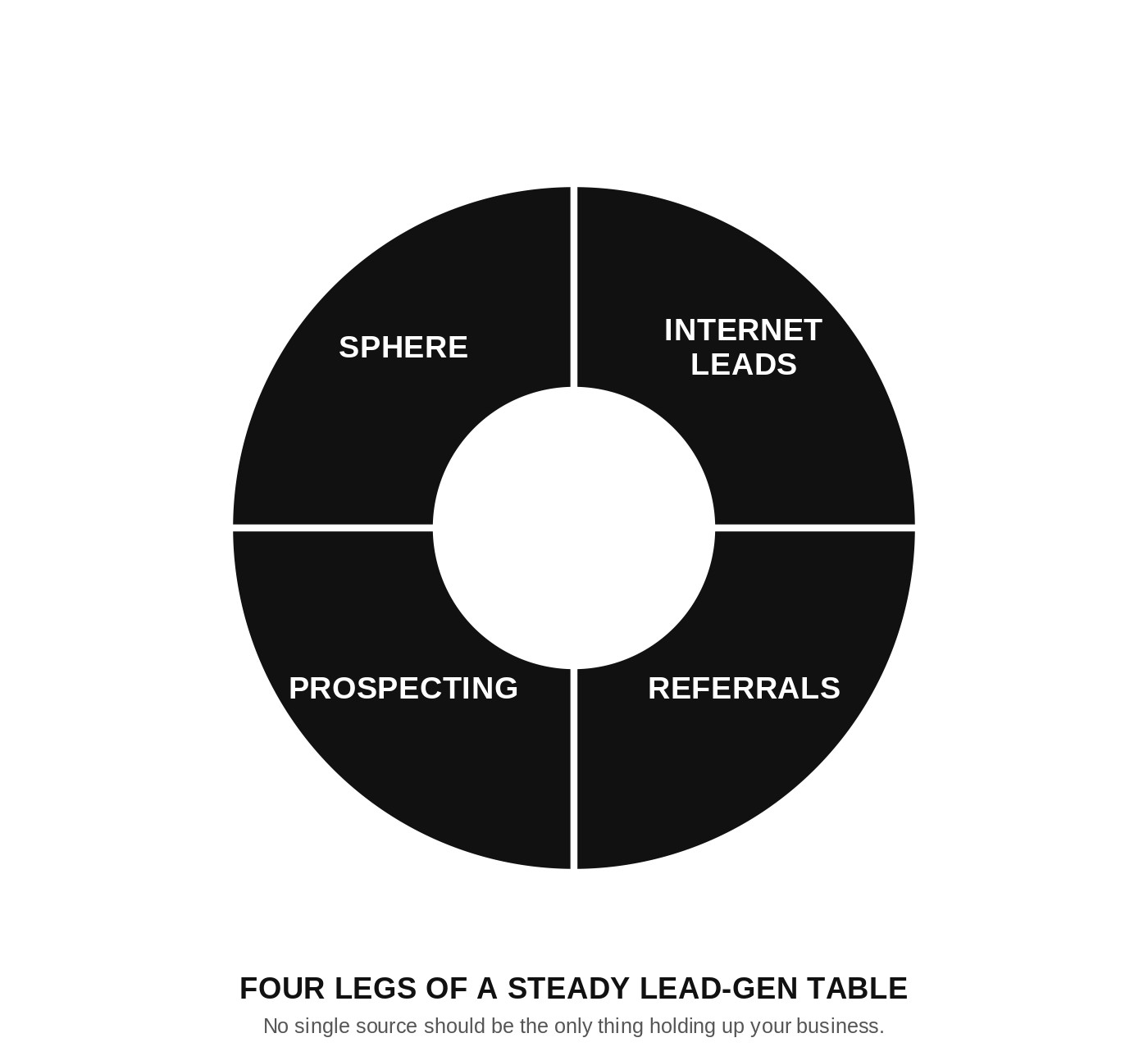
Why it matters: We like to compare it to a table: it needs four legs to be steady. Drop below three and your business starts to teeter-totter. An agent who depends only on friends and family has just one leg to stand on.
What to do instead:
- Treat your sphere as one lead source, not your only one.
- Build at least three separate lead sources so no single one can sink your pipeline.
Real example: We have an agent who broke through by building a niche working with real estate investors rather than relying solely on his sphere. In the last calendar year, referrals and repeat business accounted for 50% of his closings.
Why New Real Estate Agents Give Up Before They Gain Traction
The problem: In our experience, the hardest stretch for new agents is the first six months. You're putting in work, but your pipeline hasn't had enough time to produce consistent results.
Why it matters: That lag can make new agents assume the business isn't working before they've given consistent prospecting, coaching, and follow-up enough time to evaluate what's actually working.
What to do instead:
- Expect the first 6-18 months to be the hardest stretch, not a sign something's wrong.
- If you're a few months in and discouraged, that's normal, not a red flag.
Real example: We've watched this pattern play out more than once: a rough first year that felt discouraging, followed by a breakthrough once an agent went all-in instead of starting and stopping. A slow first year isn't automatically a sign that it's time to quit; it's a reason to look honestly at your activity, consistency, and pipeline before deciding what comes next.
How to Avoid Failing as a New Real Estate Agent
Starting a real estate career is a risk, but the challenges that derail new agents aren't always a surprise. Now you know what to watch for, and more importantly, which parts you can control.
You don't need to have everything figured out on day one. You do need enough financial runway to give yourself a real chance, a commitment to consistent prospecting, support when you need it, and realistic expectations about how long building a business can take.
If you're still deciding whether real estate is right for you, your next step is to read about the first 90 days as a new agent on Premier Home Team for a clearer picture of what those first few months actually look like.
And if you're looking for a team that provides the coaching and structure we've discussed here, visit Premier Home Team careers page to learn how Premier Home Team supports new agents and see our current opportunities.
Frequently Asked Questions
Why do new real estate agents fail?
In our experience at Premier Home Team, new agents rarely struggle because of one major mistake. It's usually a combination of inconsistent prospecting, unrealistic financial expectations, relying too heavily on their existing network, trying to figure everything out alone, or giving up before they've had enough time to build a pipeline.
How long does it take a new real estate agent to become profitable?
Building a pipeline takes time. At Premier Home Team, we recommend that new agents plan for six to twelve months before commissions become steady.
How much money should I save before becoming a full-time real estate agent?
At Premier Home Team, we recommend planning for six to twelve months of living expenses before going full-time, even if a partner is helping cover costs.
Do new real estate agents need a coach or mentor?
No, it's not essential, but we've seen that regular check-ins with a coach, especially in the first 90 days, help you build good habits faster and avoid common mistakes.
Robin Martin
Realtor® | Premier Home Team | Keller Williams Empower | PLACE
or another way