
Categories
Home Buying TipsPublished May 15, 2026
How to Buy a Home in Philadelphia With a Low Down Payment (What First-Time Buyers Get Wrong)

If you’re trying to buy a home in Philadelphia, there’s a good chance you’ve already told yourself some version of this:
“I just need more time to save.”
Usually, what that really means is:
“I don’t have 20% down yet, so I’m not ready.”
We hear this all the time, and when we sat down with two experienced Philadelphia real estate agents, Joe Stacy and Leiny Miguel, they told us the same thing:
“For some reason, people still think you need 20% saved to buy a house… but that’s just not the case anymore.”
This is especially true for first-time buyers and those working with a limited budget, who often assume homeownership is further out of reach than it actually is.
That belief is everywhere. And according to the agents we work with every day, it’s also one of the biggest reasons buyers stay stuck, even when they could already afford to buy.
In this article, we’ll break down what it actually costs to buy a house in Philadelphia, what most buyers misunderstand, and how some people are getting into homes with far less upfront than they expected.
Do You Need 20% Down to Buy a House in Philadelphia?
The idea didn’t come out of nowhere. Years ago, putting 20% down really was the standard. That’s how mortgages worked.
But lending has changed. Programs have evolved. And cities like Philadelphia have created incentives to help more people become homeowners.
The problem is, the advice didn’t evolve with it. Now, buyers are operating on old information in a completely different market. The danger is this: buyers delay for years based on outdated information, often missing opportunities they could have afforded much sooner.
Today, many first-time buyers can put down as little as 3% to 3.5%, depending on the type of loan they qualify for, including options like FHA loans or certain conventional programs designed specifically for first-time buyers.
And yet, many buyers spend years waiting, not because they can’t afford to buy, but because they’re working off outdated assumptions.
What Does It Actually Cost to Buy a Home in Philadelphia?
When buyers finally ask, “So how much do I really need?”, the honest answer is still: it depends.
But experienced agents tend to simplify it the same way.
“Back-of-the-napkin, you should expect around 10% of the purchase price,” Joe explained. This estimate helps set expectations, but buyers often don’t pay the full amount out of pocket when they take advantage of first-time homebuyer programs.
That number includes everything:
| Cost Component | What It Covers |
| Down Payment | Your upfront contribution toward the purchase |
| Closing Costs | Lender fees, title, taxes, and transaction expenses |
| Prepaids | Insurance, taxes, and escrow setup |
So if you’re looking at:
- $200,000 → roughly $20,000
- $300,000 → roughly $30,000
| Philadelphia Home Price | Estimated Total Needed (10%) |
| $200,000 | ~$20,000 |
| $300,000 | ~$30,000 |
But here’s the part most buyers miss:
That’s not what you’ll necessarily pay. That’s just the starting point.
Down Payment vs. Closing Costs vs. Cash to Close: What's the Difference?
One of the biggest sources of confusion is that buyers hear the total cost and assume all of it is fixed.
It’s not.
Agents spend a lot of time just breaking this down clearly:
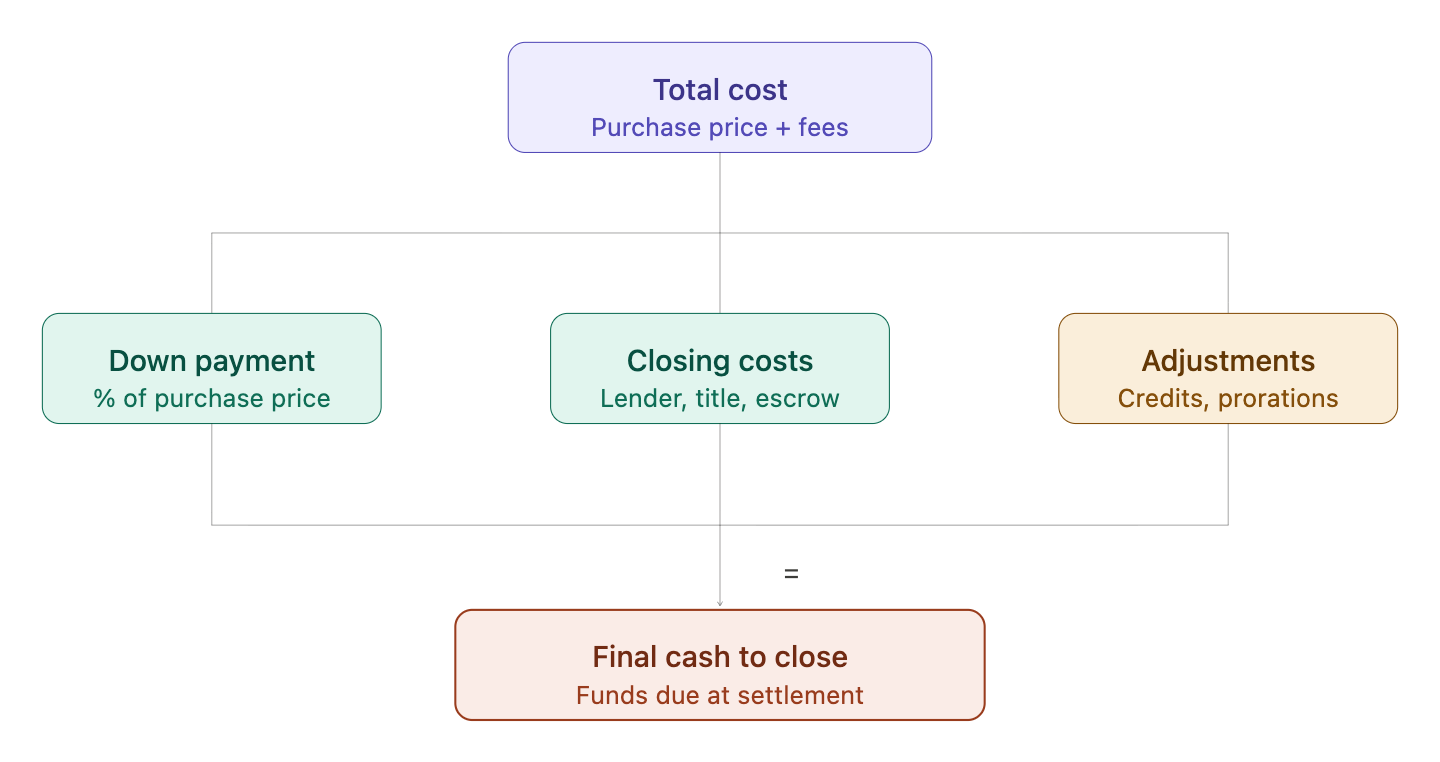
- The down payment is what the bank requires you to contribute.
- Closing costs cover everyone involved in the transaction: lenders, title, and taxes.
- Cash to close is the cash you need in your account to bring on settlement day.
As Leiny explained it:
“There are a lot of people who have to get paid… It’s not free.”
But once you understand where the money goes, something shifts.
You start to see that not all of it is rigid, and that’s where strategy comes in.
How to Reduce Your Out-of-Pocket Costs When Buying in Philadelphia
This is where Philly becomes especially interesting.
Compared to many other markets, Philadelphia has a large number of first-time buyer programs and incentives.
And when you layer those together correctly, the numbers can change fast.
Leiny described it like this:
“If you know how to negotiate and play the system, you can get into a really nice house with very little out of pocket.”
She wasn't exaggerating.
By taking advantage of Philadelphia’s programs and incentives, we’ve seen buyers:
- Go from needing $30,000… to around $4,000 in closing costs.
- Purchase homes and bring less than $1,000 to closing (rare, but real)
Another example from the team:
A buyer under contract at $325,000 only needed about $4,000 out of pocket, compared to over $30,000 without assistance.
To put that into perspective:
| Home Buying Scenario | Estimated Cash Needed |
| Without assistance | ~ $30,000 |
| With programs, assistance & negotiations | ~ $4,000 |
These scenarios aren’t typical, but they show what’s possible with the right approach.
This typically comes down to how offers are structured, the programs that are layered in, and how negotiations are handled.
First-Time Home Buyer Programs and Grants in Philadelphia
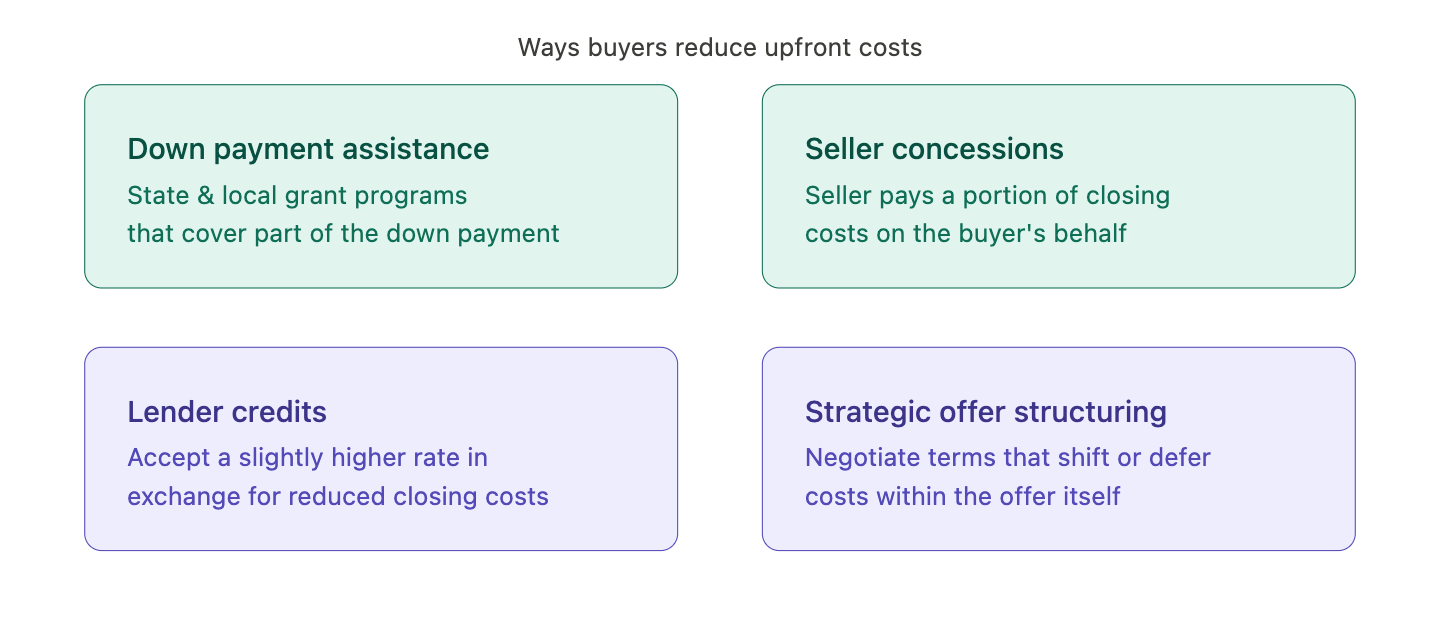
In Philadelphia, there are multiple programs designed to reduce upfront costs. Many of these programs are specifically designed for first-time homebuyers and low-to-moderate-income households.
Some of the most common include:
| Philadelphia Program Type | What It Helps Home Buyers With |
| Philly First Home | Down payment assistance |
| PHFA Programs | Loans + grants for buyers |
| Lender Grants | Reduced upfront costs |
| Savings Match Programs | Helps grow buyer savings faster |
Most buyers don’t even know where to look, and the information online is often fragmented or hard to piece together.
As Joe pointed out:
“Every time I ask someone how they heard about it, it’s never online, it’s always word of mouth.”
That lack of visibility creates a strange situation:
The programs exist. Many buyers qualify. But without the right guidance, they never take advantage of them.
Each program has different income limits, credit requirements, and eligibility criteria, which is why most buyers don’t know which ones they qualify for.
Do You Qualify for First-Time Home Buyer Programs in Philadelphia?
There’s a pattern agents see over and over again.
Buyers assume:
- Their credit isn’t high enough.
- They make too much money.
- Or they don’t make enough.
And in many cases, all three assumptions are wrong.
“There’s a lot of self-doubt,” Joe said.
“People think they don’t qualify… when in reality, they line up perfectly.”
That hesitation alone keeps people from even starting the process.
The Catch: These Programs Aren’t Truly “Free”
There’s a reason these programs work, and a reason they come with conditions.
Some require you to:
- Stay in the home for 10–15 years.
- Avoid refinancing for a certain period.
- Buy within specific areas or price ranges.
As Leiny explained:
“It’s free, but you have to comply with the program requirements.”
That doesn’t make the programs bad. But it does mean you need to choose carefully.
Because the goal isn’t just to reduce your upfront cost, it’s to make a decision that fits your life.
What Is Seller Assist and How Does It Work in Philadelphia?
Another tool that often gets overlooked, or misunderstood, is seller assist.
In simple terms, seller assist is money negotiated from the seller to help cover your costs.
But as Joe explains to clients:
“It’s not really the seller giving you money, it’s built into the deal.”
That distinction matters.
Because once you understand both sides of the transaction, you can structure offers that:
- Reduce your upfront cash.
- Still makes sense to the seller.
And that’s where real leverage comes from.
When Buying With Less Money Doesn’t Work
For all the advantages, there are situations where these home buyer programs aren’t ideal.
For example:
- Some programs limit you to certain neighborhoods or zip codes.
- Others cap your price range.
- Some don’t allow co-signers.
In one case, a buyer qualified for more without a grant than with one, because of income and program restrictions.
In another, buyers couldn’t use assistance because of how their financing was structured.
That’s why this isn’t about finding a solution.
It’s about finding the right solution for your situation.
Why Getting Pre-Approved Is the First Step to Buying a Home in Philadelphia
A lot of buyers start by browsing homes on Zillow. But Joe and Leiny both said the same thing: that's backwards.
Before you start shopping, you need to understand what you can actually afford and what programs you qualify for. That means talking to a lender who understands Philadelphia's local programs and getting pre-approved so you have real numbers to work with, not guesses.
As Leiny put it: "It doesn't force you to move faster, it just helps you understand where you're at."
And that understanding allows you to plot a real path toward homeownership.
So… How Much Do You Actually Need to Buy a Home in Philadelphia?
There's no single answer. But here's the truth: you probably need less than you think.
Not because buying is easy, but because there are more programs, strategies, and negotiation tools available in Philadelphia than most buyers realize. And the difference between knowing about them and not can be tens of thousands of dollars.
The buyers who move forward aren't always the ones with the most cash. They're the ones who understand their options, ask the right questions, and work with someone who knows how to structure the deal.
If you're not sure what you'd actually need to buy based on your situation, the best next step is simple: talk to someone who can break it down clearly for you. Because once you understand the real numbers, you might realize you're a lot closer than you think.
Common Questions About Buying a Home in Philadelphia
How much money do I really need to buy a house in Philadelphia?
Answer:
The amount you need depends on the home price, loan type, and whether you qualify for assistance programs, but a common starting estimate is around 10% of the purchase price.
That said, many buyers pay significantly less out of pocket by using:
- Low down payment loan options (as low as 3–3.5%)
- First-time homebuyer programs
- Seller concessions or negotiated credits
In some cases, buyers in Philadelphia have been able to purchase homes with just a few thousand dollars upfront, but this depends on your specific situation and how the deal is structured.
Do you really need 20% down to buy a house in Philadelphia?
Answer:
No, the 20% down payment is a common myth, but it’s not a requirement for most buyers today.
Many loan programs allow for much lower down payments, including:
- FHA loans (typically around 3.5%)
- Conventional loans with as little as 3% down
While putting 20% down can help you avoid certain costs like private mortgage insurance (PMI), most first-time buyers purchase with far less.
What are closing costs when buying a home in Philadelphia?
Answer:
Closing costs are the fees and expenses associated with finalizing your home purchase. In Philadelphia, they typically include:
- Lender fees
- Title and settlement costs
- Transfer taxes
- Prepaid expenses (like property taxes or insurance)
Closing costs usually range from 2% to 5% of the home price, but they can sometimes be reduced through negotiation or assistance programs.
What is the difference between closing costs and cash to close?
Answer:
Closing costs are just one part of your total upfront expense.
Cash to close is the total amount you need to bring on settlement day, which includes:
- Your down payment
- Closing costs
- Any adjustments (credits, taxes, etc.)
Because of negotiations or assistance programs, your final cash to close is often lower than the total estimated costs you see early in the process.
Are there first-time homebuyer programs in Philadelphia?
Answer:
Yes, Philadelphia offers several programs designed to help reduce upfront costs, especially for first-time buyers and those within certain income ranges.
Some of the most common include:
- Philly First Home
- Pennsylvania Housing Finance Agency (PHFA) programs
- Lender-specific grants and assistance
Each program has its own eligibility requirements, so the best way to understand what you qualify for is to speak with a knowledgeable agent or lender who can walk you through your options.
Robin Martin
Realtor® | Premier Home Team | Keller Williams Empower | PLACE
or another way