
Categories
Careers, Working in Real EstatePublished July 31, 2026
Joining a Real Estate Team: Joe’s Journey to 48 Deals


Most new real estate agents figure out the hard truth after the fact: getting your license is the easy part. Building an actual career, one with momentum, consistent income, and a clear path upward, is a different challenge entirely. The exam does not cover that part.
Should you join a team or try to build your business on your own? Is starting as a showing partner actually worth it, or does it slow your career down? What does a successful first year even look like?
At Premier Home Team, over the past five years, we have watched agents go from newly licensed to genuinely producing, year over year. We know what the early stages look like from the inside, including what makes the difference between agents who plateau and agents who grow.
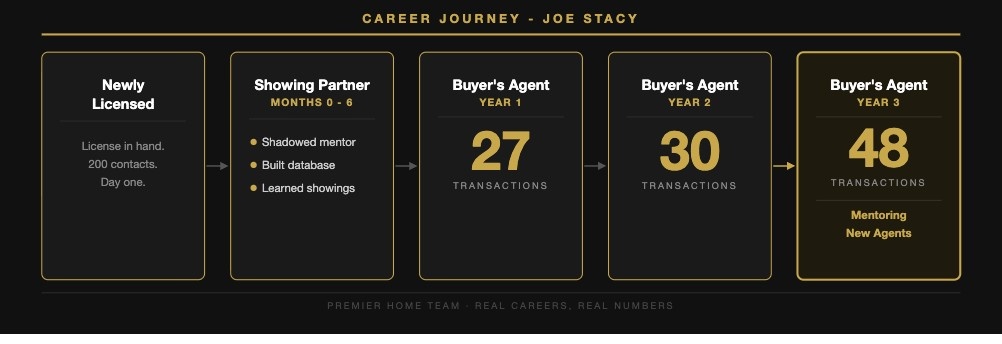
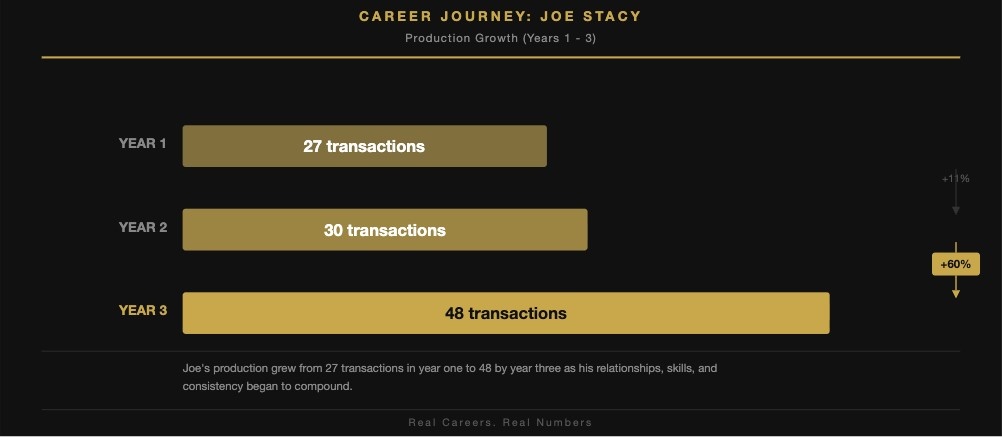
Joe Stacy's path doesn't represent every new agent's experience, but it does show what can happen when someone joins a team, embraces the process, and stays consistent. He started as a showing partner, became a buyer's agent six months later, and grew from 27 transactions in year one to 48 by year three. Here's what happened, and what his experience can teach you if you're considering the same path.
How Joe Started: A New Agent Joins the Team as a Showing Partner
When Joe joined Premier Home Team, he could have come in as a buyer's agent from day one. He chose not to.
Why the showing partner role made sense
"Starting as a showing partner is a lot less intimidating," Joe says. "You're following along in someone's coattails. It's not as much about your conversion. It's more about a learning role. It allowed me to get in front of clients for the first time, understand what kind of questions I should be asking, and how to help them navigate the process without being the one necessarily responsible for navigating them through it."
What those six months actually looked like
The structure was straightforward. Early on, Joe shadowed his mentor Robin through showings. He observed, he listened, he absorbed. Gradually, the dynamic shifted: Joe started taking the lead while Robin watched and offered feedback. By the end of his time as a showing partner, Joe was managing clients from first showing through contract, operating nearly as a full agent.
This progression wasn't accidental. We've found that most new agents learn faster when they can first observe client interactions, then gradually take ownership with feedback rather than being expected to manage every aspect of a transaction on day one.
The less obvious benefit was what was built in the background during that time. Joe came in with the 200 contacts in his phone. That was his entire database. But six months of staying in touch, following up, and building real relationships meant he arrived at his buyer's agent transition with a pipeline ready to go.
Building a database during those first six months also solved one of the biggest challenges new agents face: creating a pipeline before they're expected to generate their own business. Rather than starting from zero as a buyer's agent, Joe already had relationships in motion.
"By the time I became an agent, I already had a group of people I'd been working with," Joe says. "I didn't have to start from scratch."
A New Agent's First Career Step: Buyer's Agent
The move happened around the six-month mark. The reason was simple: Joe had built enough foundation to stand on his own.
What changed at the six-month mark
"I finally built that database big enough to be self-sufficient," he says. "I had created relationships where they didn't necessarily know who my mentor was anymore, because I was the one helping them through the entire process. It was a combination of six months of accumulating people interested in real estate and getting to a point where I had enough structure around me that I didn't need the day-in, day-out guidance anymore."
How the team supported the handoff
The team's role was immediate and practical. They handed Joe ownership of the leads he had been nurturing. The transaction coordinator stepped in to make sure no questions went unanswered and no details slipped. Joe's clients never had to feel the transition.
For many new agents, the transition from learning to producing is where momentum stalls. They've developed some skills, but they're still building a pipeline while learning contracts, negotiations, and transaction management. By spending his first six months building relationships and then taking ownership of those clients, Joe entered his buyer's agent role with both confidence and an active pipeline instead of starting from scratch.
The Turning Point: A New Agent's First Year
Twenty-seven units in a first year as a buyer's agent is a strong result, most new agents don't come close. By Joe's own account, it came at a real cost.
The grind behind managing 27 Units Sales
"It felt like a lot," he says. "It was a lot of showings, a lot of calls, a lot of work. But that's also because I wasn't good at it. I'm a lot better now. To do 27 units today would probably be a quarter of the work. Back then, it was all the work."
Joe spent a three-month stretch without a single day off. He was in the office by 8:00 or 8:30 in the morning and home around 7:00 or 8:00 at night. Weekends went. Some friendships went with them.
This is one of the biggest misconceptions new agents have about real estate. Early success rarely comes from finding shortcuts; it comes from building habits before you've built momentum. As Joe points out later in his story, the work became more efficient as his skills improved, his database grew, and referrals started coming in. The long hours weren't the goal; they were part of the learning curve.
The mindset that made developing the business work
What kept him going was not motivation. It was momentum.
"You don't look at it from the beginning and say, 'I'm going to work three months straight,'" Joe says. "You look back and say, 'I just worked three months straight.' I would see it as a micro thing, not a macro. Just get through the day. Keep the momentum going. Show up the next day. That's the compound effect of that work."

Year Over Year: Real Estate Career Growth When You Stay in the Work
From 27 to 30 Homes: understanding delayed gratification
By year two, the math finally made sense in a different way. Joe had done the work, seen the results, and could connect the two.
"The first year was, 'I hope this works,'" he says. "After getting the result of 27 homes, it became, 'So this is what it takes.' In the second year, it was about understanding what is going to come from the work I'm doing now. Most of real estate is delayed gratification. You're always about four months behind."
Some of the people who told him "not right now" in year one called out of nowhere in year two to say they were ready. Staying in touch, once a month, with no agenda other than being present, turned into business.
From 30 to 48 Homes: getting ruthless about time
The jump from 30 units to 48 in 2025 came down to one thing: how Joe used his time.
"Feeling busy and being busy are two different things," he says. "You can lose a lot of time by feeling busy and not understanding where the efforts are actually going."
Joe’s solution was a fixed morning block: 9:30 to noon, Monday through Friday, reserved for nothing but prospecting: calls, database follow-up, sorting contacts into the right buckets for the right follow-up timing. The team's technology helped make it precise, surfacing the contacts most worth calling based on their actual behavior.
"I don't have to think about who I'm going to call today," Joe says. "We have systems that tell me who to call, when to call, and what to talk about."
By 2025, word of mouth had also started arriving. Past clients were sending new ones. The compound effect of three years of doing right by people had started paying off in a way that year-one Joe could not have planned for.
Referrals save time too, but not just by cutting down on the search for new leads. Referred clients arrive with a level of trust already built in. You're not starting from zero, proving yourself before someone will even take your call. That trust transfer shortens everything downstream: fewer objections, faster decisions, less time spent convincing someone you're worth working with in the first place. The relationship-building Joe protects in his morning block is what generates this kind of lead later. Referrals are the return on that time investment showing up years down the line.
How a Real Estate Team Accelerates a New Agent's Growth
By this point in Joe's career, the value of being on a team had become easier to measure. It wasn't that the team made the work easier; it made it possible to focus on the work that mattered most.
Instead of trying to learn every aspect of the business at once, Joe could spend his time building relationships and helping clients, claiming an estimated 3-4 hours per week that would otherwise have gone to figuring things out on his own, while leaning on experienced teammates for mentorship, transaction support, and systems that helped him stay organized.
As his role expanded, those same systems gave him a foundation he could continue building on rather than having to reinvent his business every year. Learning how to leverage the right people, systems, and technology became an important part of growing his business.How much time did this save Joe. How much time per week could he dedicate to the relationships?
Joe doesn't hesitate when asked what that support meant to his production.
"If I would have had to figure that out on my own, I probably would have done half of what I did my first year," he says. "Year two might have still been under 20. I probably would not have cracked 30 by year three doing it alone. Most people in that position sell two houses or something like that. I probably would have been subject to that statistic as well."
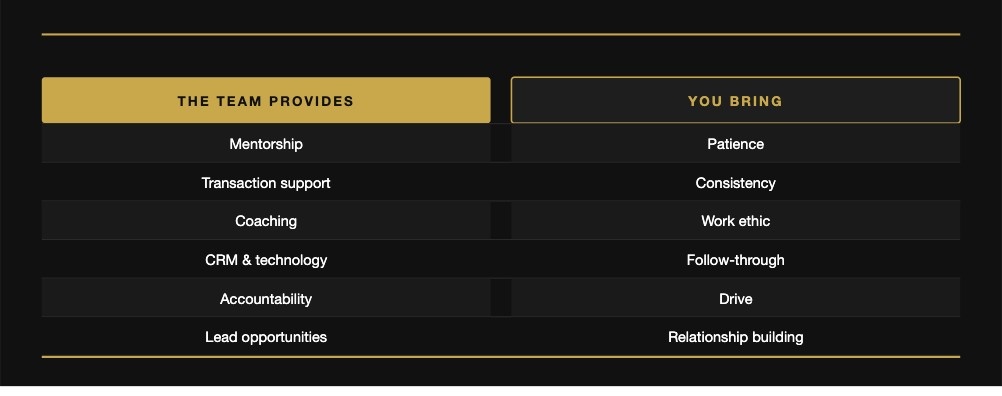
Joe's experience shows that success on a real estate team is a shared responsibility. Some things the team can provide. Others only you can develop.
What a New Agent Needs to Bring
The team's structure can shorten the learning curve, but it can't replace the qualities every successful agent needs to develop for themselves.
Joe is clear that mentorship, systems, and support only matter if you're willing to put in the work behind them.
"What someone needs to make this path work is patience and drive," he says. "Most days you're not going to feel like doing it. But you have to do it anyway, because that's what it takes to get where you're trying to go."
Real estate rewards consistency more than motivation. The conversations you have today may not turn into closings for months, which means success often comes from continuing to do the work long before you see the results.
Who This Real Estate Career Path Isn't For
Joe is just as candid about who should think carefully before pursuing this career.
"I would tell people who think it's like Selling Sunset, where you just show up and do house tours all day and people buy houses, that it's not that easy. It's not for someone who is relying on a consistent paycheck day in and day out. In the beginning, it's going to be incredibly inconsistent. But if you understand what you're getting into and you're willing to do it anyway, the path is there."
The reality is that a team can provide coaching, leads, and support, but it can't eliminate the uncertainty that comes with building a real estate business. If you're looking for immediate stability or a shortcut to success, this path will probably feel frustrating. But if you're willing to invest in learning the business, build relationships consistently, and accept that results take time, joining a team can provide a much clearer path forward than trying to figure everything out on your own.
What Joe's Story Can Teach New Real Estate Agents
You came here to understand what building a real estate career actually looks like on a team. Not a pitch. Not a highlight reel.
Joe's story answers that question as honestly as we can. Not every new agent will follow the same path. But the numbers are real. So are the three months without a day off, the weekends given up, and the people who did not understand why he was not available. So is the production growth that followed.
If you are at the beginning of your career and trying to decide whether joining a real estate team is the right move for your career, your next step shouldn't be submitting an application—it should be understanding exactly what you're signing up for. Read Premier Home Team: Your First 90 Days as a New Real Estate Agent to learn more about how Premier Home Team's onboarding process, mentorship, and lead systems work so you can decide whether this path fits your goals. Then, if it sounds like the kind of environment where you'd thrive, we'd love to have a conversation.
Frequently Asked Questions
What does a showing partner do on a real estate team?
A showing partner works alongside buyer's agents to take clients through home tours and help them evaluate properties. In practice, the role often grows quickly. A showing partner typically starts by observing, shifts to leading showings, and ends up handling pieces of the client relationship end to end. At Premier Home Team, the showing partner role is a structured entry point: new agents get real client experience, mentorship, and time to build a database before carrying the full weight of a buyer's agent role.
How long does it take to build production as a new real estate agent?
It varies, but Joe's experience points to something consistent: real estate runs on roughly a four-month lag. The relationships you build today often turn into closings months later. Joe hit 27 units in his first year as a buyer's agent, but that number was built on a foundation laid during six months as a showing partner, building his database and skills before making the jump.
Should I join a real estate team as a new agent?
The honest answer depends on how you learn best and what resources you have access to on your own. What Joe's path shows is that a team structure can compress the learning curve significantly: coaching, systems, transaction support, and a built-in lead engine that solo agents have to build from scratch. The tradeoff is a commission split. Whether that math works for you is worth thinking through before you decide.
Want to hear directly from Joe? Watch his two-minute testimonial about why he chose Premier Home Team and what surprised him most during his first few years.
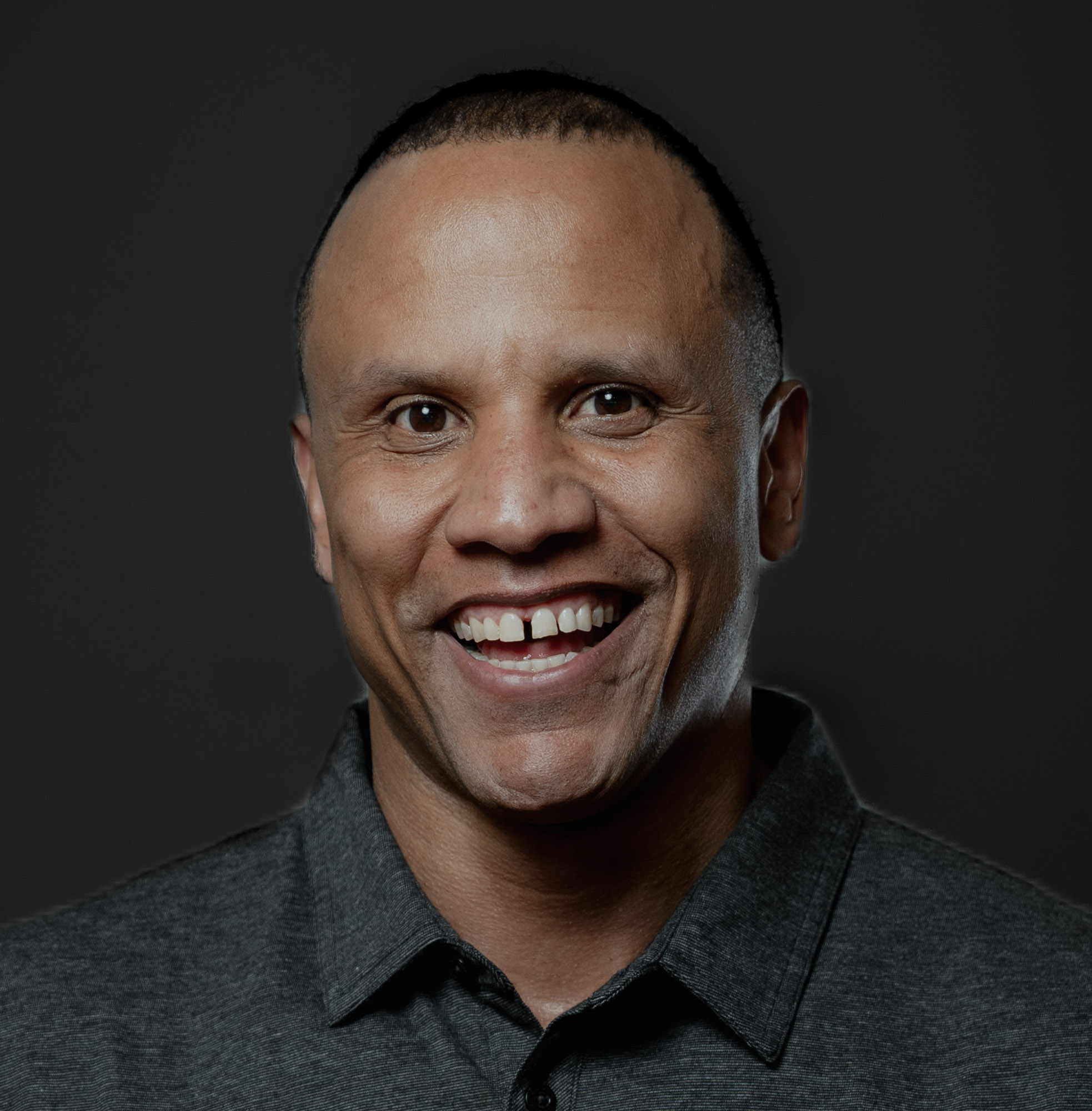
Robin Martin
Realtor® | Premier Home Team | Keller Williams Empower | PLACE
or another way