
Categories
Home Buying TipsPublished June 15, 2026
Is There a Worst Time of Year to Buy a Home? Here's the Truth


You've probably heard it before: "Wait for the right time to buy." Maybe someone told you to hold off until spring, or that winter is dead, and you shouldn't bother. Maybe you've been sitting on the sidelines for months or years, still waiting for the stars to align.
That waiting game is frustrating. And if you're being honest, you're not totally sure what you're waiting for.
At Premier Home Team, we work with buyers across the Philadelphia area every single month of the year: spring, summer, fall, and yes, even in the middle of a Philly winter. We've helped buyers land deals in January that they never would have gotten in April. And we've also seen buyers jump in at the "perfect" time only to overbid on a house they didn't love because the competition was fierce.
In this article, we're going to answer the question directly: Is there actually a worst time of year to buy a home? We'll walk you through what really drives timing in the Philadelphia-area market, what can make it the wrong time regardless of season, and how to know when it's actually your time to buy.
Is There Actually a Worst Time of Year to Buy a Home?
Honestly? No. There isn't one.
When buyers ask us this question, our answer is usually: not buying is the worst time. That’s not the same as saying everyone should buy right now. Because if everything lines up for you, including your finances, your needs, and your timeline, there's no month on the calendar that should stop you.
That said, different times of year do create different market conditions. And understanding those conditions can help you go in with realistic expectations, the right strategy, and a better shot at getting what you want.
Why the Spring Market Can Actually Be the Hardest Time to Buy
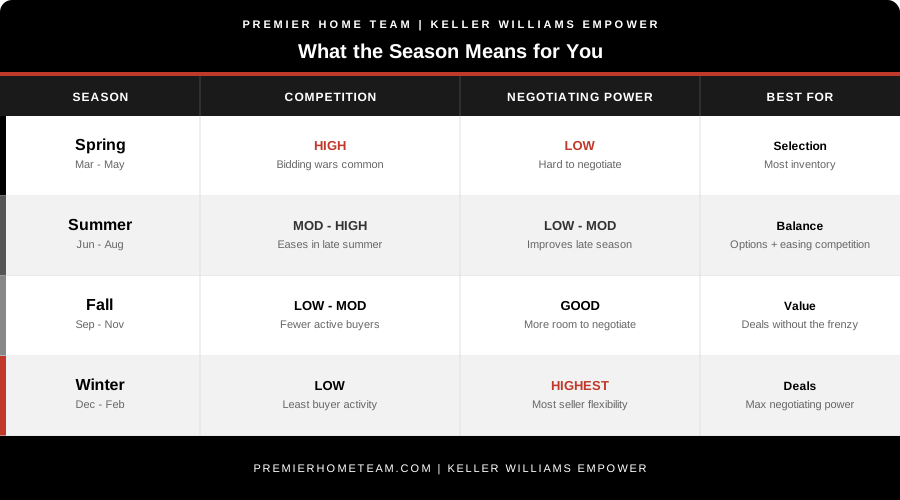
Spring brings more listings, but it also brings more buyers. A larger buyer pool drives prices up, and the things that protect you as a buyer, like inspection contingencies, seller assists, and price negotiation, become much harder to pull off when a seller has four other offers on the table.
That doesn't mean spring is a bad time to buy. For many buyers, especially families trying to move before the next school year or those looking for more inventory to choose from, spring can make a lot of sense. But it does mean you need to go in understanding the competition will be higher.
During peak season, buyers who aren't prepared often make costly mistakes. They go in thinking they can negotiate, lose three offers in a row, and either overpay out of frustration or give up entirely. If spring is when you need to buy, understanding what it takes to write a competitive offer before you start touring homes can make the difference between winning and walking away empty-handed.
For a full breakdown of how each season plays out in the Philadelphia-area market, including what to expect in summer and fall and how city and suburban timing differ, read our guide: When Is the Best Time of Year to Get a Good Deal on a Home?
What Makes Fall and Winter a Smart Time to Buy a Home in Philadelphia
October, November, and December tend to see fewer buyers out in the market, along with fewer listings and less overall competition. Some people read that as a slowdown and steer clear. Experienced buyers read it as an opportunity.
With less competition, sellers are more willing to negotiate. You have a better shot at going under asking price, requesting repairs after an inspection (not just for informational purposes), and asking for seller credits toward your closing costs.
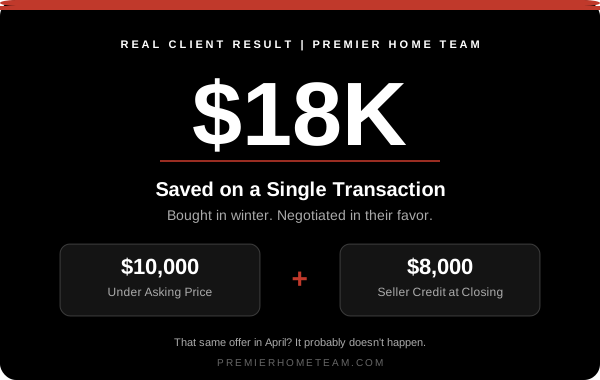
Here's a real example from our team: a buyer worked with us during the winter months and was able to go $10,000 under the asking price, plus negotiate $8,000 in seller credit toward closing costs. That's $18,000 in savings on a single transaction. That same offer in April? It probably doesn't happen.
Winter is where negotiation power peaks. But buyers also need to understand there may be fewer homes to choose from, especially in certain Philadelphia suburbs where inventory already moves quickly. As with every season, what you gain in leverage may come with tradeoffs in selection.
Personal Reasons It Might Not Be the Right Time to Buy Regardless of Season
Here's something we want to be straightforward about: the season isn't what decides whether you should buy. Your situation is.
The things that actually determine whether it's the right time for you are:
- Your employment history. Most loan programs want to see at least two years in the same field.
- Your credit score. A lower score can mean higher interest rates or disqualify you from certain programs altogether. If you're not sure where you stand, a HUD-approved housing counselor can review your credit report with you at no cost.
- Your savings. You'll need money for a down payment and closing costs. There are assistance programs that can help, but you need a baseline.
- Your reason for moving. Whether you're relocating for work, upsizing for a growing family, or downsizing after a major life change, the clearer the reason, the easier the timing decision usually becomes.
If those things aren't lined up yet, that's not a reason to feel behind. It's just information.
In fact, one of the best things you can do before worrying about market timing is evaluate how prepared you actually are financially, logistically, and personally to buy. That's why we've put together a simple Homebuyer Readiness Checklist to help you identify where you're already in a strong position and where you may need a little more preparation first.
We work with buyers to build a plan so that when the time is right, they're ready to move quickly and confidently.
How Interest Rates Factor Into Your Home-Buying Timeline
Interest rates affect your monthly payment and your long-term cost of homeownership, sometimes more significantly than a seasonal price swing. When rates are higher, your buying power shrinks. When they drop, the same budget stretches further.
Even a one-percent difference in interest rates can change your monthly payment by hundreds of dollars, depending on your price range. That's why buyers who obsess over seasonal timing sometimes miss the bigger financial picture entirely.
But here's the key: rates don't follow the seasons. A rate change in October matters just as much as one in March. So waiting for spring, hoping rates will also improve isn't a strategy, it's a gamble. The better move is to get pre-approved, understand what you can comfortably afford at today's rates, and buy when your finances and your needs align.
Mistakes Buyers Make When They Don't Understand the Market They're In
One of the biggest things we see that hurts buyers isn't bad timing. It's going into a market without understanding the rules of that market.
A buyer who makes a lowball offer on a home that has just been listed at day one in a booming spring market is going to be disappointed. But a buyer who assumes every winter listing is automatically a bargain can make just as big a mistake. Sometimes homes sit because sellers are flexible. Sometimes they sit because the property has real issues.
The problem isn't the season, it's the strategy. Different markets require different expectations, negotiation tactics, and levels of urgency.
That's why having an agent who will educate you on the current market conditions, not just cheer you on, makes such a difference. You need to know, going in, what is and isn't realistic to ask for. No surprises.
How to Know When It's the Right Time for You to Buy a Home
If you've ever said, "I'm waiting for the right time," the first question to ask yourself is: What does that look like? Because if you have a clear, specific answer like "after we get married" or "once I have six months of savings," that's a real timeline. That's something to work toward.
But if the answer is vague, it usually means something else is going on. Maybe it's uncertainty about finances, or credit, or just the general anxiety that comes with making a big decision. That's where a conversation with an agent can help, not to push you into buying, but to help you figure out what's actually standing in the way.
A quick checklist to see where you stand:
- Do you have a clear reason to move - upgrading, downsizing, relocating?
- Have you been employed in the same field for at least two years?
- Is your credit score in a place where you'd qualify for a reasonable loan?
- Do you have savings for a down payment and closing costs?
- Are you ready to talk to a lender and get pre-approved?
If you can check those boxes, it could be go time, whether it's February or July. If you can't check them yet, that's not a dead end. It's a roadmap.
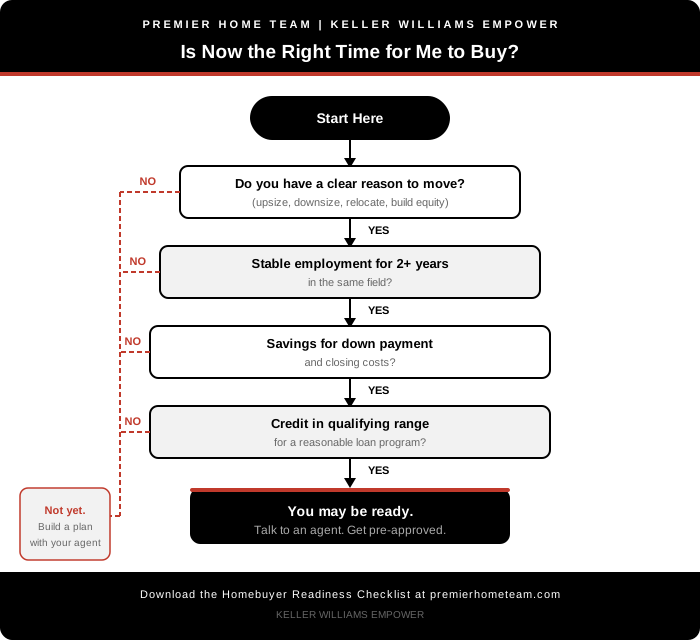
If you're not completely sure where you stand yet, we've also put together a Homebuyer Readiness Checklist that walks through the financial, personal, and logistical factors buyers should evaluate before jumping into the market.
There's No Worst Time to Buy, Only the Wrong Circumstances
There is no worst month to buy a home. The calendar has never been the problem. What actually makes it the wrong time is a mismatch between your circumstances and what the market requires of you right now.
If you came here with a nagging feeling that you might be buying at the wrong time, that feeling is worth paying attention to. But the answer probably isn't in the season. It's in the checklist above. Work through it honestly, and you'll know.
If you're still trying to figure out whether now is the right time, the best next step is to evaluate where you stand financially, personally, and logistically before making any major decisions. That's exactly what our Homebuyer Readiness Checklist is designed to help you do.
At Premier Home Team, that's exactly what we do. We work with buyers across the Philadelphia area at every stage of readiness, and we'll tell you the truth about where you stand. Reach out and let's figure out if now is your time.
Frequently Asked Questions
When is the best time of year to buy a house?
The best time to buy a house is when your finances are ready, you have a clear need to move, and you're working with an agent who understands the current market. Seasonally, fall and winter tend to offer less competition and more negotiating room, while spring brings more inventory but also more buyers to compete with.
Is it a good time to buy a house right now?
Whether it's a good time to buy depends more on your personal situation than on market conditions. If your income is stable, your credit is in good shape, and you have a genuine need to move, it's worth having a conversation with a local agent to assess current inventory and pricing in your target area.
Should I wait for a buyer's market before purchasing a home?
Waiting for perfect market conditions is rarely a winning strategy, because markets are unpredictable and waiting has real costs: continued rent payments, rising prices, or rates moving against you. A better approach is to get pre-approved now, understand what you can afford, and buy when your personal circumstances align.
Do home prices drop in winter in the Philadelphia area?
Prices don't necessarily drop in winter, but buyers often have more negotiating leverage. With fewer competing offers, sellers are more likely to consider requests like price reductions, inspection contingencies, and seller credits toward closing costs. That can add up to significant real-dollar savings even if the list price doesn't budge.
How do interest rates affect the best time to buy a home?
Interest rates have a direct impact on what you can afford each month, and they're not tied to the season. Rather than waiting for rates to drop, which may or may not happen on your preferred timeline, it's smarter to get pre-approved at current rates, understand what that means for your budget, and make a decision based on your full financial picture.

Robin Martin
Realtor® | Premier Home Team | Keller Williams Empower | PLACE
or another way