
Categories
Home Buying Tips, Market TrendsPublished May 8, 2026
When Is the Best Time of Year to Get a Good Deal on a Home?

.jpeg)
If you’re trying to time the housing market perfectly, you’re not alone.
Most buyers assume there’s a “right” time of year to buy a home; when prices drop, competition disappears, and great deals are easy to find. But when you actually start looking, the reality feels more complicated. Some homes are flying off the market with multiple offers, while others sit for months with price cuts.
Many buyers who try to time the market end up doing the opposite of what they intended; overpaying in competitive markets, missing opportunities, or waiting for a “perfect moment” that never comes.
And in a market like Philadelphia, where conditions can shift quickly, timing your purchase the wrong way can cost you thousands, or the home you really wanted.
We see this confusion all the time when working with buyers. The truth is, there isn’t one universally “best” time to buy a home, but there are certain times of year that give you very different advantages depending on your goals.
In this article, we’ll break down how each season affects:
- Inventory
- Competition
- Pricing
- Negotiation power
So you can decide when it’s actually the right time for you to buy.
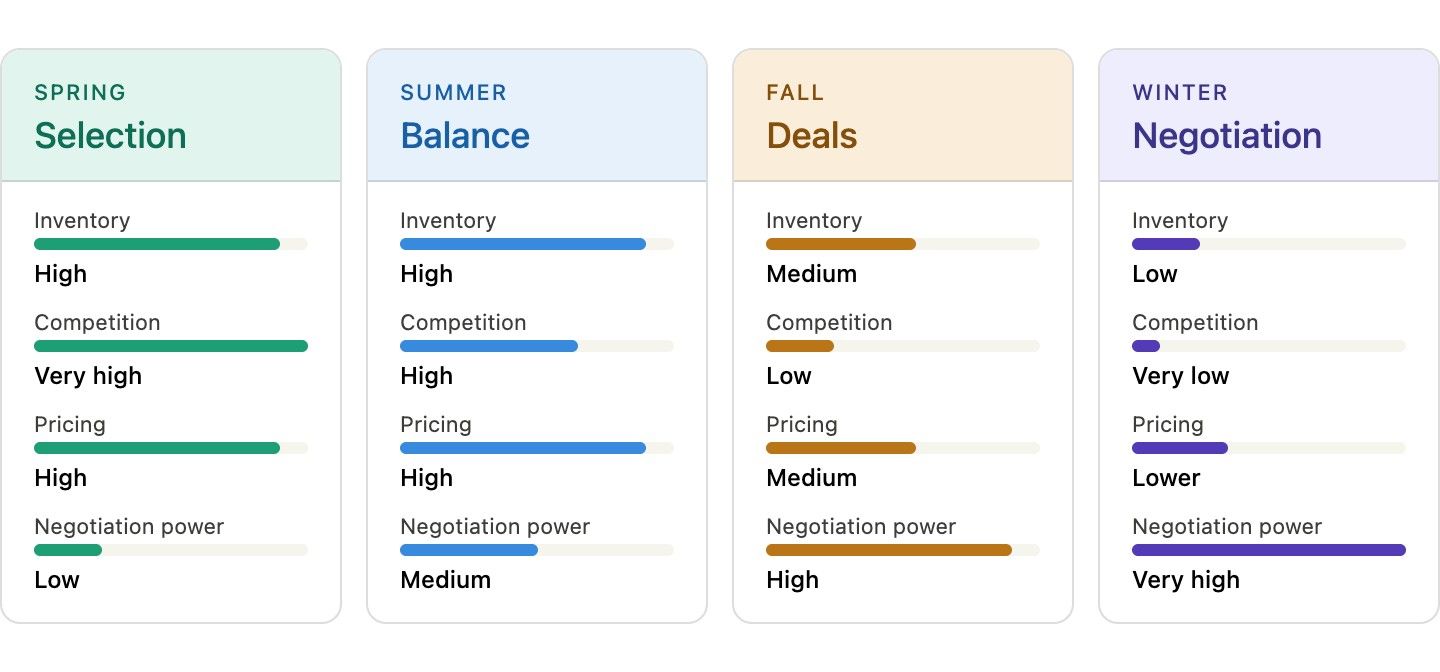
Spring: The Most Competitive (and Most Expensive) Season
Spring is widely known as the busiest time in real estate, and for good reason.
As the weather improves and families start planning around the school year, both buyers and sellers flood the market. More homes become available, but even more buyers show up to compete for them.
The result is higher prices, and intense competition.
In this environment, buyers often have to move quickly and decisively. There’s less time to think, fewer opportunities to negotiate, and a much higher chance of entering bidding wars. In markets like this, being fully prepared, especially knowing what you need to apply for a mortgage before you start your search, can be the difference between winning and missing out.
That doesn’t mean you can’t get a good deal, but it’s harder. You’ll need strong guidance, a clear strategy, and the ability to act fast.
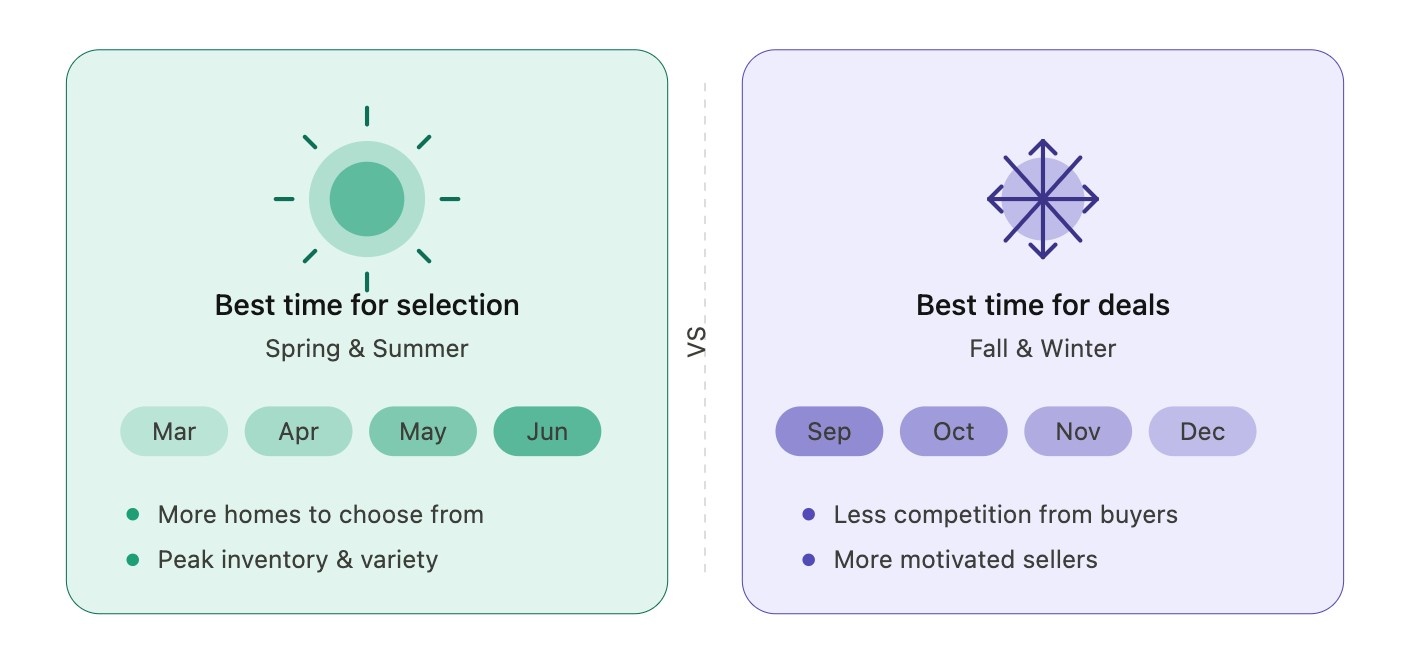
Spring is best if your priority is selection of the best home for you and your family.
Summer: Still Competitive, Until It Suddenly Isn’t
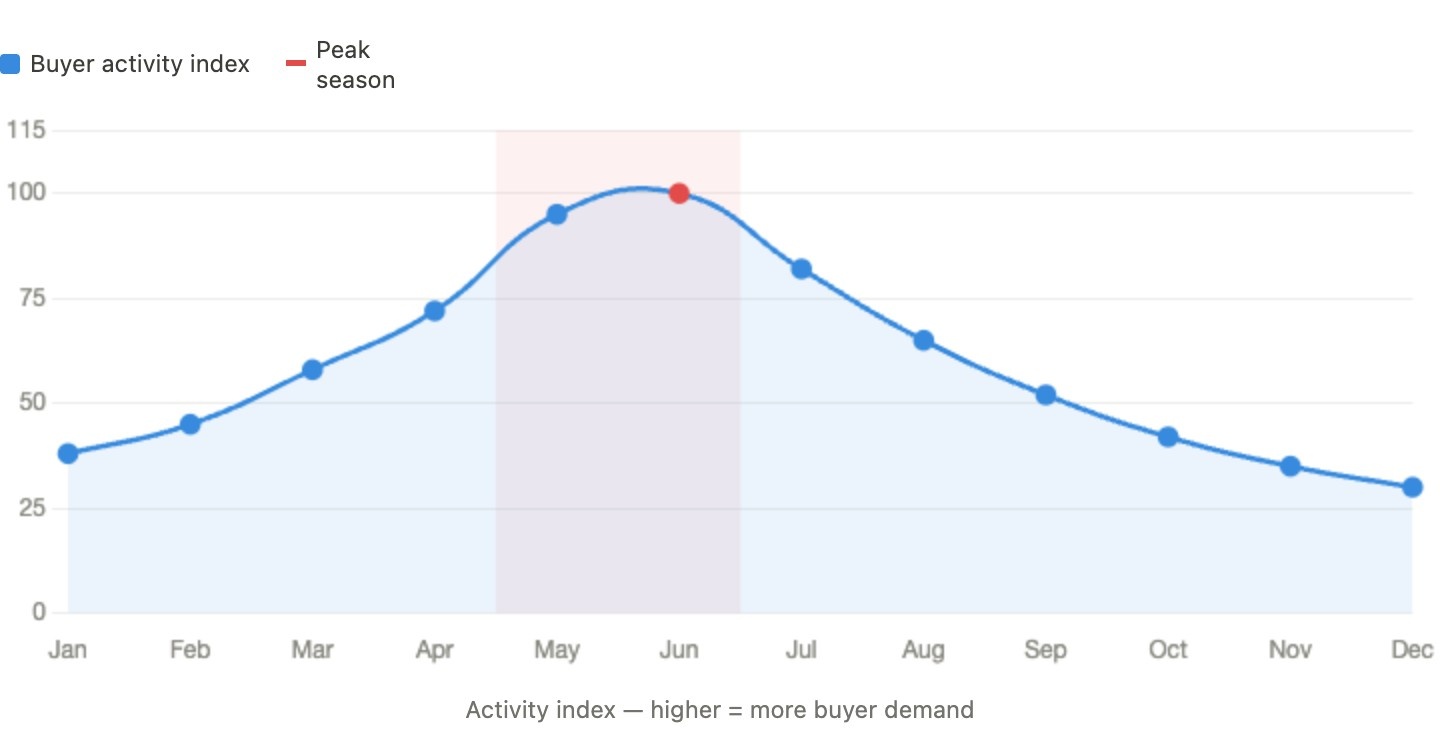
Summer starts off looking a lot like spring. Buyer demand remains high, especially in early summer, as people try to move and settle before the next school year. Competition stays strong, and pricing remains elevated.
But something interesting happens around mid-to-late July. As vacations kick in and families finalize their moves, the market begins to slow down. By August, activity drops off more noticeably.
This creates a small window of opportunity.
Late summer can offer a balance between inventory and reduced competition, especially compared to the peak spring frenzy. Buyers who stay active during this time may find slightly more negotiating power than earlier in the year.
Fall: The Most Overlooked Opportunity for Buyers
Fall is where things start to shift in a buyer’s favor.
By this point, many buyers who started their search in spring or summer are either already under contract, or burned out. At the same time, sellers who didn’t get their homes sold during peak season may feel increasing pressure to make a deal before the market slows further.
This combination creates one of the most underrated opportunities of the year.
There’s less competition from families, fewer bidding wars, and more room to negotiate on price and terms. Buyers who remain active in the fall often gain leverage simply because fewer people are still looking.
Fall is ideal if your goal is to negotiate and find value without extreme competition.
Winter: The Best Time to Negotiate, With One Catch
Winter is often considered the “best” time to get a deal, but it comes with tradeoffs.
Fewer homes are listed during the winter months because most sellers prefer to wait for warmer weather and more buyer activity. As a result, inventory drops significantly.
For the homes that are on the market, sellers are often more motivated. They may need to move quickly or may have already missed the peak season. That creates opportunities for buyers to negotiate more aggressively.
The catch is that there are fewer homes to choose from. You might find a great deal, but only if the right property is available.
Winter is best if your priority is negotiation power.
What to Expect in Each Season
Here’s a quick way to think about how each season typically plays out:
- Spring: Higher chance of bidding wars
- Summer: Pressure to move before school year
- Fall: Fewer options, but better deals
- Winter: Strong deals, but limited inventory
Philadelphia vs. The Suburbs: Why Timing Isn’t the Same Everywhere
One thing most buyers don’t realize is that timing doesn’t work the same everywhere.
The city and the surrounding suburbs often move in opposite patterns.
In Philadelphia, demand tends to be more consistent year-round, driven by first-time buyers and young professionals. In contrast, suburban markets are much more tied to school schedules and family moves, making spring and summer significantly more competitive.
This means the “best time” can vary depending on where you’re buying.
If you’re considering both city and suburban properties, it’s critical to adjust your expectations for each.
How to Decide When to Buy
Instead of trying to guess the “perfect” time to buy, it’s more helpful to match your timing to your priorities. Here’s a simple way to think about it:
| If your priority is… | Best time to buy | What to expect |
| Getting the best possible deal | Winter | Less competition gives you more negotiating power, but fewer homes to choose from |
| Having the most options to choose from | Spring | More inventory hits the market, but expect higher prices and bidding wars |
| Finding a balance between options and competition | Late summer | Inventory is still available, and competition begins to ease |
| Maximizing your negotiating leverage | Fall | Fewer active buyers means sellers are often more flexible on price and terms |
The key is understanding what each season brings so you can make the right decision for your situation.
What Actually Helps You Get a Great Deal (No Matter the Season)
Timing helps, but it’s rarely the reason someone actually gets a great deal.
In many cases, buyers win not because they offer the highest price, but because they present the strongest overall offer.
Before you start making offers, it’s worth understanding exactly how to position yourself. Our guide on How to write a competitive home offer walks you through how to structure an offer that stands out and wins.
That includes:
- Flexible inspection terms
- Strong appraisal strategies
- Covering certain costs strategically
- Reducing risk for the seller
In competitive situations, these details can make your offer more appealing, even if it’s not the highest.
And in slower markets, they can help you negotiate even better terms.
A Real Example: How Timing + Strategy Created a Deal
One buyer in Philadelphia found a five-bedroom, move-in-ready home that had been sitting on the market for six months.
Instead of focusing only on price, the strategy shifted to negotiating seller concessions.
The result?
- Minimal out-of-pocket costs (just over $3,000 total)
- Seller assistance and first time home buyer programs (like those offered through PHFA) covering closing costs
- A monthly payment lower than their previous rent
In this case, the deal didn’t come from the “perfect” season; it came from recognizing the opportunity and negotiating effectively.
Your Next Step: Timing Matters, But Preparation Matters More
If you’ve been waiting for the “perfect” time to buy, you’re not alone.
There’s no perfect season, just different opportunities depending on what you’re looking for.
The buyers who get the best deals aren’t the ones who wait, they’re the ones who are prepared when the best opportunity presents itself.
That means understanding the market, defining what a “good deal” looks like for you, and having a strategy in place before you start seriously looking. If you’re planning to buy in the next 6–12 months, your smartest move is to start that process now.
👉 Talk to an agent to understand your local market, explore your options, and put yourself in position to recognize and win a great deal when it appears.

Robin Martin
Realtor® | Premier Home Team | Keller Williams Empower | PLACE
or another way